YaObmen is a Russian-language style of online exchange service, built around direct conversions rather than the deep market infrastructure of a conventional cryptocurrency exchange. Its name, literally suggesting an exchange service, fits the model. Users typically arrive with a specific task: turn one digital asset or payment balance into another and leave. That can be efficient, but it also means the quality of each individual direction matters more than broad platform branding.
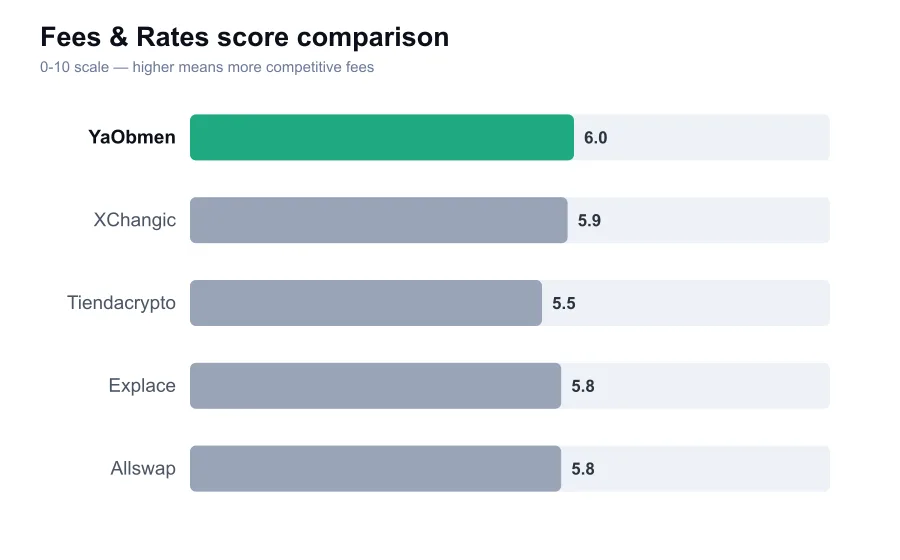
This is a market where users often search for the best displayed rate and make a decision too quickly. YaObmen, like comparable exchange desks, should not be judged by a headline fee because the economic cost is normally expressed through the exchange rate. The service may also face network fees, payment-system charges, and reserve limits that differ by direction. The honest comparison is the final amount delivered to your destination.
A quote that looks generous can become less attractive if it is floating and the market moves before the service processes the deposit. Conversely, a fixed quote may impose a short payment window and exact amount requirement. Read the order conditions instead of assuming that every rate works the same way. This is especially important with volatile assets. A few minutes of price movement can matter more than the nominal service fee.
For common crypto routes, YaObmen may be convenient because it avoids a formal trading account and a multi-step withdrawal. That convenience can be worth paying for on a small conversion. It becomes harder to justify on a large transaction if a major exchange can provide a clearly lower all-in cost. Users who already have verified accounts at Binance, Bybit, Kraken, Coinbase, or a suitable regional exchange should calculate the full alternative, not merely compare a spot price.
The service's speed is likely to vary according to the payment method and asset. A confirmed stablecoin transfer on a low-cost network can be straightforward. Bitcoin takes confirmation time, and some payment directions depend on manual availability or banking schedules. There is no universal processing time that can responsibly be promised for every order. A precise route, amount, network, and time of day will determine much of the experience.
YaObmen is likely most comfortable for customers who understand this reality already. If a payout is needed for rent, payroll, or a time-critical commercial obligation, a small exchange desk is not where I would introduce uncertainty. Even an honest operator can be delayed by a blockchain, a payment processor, or a risk review. Use a route with an adequate time buffer and do not send your last available funds.
The operational details matter. Check the minimum and maximum on the actual direction, confirm the target network, and ensure that the wallet or payment account belongs to you where required. If the payout asset uses a memo, destination tag, or other identifier, missing it can turn a quick exchange into a support case. The service cannot always repair an error instantly, even if it wants to.
Security here is mainly a question of minimizing avoidable risk. Open YaObmen from a trusted source, not a copied link in a messenger group. Confirm the SSL domain in your browser, compare the order details before paying, and save the transaction hash. Do not reveal wallet seed phrases or remote-access credentials to anyone claiming to be support. A real exchanger has no reason to request your seed phrase.
Some users are attracted to exchange services because they may involve less account setup than a full centralized exchange. That should not be confused with an unconditional no-KYC guarantee. Financial crime controls, payment-provider demands, and suspicious-transaction checks can all lead to a request for verification. The important issue is whether the current policy tells users this before money is sent and explains what happens to an order placed under review.
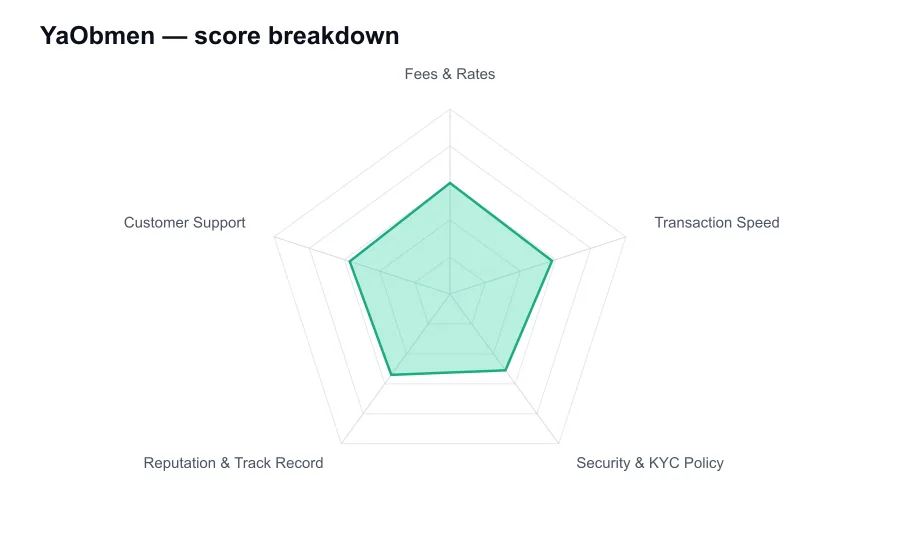
I would regard YaObmen as having a moderate security profile rather than a high-assurance one. Its short transaction model reduces the temptation to leave a large account balance online, which is a positive. But the user is still extending trust to a smaller counterparty at the moment of transfer. It lacks the public proof, regulatory visibility, and extensive security tooling expected from the largest exchanges. That is a reasonable reason to keep initial order sizes conservative.
Reputation needs careful reading. A listing on an exchanger-monitoring site or a collection of user reviews can be helpful, particularly if it shows a lengthy record and recent complaint handling. It is not a substitute for deep due diligence. Monitor listings can change, feedback can be uneven in quality, and a good score says little about how a provider handles a rare but serious problem.
The best reviews are specific. They say which route was used, whether the quoted amount was honored, how long it took, and whether a support agent addressed an issue. The least useful reviews are generic applause or generic outrage without an order detail. I would look for a consistent history over time and pay particular attention to unresolved claims about frozen funds, rate recalculation, or failed payouts.
Customer support is not a luxury feature for YaObmen. It is part of the product. An order-based exchange can be excellent until one identifier is wrong or a deposit confirmation stalls. Good support should be reachable through the official channels, able to locate an order by its number, and willing to explain the next action in plain language. A response that asks for the same information repeatedly is a bad sign.
Before using YaObmen for anything beyond a small test, I would ask a concise question through its official support channel. Confirm the availability of the exact payment direction or network. This is also useful for judging language quality and response discipline. A polite but vague answer is less reassuring than a short, technically accurate one that mentions the relevant network and order conditions.
YaObmen can make sense for a user who needs an uncomplicated conversion, has verified the current quote, and knows how to use self-custody wallets safely. It is not where I would send a large treasury transfer, nor is it a good first stop for someone who needs extensive educational help. The independent-exchanger model can be perfectly functional, but it rewards careful customers and punishes hurried ones.
My take is that YaObmen deserves consideration as a practical route finder, not automatic loyalty. If its live payout is better than alternatives and current third-party feedback remains healthy, a small transaction can be sensible. If the price advantage is marginal, I would choose the provider with stronger public accountability. In crypto, a slightly better rate is rarely worth accepting a dramatically weaker recovery path.