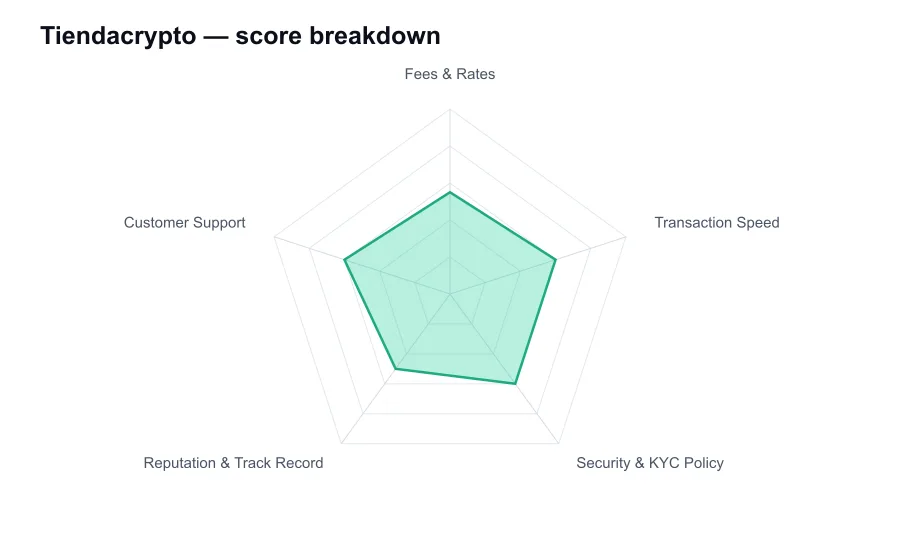
Tiendacrypto is a regional crypto buying and selling service aimed primarily at users who want a straightforward path between local payment methods and digital assets. It occupies a very different space from a DeFi protocol or global derivatives venue. The appeal is familiarity: local language, local currency context, and a simpler purchase flow for people who do not want to begin with an international exchange.
That local focus is both its strength and its ceiling. A customer looking to acquire Bitcoin, USDT, or another mainstream asset using a domestic bank transfer may value a nearby service more than a huge platform with a dense order book. A trader hunting dozens of altcoins, perpetual futures, or institutional liquidity will find the scope much narrower. Tiendacrypto should be judged as a retail on-ramp and exchange service, not as a full trading terminal.
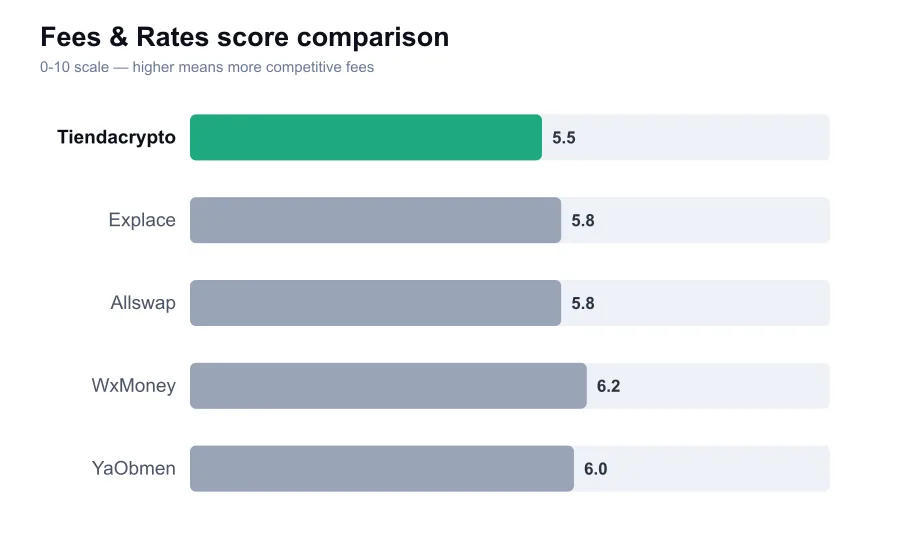
The first thing I would inspect before placing an order is the actual buy and sell quote. Services of this kind often make money less through a clearly isolated maker-taker fee than through the spread between the market reference price and the rate shown to a retail customer. That is not automatically unfair. It can be a sensible price for convenience, payment processing, local compliance work, and operational risk. It does mean headline claims about low fees can miss the real economic cost.
For a small, occasional purchase, a visible all-in quote can be easier to understand than an exchange charging trading fees, withdrawal fees, and separate conversion fees. The trouble starts when the spread is not compared. Check the offered rate against a liquid reference such as Binance, Kraken, or a major market-data index at the same minute, then include the cost of funding and withdrawing. The difference is what the purchase is really costing you.
I would not describe Tiendacrypto as a bargain venue for high-volume trading. Local convenience usually carries a premium, especially where banking rails are expensive or volatile. Users exchanging modest sums may reasonably accept that premium to avoid a complicated international onboarding process. Anyone converting large balances should ask for the exact quote, calculate the percentage difference, and compare at least one alternative. Spreads matter far more than a friendly interface once the order size grows.
Transaction speed is closely tied to the payment rail. A crypto transfer after funds are credited can be quick, while a local bank deposit may be subject to banking hours, manual review, or confirmation delays. Card payments, if offered for a particular customer, can be fast but often cost more. A service cannot make an interbank transfer settle faster than the bank itself, and users should be skeptical of marketing that suggests otherwise.
The sensible approach is to plan around the slowest part of the process. First purchases can take longer because identity checks and payment verification must be completed. Once an account is established, repeat transactions may be smoother, but this is not the same as guaranteed instant settlement. If you need coins on-chain for a time-sensitive trade, buy in advance. Retail on-ramps are poor tools for racing a market move.
Unlike no-account swap services, a fiat-facing business should be expected to apply know-your-customer procedures. Tiendacrypto's use of identity and payment verification is not a flaw in itself. It is a normal consequence of operating with traditional financial rails. Customers should expect requests for personal details and, depending on transaction size or risk signals, potentially further evidence about payment ownership or source of funds.
The security question has two sides. A platform that handles customer accounts and fiat transfers has to protect login credentials, payment information, and any crypto it controls before withdrawal. The user also has responsibility. Enable two-factor authentication if available, use a unique password, confirm the withdrawal address carefully, and move long-term holdings into self-custody rather than leaving them on any retail platform indefinitely.
Public information and brand scale matter here. Tiendacrypto does not carry the deep, internationally scrutinized track record of a major global exchange, nor does it have the public corporate footprint that lets an outsider assess every reserve, custody, and governance practice in detail. That does not prove it is unsafe. It does mean the burden of caution should be higher. Start small, test the deposit and withdrawal process, and do not confuse a functioning website with proof of institutional resilience.
A regional provider can offer better communication than a giant international platform, especially if the support team understands the local banking environment. That is an advantage when a transfer reference is missing or a payment is delayed. The opposite is also possible: smaller teams can become slow during demand spikes, holidays, or compliance reviews. The quality of support is most visible when something goes wrong, not when an order completes normally.
Before depositing meaningful money, I would test support with a specific practical question, such as the expected time for a named bank transfer or the network used for a USDT withdrawal. A useful answer should be direct, current, and clear about limits. Vague promises of immediate service are not enough. Retain payment receipts, order confirmations, and blockchain transaction IDs because those records make any later support conversation much easier.
Tiendacrypto's reputation is therefore best understood as regional and functional rather than globally proven. It can make sense for users who value a locally oriented gateway into crypto and are prepared to pay for that convenience. It is not the service I would choose to store significant wealth, chase the tightest execution, or trade actively through volatile markets. Its value lies in reducing friction for a particular customer, not in being everything to everyone.
My take is measured but clear. Use Tiendacrypto for modest, deliberate purchases if its live quote is acceptable and its supported payment method suits you. Complete verification before you need to transact, make a small withdrawal test, and keep long-term coins in a wallet you control. People who need deep liquidity, independently verifiable institutional safeguards, or sophisticated order types should choose a larger regulated exchange. Convenience is useful, but it should never replace price comparison and basic custody discipline.