SecureShift presents itself as an instant cryptocurrency exchange service, built for users who want to swap one asset for another without opening a conventional trading account. That places it in the same broad category as SimpleSwap, ChangeNOW and other quote based conversion platforms. The appeal is obvious: select a pair, provide a receiving address, send funds, and receive the new asset. The reality is more complicated, because the simplicity of the screen hides the fact that execution, liquidity and transaction monitoring are largely outside the user's direct control.
The service is aimed at convenience rather than active trading. There is no familiar exchange order book to study, no advanced charting environment and no promise that you are interacting with a single transparent pool of liquidity. Instead, SecureShift provides a quoted conversion route. That can be useful for a person consolidating a small wallet or changing coins across networks. It is a poor fit for anyone who wants to place limit orders, trade regularly or know exactly how an order is being routed.
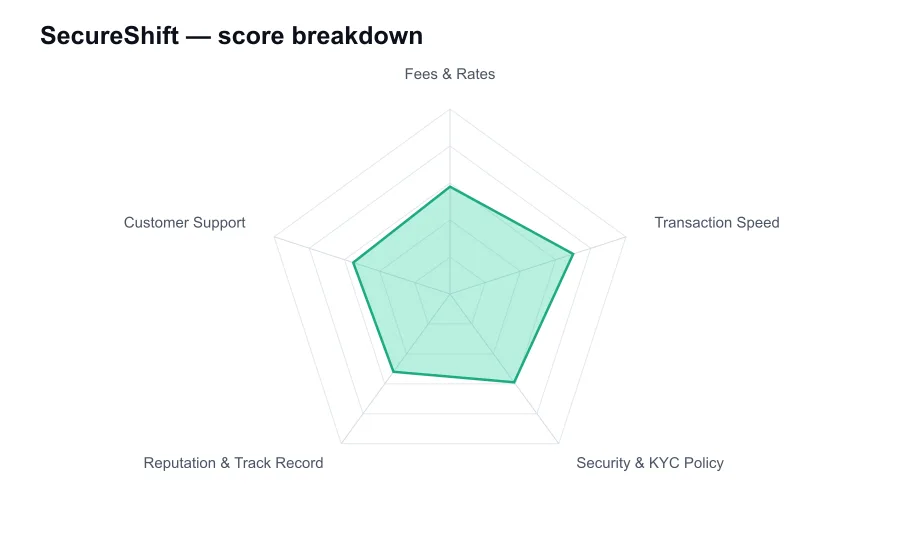
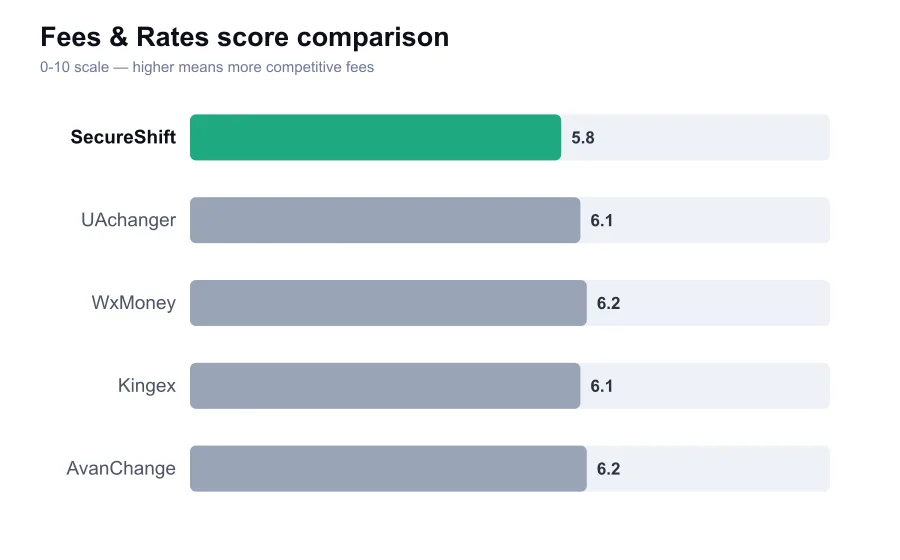
Fee transparency is the biggest area where users should remain skeptical. Instant swap providers frequently advertise competitive or low fees while incorporating their compensation and liquidity costs into the rate displayed on screen. SecureShift's effective cost is therefore the difference between the amount you send and the market value of what reaches your receiving wallet, plus any network fee. That number can be reasonable for a small urgent swap. It can also be substantially worse than a trade on a liquid centralized exchange.
A user should compare the quote against a reliable market price before sending anything, especially with lesser known tokens or a large transaction. Check whether the selected option is fixed rate or floating rate, if offered, and read what happens if the deposit arrives late or the market shifts. A floating quote may produce a different payout than the initial estimate. A fixed quote can offer certainty, but only if the platform gives clear terms, a credible time window and an understandable refund policy.
Speed is good in the narrow sense that the order process is fast. Creating a swap takes moments, and common assets on healthy networks can be processed reasonably quickly once SecureShift detects the deposit. But an instant exchange is only as fast as its slowest dependency. Bitcoin confirmation time, Ethereum gas conditions, wallet delays, liquidity partner availability and manual risk reviews can all turn a five minute expectation into a much longer wait.
That distinction is important because swap sites often market the best case, not the difficult case. A USDT transfer on a low cost network may complete quickly. A BTC to ETH exchange during chain congestion or a volatile market can take far longer. Users should never send assets needed for an urgent payment, liquidation deadline or exchange deposit window through an intermediary route unless they have tested it first. The word instant is a product category label, not a guarantee.
SecureShift's account light model is attractive to users who dislike handing over identity documents for every conversion. A standard swap flow may not require a full account or routine KYC. However, no responsible reviewer should translate that into a promise of anonymous, unconditional service. Transaction monitoring, sanctions screening, source of funds questions or partner compliance rules can result in a swap being paused and extra information being requested.
That is the central security and policy issue. If a swap is held for review, the user is in a weaker position than they would be with an onchain decentralized exchange. The provider controls the process and the user may have to communicate through support to resolve it. Before using any instant exchanger, read its AML, KYC, refund and terms pages. If those policies are vague about who can be verified, how long a review lasts or where a refund goes, treat that as a serious warning.
The platform is noncustodial only in a limited, transaction based sense. It does not operate like an exchange where you deliberately keep a trading balance, but it takes custody of coins during the conversion. That is still counterparty exposure. Users should not confuse a no account interface with trustlessness. Once you send funds to the service's deposit address, you rely on its systems, partners and support process until the outgoing transaction is completed.
On reputation, SecureShift does not carry the same weight as the oldest names in the instant exchange sector. That does not prove misconduct, but it should affect position sizing. A lesser known provider has less public operating history, fewer independent discussions to assess and less evidence of how it handles difficult cases. I would be reluctant to use it for a large conversion merely because its initial quote looked a little better than a better established competitor.
The website's security signals and polished interface are not enough on their own. Domain impersonation, fake support accounts and copied exchange sites are common in this corner of crypto. Users should type the address themselves, verify the domain carefully and never trust a direct message offering recovery help. SecureShift, like every swap provider, cannot protect someone who sends funds to a cloned site or shares wallet credentials with a scammer.
Customer support is a make or break issue for services like this. If the swap works, support barely matters. If a transaction is delayed, sent with the wrong memo, or flagged for review, support becomes the entire product. SecureShift provides online support channels, but it does not have the public scale or deeply documented service reputation of a major exchange. Keep transaction IDs, screenshots and the exact amount sent, because a clear support ticket is your best tool if something goes wrong.
Its coin selection and chain support can be useful, but breadth is not always quality. More assets mean more possible routing problems, low liquidity markets and network specific errors. I would limit use to established assets and networks I understand. Be especially careful with tokens that share symbols, wrapped assets and chains requiring destination tags or memos. An incorrect network selection can create a support problem that no fast swap interface can solve quickly.
SecureShift is best viewed as a utility, not a home for funds. Test it with a modest amount, use an address you control, and avoid making the first transaction a high stakes one. Compare its final payout with at least one competitor and with the cost of trading manually on an exchange. If it saves meaningful time without imposing a large spread, it has done its job. If not, the convenience is expensive.
My opinion is guarded. SecureShift may be perfectly functional for small, straightforward conversions, and its low friction model will appeal to users who do not want a trading account. Yet the combination of opaque effective pricing, transaction level custody and a lighter public track record means it has not earned blind trust. Use it selectively, document every transaction and keep your expectations realistic. For serious volume, established venues with transparent markets remain the better choice.