Spark sits in a different corner of the crypto market from instant swap sites such as StealthEX or Swapuz. It is best understood as a DeFi lending protocol built around the Maker ecosystem, with access to DAI savings, borrowing, and liquidity products. Calling it an exchange is only partly accurate. You can swap through connected interfaces, but Spark's real appeal is onchain capital management rather than quick asset conversion.
That distinction matters before anyone deposits funds. A visitor expecting a simple BTC to SOL exchange will find Spark less direct than centralized exchanges or swap aggregators. A DeFi user who already holds stablecoins, ETH, wrapped BTC, or Maker related assets may find the platform much more compelling. Spark is designed for people prepared to use wallets, sign transactions, and understand collateral rather than beginners wanting an account and a card.
Its strongest feature is the connection to Maker's deep DAI infrastructure. SparkLend has offered DAI borrowing and lending markets where rates are tied closely to broader MakerDAO policy. For borrowers, that can be materially cheaper than the rates found on many retail lending apps, particularly during periods when centralized platforms widen spreads. For DAI holders, the protocol can provide routes into stablecoin yield without handing custody to a company.
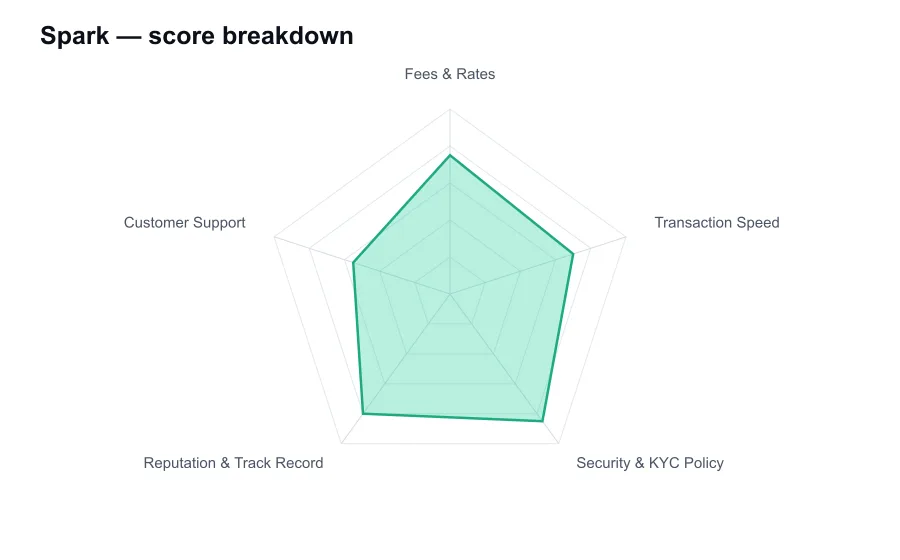
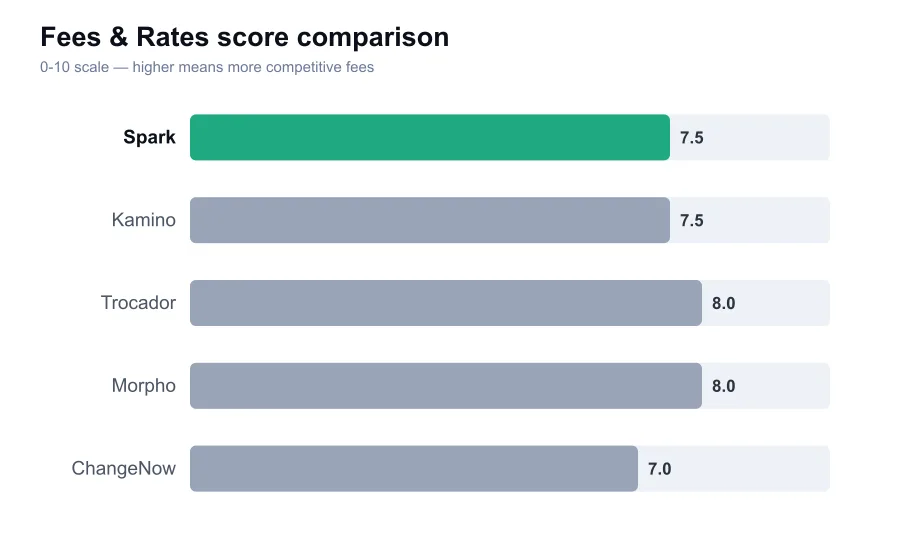
Fees are not simple in the way they are at a retail exchange. Spark does not generally charge a neat, universal trading percentage. Users instead face protocol interest rates, liquidation penalties where applicable, Ethereum gas costs, and potentially swap execution costs from whatever route or interface they choose. This is transparent onchain, but it is not necessarily cheap. Small transactions on Ethereum can become uneconomic quickly when gas rises.
Borrowing costs also move. Anyone quoting a single Spark rate without a timestamp is being careless. Supply and borrow annual percentage rates change with utilization and governance parameters, while DAI's savings rate can change with MakerDAO decisions. The upside is that the rate mechanics are visible rather than buried in a platform's terms. The downside is that users need to watch positions rather than assume an advertised yield will stay put.
Speed is another area where Spark behaves like DeFi, not an instant exchange. Once a transaction is broadcast, settlement follows the underlying network. On Ethereum mainnet, a straightforward deposit or borrow may be confirmed within minutes, though congestion and chosen gas settings affect that. The transaction itself is fast enough. The practical delay is often wallet setup, bridge use, approving token contracts, and waiting for funds to arrive on the right chain.
Spark can feel efficient for an experienced user because its interface is relatively focused. Depositing collateral, borrowing DAI, and repaying debt are not buried beneath a casino of token promotions. But there is no escaping the operational complexity. An approval signed in a wallet is not a harmless click, and collateral ratios are not decoration. If the value of collateral falls far enough, a position can be liquidated by the protocol.
Security is where Spark earns meaningful credit, although not blind trust. It is built in the orbit of MakerDAO, one of DeFi's oldest and most battle tested ecosystems, and the contracts and governance processes are public. That is a better foundation than an anonymous swap site with no visible technical history. Still, smart contract risk is real, oracle risk exists, and governance decisions can alter the economic environment around the product.
Spark does not impose conventional customer identification for ordinary wallet interaction. There is no standard account registration or passport check simply to connect a self custodial wallet. That privacy is attractive to DeFi users, but it should not be confused with immunity from compliance concerns. Front ends, fiat ramps, bridges, and centralized services used alongside Spark can have their own screening rules, and blockchain activity remains traceable.
The reputation picture is strong by DeFi standards, largely because Spark is associated with the established Maker and Sky ecosystem rather than a short lived yield project. Its governance roots are public, its economic model is not secret, and its core purpose is understandable. That said, Spark does not yet have the broad retail track record of Coinbase or Kraken. It is respected among DeFi participants, but it is not a household name.
Customer support is the weak point for anyone accustomed to a staffed exchange desk. Spark relies heavily on documentation, governance forums, community channels, and the support structure around its connected ecosystem. That is normal for decentralized protocols, but it can feel unforgiving during a stressful situation. There is no support agent who can reverse a wallet transaction, recover a bad address, or close a position after liquidation has already occurred.
The documentation is generally useful, especially for users who will actually read it before borrowing. It explains collateral mechanics and the risks of leverage better than many flashy lending products do. Yet the learning burden remains on the user. A newcomer who wants somebody to explain each signature, gas fee, and health factor in real time will be better served by a regulated platform with direct account support.
Spark is particularly good for users who already understand Ethereum and want productive use for DAI or transparent access to stablecoin borrowing. It can also make sense for long term ETH holders who want liquidity without selling, provided they use conservative collateral ratios. It is a poor fit for people chasing obscure tokens, making tiny trades, or expecting an easy mobile banking experience. The product rewards discipline and punishes casual leverage.
My view is that Spark is a serious protocol with a narrow but credible purpose. Its fees can be excellent for larger DeFi positions, though gas and variable rates make it unsuitable for every wallet size. The security model is substantially more convincing than that of many anonymous instant swap brands, but self custody means the user carries more responsibility. For stablecoin focused DeFi users, Spark deserves attention. For everyone else, it may be more machinery than they need.