ChangeNOW is a noncustodial crypto exchange service built for quick wallet-to-wallet conversions. Since launching in 2017, it has grown beyond a basic swap page into a broader product family that includes a mobile app, API access, exchange widgets, fiat on-ramp connections, and the NOW token ecosystem. In the instant-exchange category, it is one of the more visible operators, alongside Changelly and ChangeHero. Its central promise is simple: no exchange account, no deposited balance, and a large range of crypto routes.
The basic experience is clean. Pick the asset you are sending, pick the asset you want, enter the destination address, and transfer the quoted amount. ChangeNOW handles the conversion through its liquidity network and forwards the output. That is exactly the kind of task it handles well. It is particularly useful for a user moving assets between personal wallets, changing a coin before sending it to another platform, or converting a token that is not conveniently available on a preferred centralized exchange. It is not a replacement for a liquid order-book venue.
Asset and network coverage are among ChangeNOW's stronger points. It lists hundreds of coins and tokens across many ecosystems, and its route selection can be more flexible than a basic wallet swap. Major pairs involving BTC, ETH, SOL, USDT, USDC, XRP, LTC, and popular layer-two assets are the sensible use cases. The presence of a smaller token on the interface does not guarantee great liquidity or an attractive quote. Users should be especially cautious with thin assets, recently migrated tokens, and stablecoins whose available network may not match the receiving wallet.
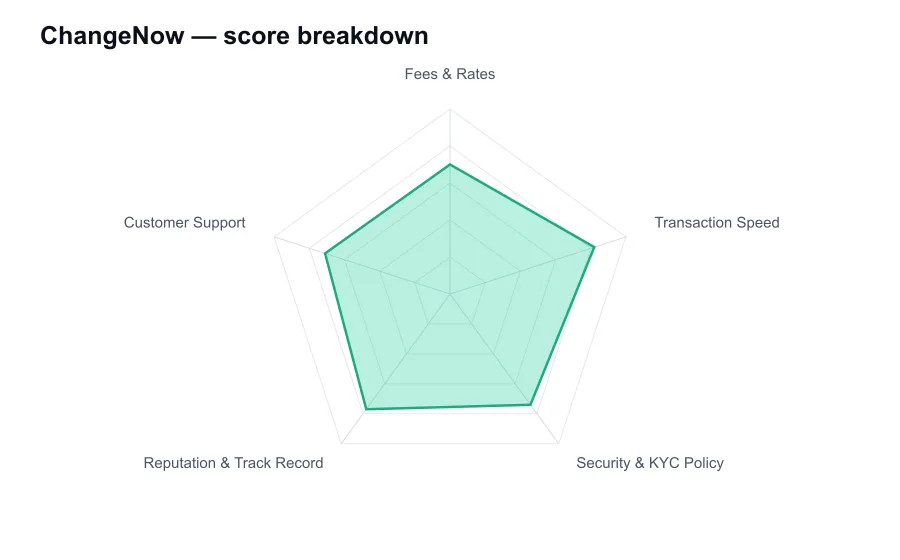
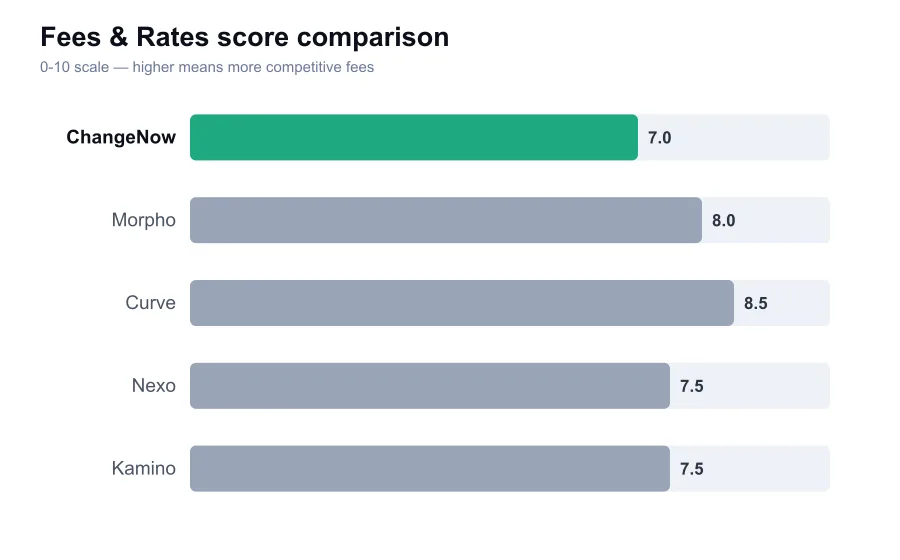
ChangeNOW advertises that it has no hidden fees, which is directionally helpful but requires interpretation. It usually presents an all-in amount rather than charging a clearly separated trading commission after the fact. The cost is therefore embedded in the exchange quote and can reflect market spread, liquidity-provider pricing, and network expenses. Published materials have often referred to a service fee around 0.5%, but the practical price varies by route. The right way to assess cost is to compare exactly how much crypto will land in your destination wallet, not to focus on a single percentage.
That pricing model is convenient, but it is rarely the cheapest option for a large liquid trade. A user who already has access to Kraken, Coinbase Advanced, Binance, or another deep spot market can frequently achieve better execution by trading manually and withdrawing. ChangeNOW's quote may still win once you account for withdrawal fees and time, particularly on awkward cross-chain routes. But it needs to be checked. I like ChangeNOW more for a small or medium conversion where avoiding account friction has value than for a five-figure trade where a modest percentage difference becomes real money.
There are floating-rate and fixed-rate options for supported pairs. Floating rate is often more competitive because it follows the market during processing. It also exposes the user to movement after sending the deposit. Fixed-rate swaps protect the stated receive amount within the conditions shown on the order page, usually including a short deposit deadline and an exact deposit amount. That is a worthwhile option during a volatile session. It is not free protection. Fixed execution normally includes a wider buffer, so compare both routes instead of assuming the fixed quote is automatically the smarter deal.
On speed, ChangeNOW is better than its critics sometimes admit. Routine swaps on liquid assets often complete in a few minutes after the initial transaction is confirmed. Fast chains such as Tron, Solana, XRP, or Polygon can make the experience feel close to immediate. Bitcoin, Ethereum, and congested token networks are another story. Their confirmation times and gas dynamics set the pace. ChangeNOW cannot make a low-fee Bitcoin transaction confirm instantly. A realistic user expects a range, not a stopwatch promise, and should allow more time around major market events.
The processing flow is usually transparent enough to follow an order's state, which is valuable when funds are in transit. But there is still an unavoidable black box between your deposit being received and the outgoing transaction being broadcast. A liquidity issue, maintenance event, incorrect deposit amount, or compliance screening can interrupt the neat path shown in promotional material. Most users will never see that side of the service. Those who do may discover why instant exchanges should not be used for deadlines with serious consequences. If settlement must happen at a precise time, use infrastructure with stronger execution controls.
ChangeNOW is noncustodial in the useful sense that it does not ask users to maintain a hosted trading balance. The output goes to an external wallet address selected by the customer. That sharply reduces the temptation to leave assets on an exchange account. It does not mean a swap is trustless. Funds are temporarily handled in the course of the exchange, and users depend on ChangeNOW and its partners to execute and deliver. Keep long-term assets in self-custody, use a fresh destination address where appropriate, and double-check the chosen chain before sending anything.
The no-registration proposition also has limits. ChangeNOW generally lets customers make ordinary crypto swaps without creating an account or completing standard KYC. Its AML and risk policies allow it to freeze or review transactions that trigger compliance alerts, and it can seek identity or source-of-funds evidence. That is a material risk for users who interpret a no-KYC service as an anonymity guarantee. It is not one. The responsible expectation is low-friction onboarding for normal activity, with a possibility of intervention if transaction analysis produces a concern.
I do not consider that policy a fatal flaw. A service openly ignoring AML risk would carry different dangers. What matters is how a provider handles an exception after taking custody of the deposit. ChangeNOW has drawn both praise and criticism here. Many swaps complete without interaction, while a minority of users report delayed transactions and difficult document requests. The existence of complaints is not unusual in crypto, especially where stolen-fund screening is involved. The recurring pattern does mean that users should avoid sending assets connected to questionable counterparties and should preserve transaction records.
ChangeNOW's reputation is fairly solid for an instant exchanger. It has survived more than one market cycle, expanded its products, and achieved visibility through its NOW ecosystem and business integrations. That makes it more credible than a new site with a flashy rate widget and no history. It remains less transparent and less institutionally accountable than a leading regulated centralized exchange. There is no reason to treat it as a place for life savings or a corporate treasury. For a targeted conversion, its track record is good enough to merit consideration, not blind trust.
Customer support is available 24/7 through live chat and email, and ChangeNOW's public support presence is one of the better parts of the offering. Straightforward issues, such as locating an order or clarifying network requirements, can be handled quickly. The difficult cases matter more, and feedback there is mixed. Some users report active help through a delayed swap, while others say resolution takes too long or the answers become formulaic during AML reviews. That is a meaningful weakness, because a delayed crypto transaction feels much more serious than a delayed retail order.
I would recommend ChangeNOW to experienced self-custody users who understand networks, compare rates, and need a convenient conversion rather than a trading venue. It is one of the stronger choices in its category thanks to coverage, speed on normal routes, and a polished swap flow. But it should be used with discipline. Start with a test transaction for an unfamiliar route, choose fixed rate if certainty matters, and never send an amount that would create a crisis if screening delayed it. ChangeNOW earns a place in the toolkit, but it should not become the toolkit.