Morpho is not a conventional cryptocurrency exchange, and judging it as one would miss what makes it important. It is a decentralized lending protocol and ecosystem built around on-chain borrowing, lending, and vault strategies. Users do not arrive to swap one token for another in the manner of Coinbase or Kraken. They arrive to supply assets, earn yield, borrow against collateral, or allocate capital through permissionless smart contracts.
That distinction also explains why Morpho has become one of the more serious names in decentralized finance. It is aimed at users who understand that yield is not a savings-account promise. The return comes from borrowers, lending markets, incentives, and risk-taking. Morpho makes those relationships more configurable than older pooled lending models, which can be powerful, but it places more responsibility on the depositor.
Morpho's current design centers on Morpho Blue, a permissionless lending primitive in which each market is defined by a loan asset, collateral asset, oracle, interest-rate model, and liquidation loan-to-value setting. The protocol itself is deliberately lean. Curated vaults, often called MetaMorpho vaults, give users a more managed route by allocating deposited assets across selected markets according to a curator's parameters.
For sophisticated DeFi users, that architecture is a major strength. It allows a market to be built around specific risk assumptions instead of forcing every depositor into a broad shared pool. For newcomers, it can be confusing. Two vaults holding the same asset can have very different risk profiles because they lend to different collateral markets, use different oracles, and are managed under different curator mandates.
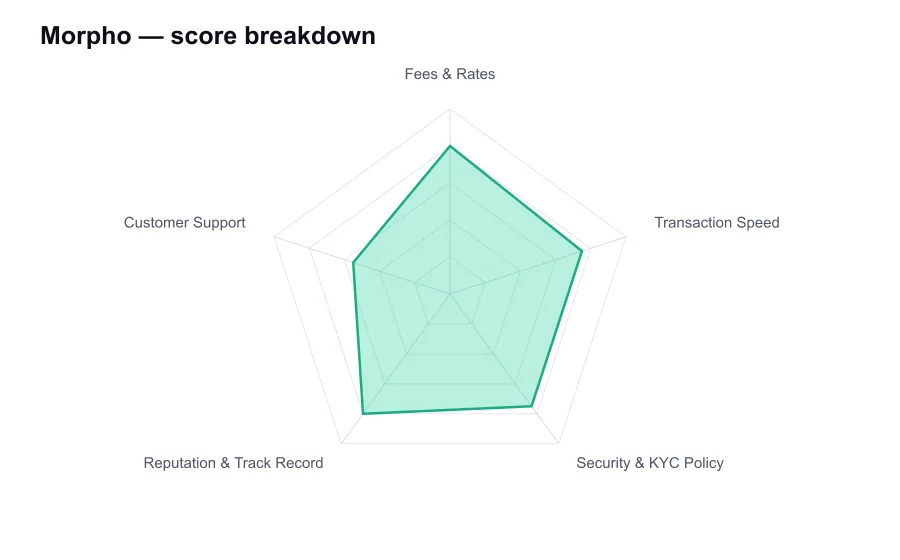
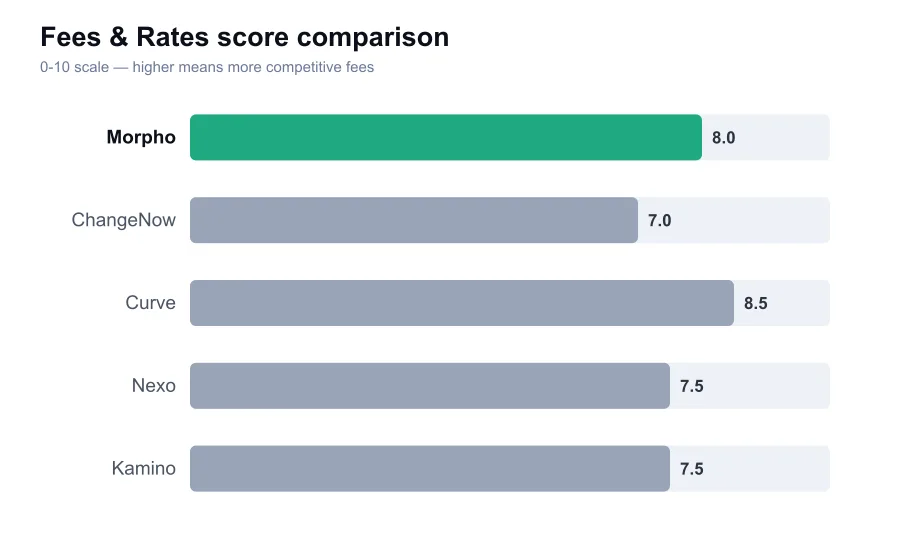
Fees are unusually nuanced because Morpho is not primarily charging retail trading commissions. A direct Morpho Blue market can have no protocol fee at the core layer, while vault curators may set performance or management-related fees within the vault structure. Borrowing costs are driven by the market's interest-rate model and utilization. Network gas also matters, especially on Ethereum mainnet, where an otherwise sensible action can become uneconomic for a small position.
That can make Morpho cheaper and more transparent than centralized lending products in one sense, because the relevant smart-contract parameters and transaction data are visible on-chain. It can also make it harder to understand. A user has to examine the annual percentage rate, utilization, vault fee settings, withdrawal conditions, and gas cost rather than looking at one simple fee line. There is no honest way to call it universally cheap without specifying the market and chain.
The speed of the protocol is fundamentally blockchain speed. On Ethereum, deposits, withdrawals, borrowing, and repayments settle after the transaction is included and confirmed. On supported lower-cost networks, the experience can be faster and less expensive. There is no human trading desk in the middle of a normal contract interaction. That is excellent for 24-hour accessibility, but it means users must manage gas, wallet approvals, and transaction settings themselves.
Withdrawals deserve special attention. A depositor's ability to withdraw from a lending market depends on available liquidity. If most supplied assets are borrowed, an instant full withdrawal may not be possible until borrowers repay, collateral is liquidated, or the vault reallocates funds. This is not a hidden defect. It is a core property of lending. Still, users accustomed to an exchange balance often discover it only after they need cash quickly.
Security is one of Morpho's stronger areas relative to newer DeFi projects. The protocol has been developed in the open, subjected to audits, and used at meaningful scale within the DeFi ecosystem. Its minimalist core is intentional, reducing some complexity compared with sprawling systems. Yet smart-contract risk never disappears, and a protocol audit is not a guarantee against an exploit, economic attack, integration failure, or oracle problem.
The larger risk can sit above the core protocol. A MetaMorpho vault has a curator, and the curator's market selection matters. The oracle design matters. The collateral can gap down. The liquidation settings can prove insufficient during a violent move. A vault can also be exposed to a market that looks conservative in normal conditions but becomes stressed if liquidity vanishes. Depositors should read the vault's mandate and allocations instead of blindly chasing the highest displayed yield.
Morpho is permissionless at the protocol level. There is generally no built-in retail KYC gate for ordinary on-chain wallet interactions. That does not mean the whole path around it is anonymous or regulation-free. Fiat ramps, centralized exchanges, front-end providers, stablecoin issuers, wallet analytics, and local law can all introduce identity or compliance consequences. Users should not mistake pseudonymous wallet access for legal immunity.
Its reputation is materially better than that of a typical anonymous DeFi launch. Morpho has identifiable ecosystem participants, substantial integration interest, public technical documentation, and a record of being discussed seriously by DeFi researchers and professional users. It still does not have the consumer protections of a regulated bank or brokerage. If a wallet is compromised, a transaction is signed in error, or a liquidation occurs, there is no support desk that can reverse the chain.
Support is therefore a mixed score. Documentation, community channels, and protocol information are useful for a technical user. They are not a substitute for personalized account recovery or a telephone line during a crisis. Morpho users need to be comfortable using a wallet, checking contract addresses, reading transaction prompts, and distinguishing official interfaces from malicious lookalikes. The protocol rewards competence and punishes carelessness.
Morpho is one of the better designed options for users who deliberately want on-chain lending exposure, but it is not a casual exchange and should never be marketed as one. Its cost structure can be excellent, its composability is strong, and its security posture is more credible than many DeFi peers. The price of those advantages is responsibility. Pick markets and vaults carefully, diversify, and assume that high yield is compensation for a risk you need to identify yourself.