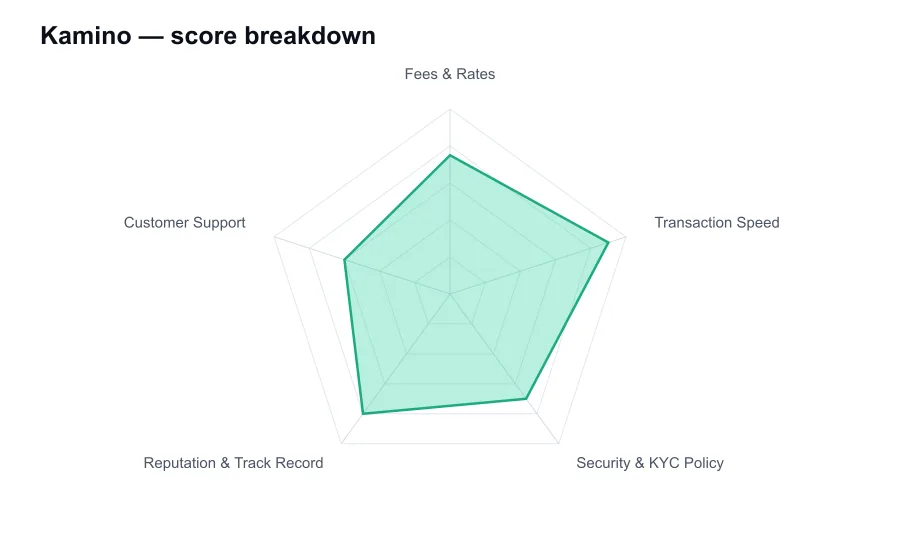
Kamino is not a conventional centralized crypto exchange, and judging it as one would miss both its strengths and its risks. It is a Solana-based decentralized finance protocol that combines lending, borrowing, liquidity vaults, leveraged strategies, and swap-related functionality. Users connect a self-custody wallet rather than opening a bank-style trading account. That gives experienced Solana users more direct control, but it also removes the safety net many exchange customers take for granted.
The protocol has become one of the better-known DeFi applications in the Solana ecosystem because it turns several complicated actions into a more coherent interface. A user can supply assets to earn yield, borrow against collateral, use Multiply for leveraged exposure, or enter automated liquidity strategies. The design is more approachable than manually stitching together lending and liquidity positions. It is still DeFi, though. A cleaner interface doesn't turn leverage, liquidation, or smart-contract risk into beginner-friendly activities.
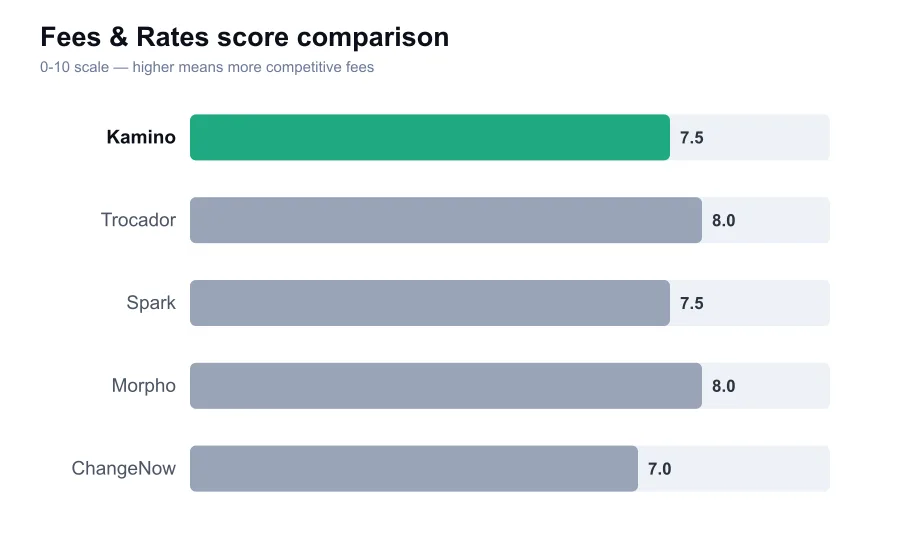
Fees depend on what a user is actually doing. A simple Solana swap carries network costs and may include route or protocol costs embedded in the transaction. Lending rates are dynamic, set by supply and borrowing demand, not a flat account fee. Liquidity vaults may charge management or performance-related fees depending on the vault, while Multiply positions have borrowing costs, swap costs, and potentially significant price impact. Anyone seeking a single Kamino fee percentage is asking the wrong question.
That complexity can be expensive if ignored. A leveraged SOL position might look profitable because the dashboard shows a high yield, while the borrower is quietly paying variable interest and accumulating liquidation risk. On volatile days, rebalancing and swap slippage can matter more than a tiny listed protocol fee. Kamino gives informed users useful tools, but it does not make financing costs disappear. Read the position details before approving a transaction, every time.
For basic Solana activity, speed is excellent. Transactions commonly confirm in seconds, and interactions feel dramatically faster than Ethereum mainnet during busy periods. That is part of Kamino's appeal. Depositing collateral, repaying a loan, or adjusting a strategy can happen quickly enough to manage a live position. Fast chains are not infallible, however. Congestion, RPC problems, validator issues, and wallet failures can still make a crucial transaction fail at exactly the wrong moment.
Speed has a darker side for leveraged users. If collateral approaches its liquidation threshold, quick settlement helps liquidators just as much as it helps the borrower. There is no support agent who can pause the market while you find more USDC. Solana's low transaction fees make active risk management feasible, but users must watch health factors and understand the liquidation price. A borrowed position should never be treated like a passive savings account.
Kamino's security model starts with self-custody. The protocol doesn't take the same kind of account custody that a centralized exchange does, and it does not normally require users to provide identity documents at the protocol layer. A wallet signature is the entry point. That is attractive to users who value permissionless access, but it shifts responsibility toward the individual. Lose a seed phrase, sign a malicious transaction, or send assets to a scam site, and there may be nobody able to reverse it.
Smart-contract risk remains real even for leading DeFi projects. Kamino's code, integrations, oracle dependencies, and collateral assets create a broader attack surface than a simple wallet transfer. Audits and bug bounties improve the picture, but they are not guarantees. A bug, oracle malfunction, stablecoin depeg, or exploit in an interconnected protocol can produce losses faster than a user can react. DeFi veterans understand this, but newcomers often underestimate it.
The protocol's KYC policy is a meaningful differentiator. Kamino itself is generally accessible through a compatible Solana wallet without centralized identity verification. That does not mean users are beyond compliance obligations. Their fiat on-ramp, wallet provider, centralized exchange, or local tax authority may still require information. It also doesn't make borrowing anonymous in the practical sense, because public blockchain activity is traceable and wallet behavior can be analyzed.
Kamino's reputation is strong within Solana DeFi, though it should not be confused with the long corporate history of a regulated exchange. It has attracted substantial usage and is commonly discussed alongside major Solana lending and liquidity protocols. The KAMINO token and governance ecosystem have increased its visibility. That standing gives the protocol more credibility than an anonymous yield farm, but popularity is not a substitute for risk management.
The interface deserves credit. It presents complex concepts such as loan-to-value ratios, borrowing capacity, projected yield, and automated liquidity in a way that many users can follow. Documentation and dashboards are substantially better than the average experimental DeFi app. Still, a user needs to understand the difference between APR and APY, collateral value and borrow value, and a projected return versus a guaranteed return. Kamino can show the numbers. It cannot make the decision for you.
Support is community-led rather than account-led. Documentation, Discord, social channels, and community moderators can help with navigation and common transaction questions. They cannot recover a wrong transfer, restore a compromised wallet, or make a bad trade whole. That is not a flaw unique to Kamino. It is an essential difference between protocols and customer-service businesses, and users should set their expectations accordingly.
Kamino is best used by people already comfortable with Phantom or another Solana wallet, token approvals, transaction simulation, and self-custody security. Start with a small deposit and a simple supply position before considering Multiply or concentrated liquidity. Check the health factor after price moves, keep spare assets available if borrowing, and bookmark the real domain. Scam interfaces that mimic popular DeFi products are a persistent threat.
My view is that Kamino is one of the more capable places to use DeFi on Solana, but capability should not be mistaken for safety. It offers fast settlement, flexible strategies, and no protocol-level KYC, with a much more polished experience than many competitors. The price is direct exposure to smart contracts, volatile collateral, and user error. For an informed Solana user, that trade can be worthwhile. For a first-time crypto buyer, it is the wrong first stop.