Curve is not a conventional crypto exchange in the Coinbase or Kraken sense. It is a decentralized liquidity protocol built primarily for swaps between assets that should trade close to the same price, such as USDC, USDT, DAI, FRAX, wrapped Bitcoin variants, and liquid staking tokens. That focus has made it one of DeFi's most important pieces of market infrastructure. If you want to turn ETH into a new meme coin, Curve probably isn't your first stop. If you need to move a large stablecoin position without getting punished by slippage, it can still be one of the best tools available.
The core appeal is Curve's automated market maker design. Traditional decentralized exchanges commonly use a simple constant product formula, which gets expensive as a trade moves through the pool. Curve's StableSwap model is tuned for assets with similar expected values. In the right pool, that means unusually deep liquidity and very low price impact. A swap between major stablecoins can often look far better on Curve than on a general purpose DEX, especially during calm market conditions.
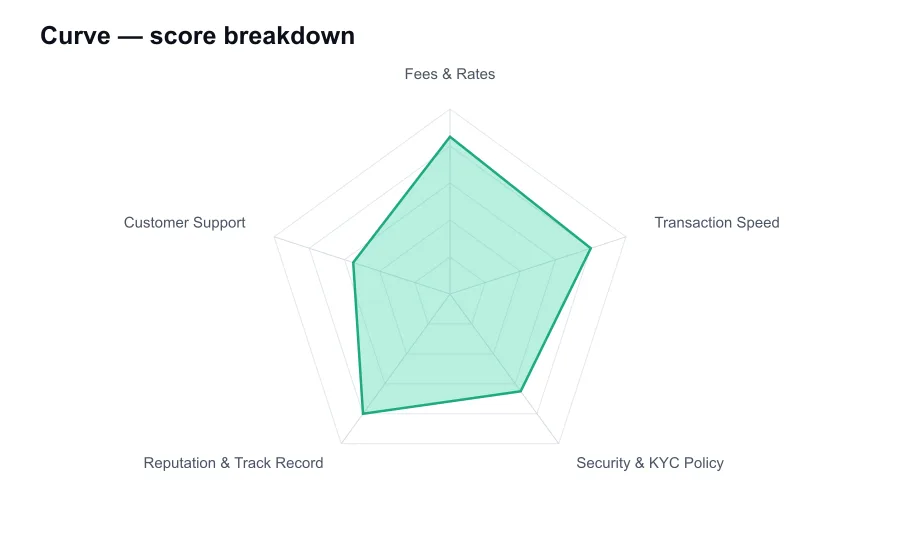
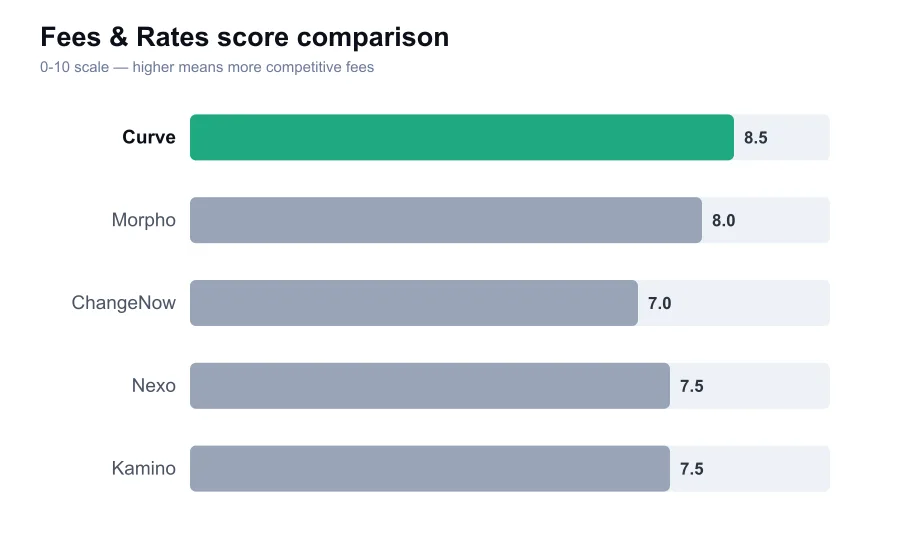
Fees are generally a strength, though users should stop treating the headline number as the whole price. Many Curve pools have historically charged a 0.04% trading fee, with most of that going to liquidity providers and a portion directed to veCRV holders. Some newer pools use dynamic fees that can rise when an asset becomes imbalanced or market volatility increases. That makes sense for pool protection, but it means the cost is not always as simple as a fixed exchange commission.
The real expense can be slippage, gas, and the quality of the specific pool you choose. Curve's best known pools are often deep, but the protocol also has many smaller pools tied to niche stablecoins or derivative tokens. A 0.04% fee is meaningless if you swap into a thin or stressed pool and lose several percentage points to execution. The interface shows estimated output, but a careful user still checks the route, price impact, and whether the asset has drifted from its intended peg.
For users swapping stable assets on Ethereum mainnet, gas can blunt Curve's fee advantage. A cheap trade fee does not help much if the network charges $20 or more to approve and execute a transaction. Curve is available across several networks, including Ethereum layer 2 ecosystems and sidechains, where transaction costs can be much lower. On Arbitrum, Optimism, Base, Polygon, and similar networks, the protocol makes considerably more sense for ordinary sized trades.
Speed is governed by the blockchain, not a Curve support desk or internal matching engine. Once a transaction is confirmed, settlement is final at the smart contract level. That is appealing because there is no withdrawal queue and no exchange operator holding your funds while it processes a request. On a fast layer 2 network, the practical experience can feel nearly immediate. On Ethereum during congestion, it can feel slow and expensive, even if Curve itself is functioning perfectly.
Curve's routing can also save time and money, but it is not magical. The protocol may route a trade through several pools to find better execution. This is useful for experienced DeFi users who understand the transaction they are signing. For beginners, multi-hop routing can be harder to inspect. You need to know which token contract you are receiving, what network you are on, and whether the quoted rate remains acceptable if the transaction takes longer than expected.
There is no standard account opening process and no routine KYC for using Curve directly from a self-custody wallet. That is one of the protocol's defining traits. You connect a wallet such as MetaMask, Rabby, Ledger-backed WalletConnect, or another supported wallet, then interact with smart contracts. Curve does not custody the private keys. This gives users meaningful control, but it also transfers the ordinary risks of wallet security, malicious approvals, phishing pages, and wrong-address transactions squarely onto the user.
The smart contract risk is real, not theoretical. Curve has been audited many times and has operated through several market cycles, but it suffered a major exploit in July 2023 after a vulnerability in certain Vyper compiler versions affected several pools. The incident resulted in major losses before recovery efforts and white hat interventions reduced the damage. That episode matters because it punctures the lazy claim that an established DeFi protocol is automatically safe. Curve's design is battle tested, but DeFi remains software with attack surfaces.
Curve has since continued operating, updating affected infrastructure and retaining a major role in stablecoin and liquid staking liquidity. Its reputation among DeFi professionals is serious rather than glamorous. Traders, market makers, and protocol treasuries use it because the liquidity can be excellent, not because the interface is especially friendly. The CRV token, vote escrow model, and so called Curve Wars have also made it central to DeFi incentive politics. That prominence is an asset, though it brings complexity and governance risk.
The veCRV system rewards users who lock CRV for voting power and fee related benefits. For sophisticated liquidity providers and protocols seeking gauge influence, this can be strategically valuable. For a casual swapper, it is mostly background noise. I would not buy or lock CRV merely because a dashboard promises boosted yields. Locking periods can be long, token incentives can change, and apparent yield can hide exposure to CRV price volatility or an unstable pool asset.
Customer support is where Curve feels most unlike a mainstream exchange. There is documentation, a Discord community, social channels, governance forums, and an active developer ecosystem. Those resources can be useful, particularly if you know how to ask a technical question. They are not the same as having a ticket number, a phone line, or a staff member who can reverse a mistaken transfer. No one at Curve can recover a wallet transaction that you signed incorrectly.
The interface has improved over time, but it still expects a degree of DeFi literacy. New users should verify the official domain, inspect token symbols and contract addresses, use a hardware wallet for meaningful balances, and revoke stale approvals periodically. They should also understand that stablecoins are not identical cash substitutes. USDC, USDT, DAI, crvUSD, and derivative tokens each carry different issuer, collateral, liquidity, and depegging risks.
Curve remains excellent at the narrow job it was designed to do. It is not the easiest place to start in crypto, and it is a poor fit for someone seeking fiat deposits, card purchases, broad asset discovery, or human-led account recovery. But for stablecoin swaps, liquid staking token exchanges, and onchain liquidity strategies, its combination of deep pools and low trading friction is still hard to dismiss.
My view is that Curve deserves respect, not blind trust. Its fees can be outstanding, its settlement is transparent, and its position in DeFi is earned. The 2023 exploit means security-minded users should never regard it as a risk-free parking place for capital. Use it with a self-custody mindset, stick to established pools unless you understand the asset risk, and treat the protocol as specialized financial infrastructure rather than a friendly retail exchange.