Exolix is a noncustodial instant crypto exchange built for people who want to swap assets without opening a trading account or learning an order book. It occupies the same broad territory as ChangeNOW, SimpleSwap, LetsExchange and Godex, but has worked harder than many of those brands to present itself as a serious rate comparison and execution service rather than a novelty swap widget. The product is simple: choose a pair, send coins, and receive the destination asset in another wallet.
That simplicity is its appeal. There is no portfolio screen begging users to trade more, no leverage casino, and no need to park funds on an exchange before making a conversion. For a user moving BTC into USDT, swapping one privacy coin into a major asset, or consolidating smaller holdings, Exolix can remove several tedious steps. It is not a replacement for a proper exchange if you regularly use limit orders, but it is a useful bridge between wallets.
The platform offers both fixed and floating exchange rates. That distinction matters more than the marketing copy sometimes makes clear. A floating quote follows the market during processing, so the final payout can be better or worse than the initial estimate. A fixed quote is intended to lock the displayed rate for a stated period, usually long enough to send the deposit and obtain the needed blockchain confirmations. In a fast market, paying for certainty is often sensible.
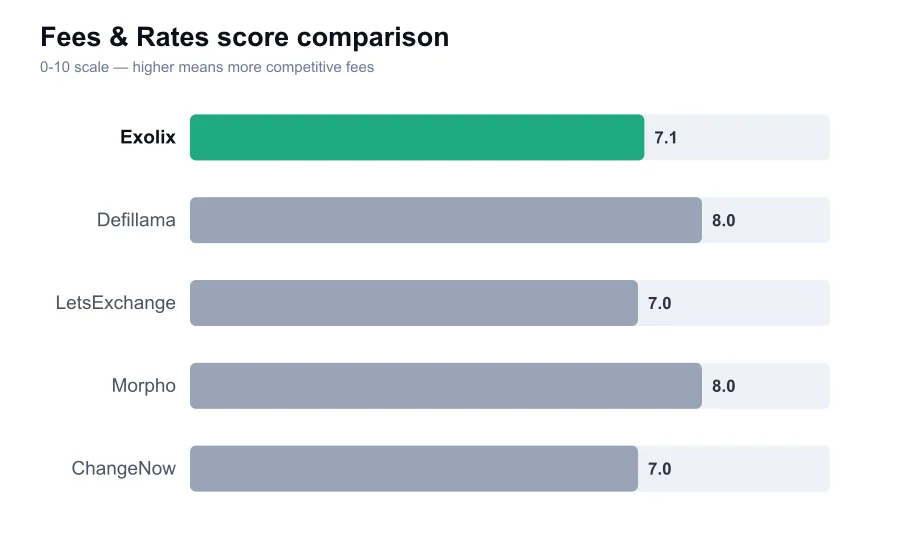
Exolix does not publish one universal percentage fee in the way a spot exchange does. Its compensation is largely embedded in the quote, alongside liquidity-provider spread and network costs. That makes the service convenient but not especially transparent. You can see what you will send and what you expect to receive, yet you cannot always separate Exolix's margin from miner fees or the partner exchange's pricing. Anybody claiming it is automatically cheap is skipping the comparison step.
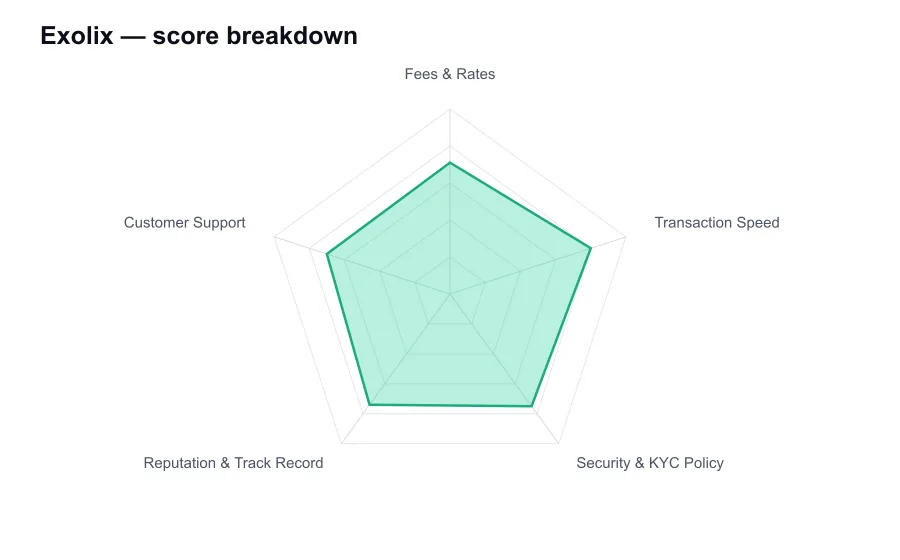
For common liquid pairs, my spot checks of services in this category tend to put Exolix in the reasonable rather than bargain-basement tier. It can be competitive on a fixed BTC, ETH, USDT or USDC conversion, particularly where its liquidity routing finds a favorable venue. On other routes, especially smaller altcoins and low-liquidity networks, the difference versus Binance, Kraken or even another instant swap provider can be meaningful. Get quotes from at least two providers before sending a large amount.
Minimums are another small but important cost. A transaction may look profitable until the required network fee and the minimum payout consume too much of a modest swap. Exolix displays limits before the deposit stage, which is better than discovering them after funds are in flight. Still, it is a service I would use for purposeful conversions, not repeated tiny swaps. Frequent small trades compound spread costs rapidly.
Speed is generally good for the type of service it is. Once Exolix receives enough confirmations, a routine exchange in well-supported assets can settle in minutes. Litecoin, Tron-based USDT and other fast networks are usually less stressful than Bitcoin during periods of congestion. The practical timing is determined by three things, your sending wallet's fee, the source chain's confirmation rules, and liquidity execution on the destination side.
Bitcoin swaps deserve patience. A low-fee BTC deposit can sit unconfirmed for a long time, and Exolix cannot responsibly release an outgoing asset before its risk controls see sufficient confirmations. Ethereum can create a similar delay when gas spikes or a token transfer gets stuck in the mempool. The site may advertise swift exchanges, but no instant exchanger can make a slow underlying blockchain instant. It is fairer to judge whether it communicates the status well than to expect magic.
On security, the noncustodial model is a real strength. Exolix does not require users to maintain a balance in a hosted account, so there is less exposure to the familiar exchange failure where a customer loses access to an entire portfolio. The moment you complete a swap, however, you are still trusting the operator and its liquidity counterpart to send the promised payout. Noncustodial is safer than leaving money on a small exchange, not the same as trustless.
Exolix markets exchanges without mandatory account registration and usually allows routine swaps without KYC. That privacy is valuable for users who do not want to hand identity documents to every website they touch. It is not an unconditional promise of anonymity. Its terms allow compliance checks, and a transaction may be paused if automated monitoring flags sanctions exposure, stolen-funds indicators, unusual patterns, or other risk triggers. Funds can then remain pending while the user is asked for information.
That policy is common in this industry, but it deserves plain language. A no-registration service with discretionary AML controls can be convenient until it is not. Do not use Exolix for funds whose provenance you cannot explain, and do not send a life-changing amount on your first transaction. Start with a small test, save the order ID and transaction hashes, and confirm that the receiving address is correct before approving anything.
Exolix has been around long enough to be better known than a freshly launched swap site, and its public footprint is stronger than many anonymous widgets. It has API and affiliate offerings, a broad asset list, and a recognizable position in the instant exchange market. Still, it does not have the regulatory depth, financial disclosures, or long institutional record of Coinbase, Kraken or Bitstamp. Its reputation is adequate for transactional use, not a reason to suspend normal caution.
Support is available around the clock through chat and email channels, and routine status questions are often handled quickly. The more difficult cases are delayed deposits, partner-liquidity failures, and compliance reviews. Those are the moments that reveal whether any instant exchange is good, because a canned response does nothing for a user watching an expensive transaction sit pending. Exolix's support reputation is decent, but it is not so exceptional that I would call it a premium service advantage.
I like Exolix for a one-off or occasional cross-chain conversion where convenience and a visible quote matter more than the absolute lowest fee. The fixed-rate option is particularly useful for nervous users moving volatile assets. I would not use it as my main trading venue, nor would I send an unusually large first transfer without testing the route. It is a credible instant exchanger, but the smart way to use it is deliberately, with a quote comparison and realistic expectations about compliance holds.