DefiLlama occupies an unusual place in the crypto market because it is primarily a data platform, not an exchange in the normal sense. Its reputation was built on tracking total value locked, protocol revenue, chains, stablecoins, bridges, yields, unlocks, and governance data across decentralized finance. The site later added a swap interface, but that product should be understood as a routing and aggregation layer sitting on top of external liquidity sources. Calling DefiLlama a full exchange misses what makes it useful.
The main site is one of the most practical research tools in DeFi. It lets users compare chains, inspect protocol TVL trends, look at stablecoin supply, identify yield opportunities, and see whether a narrative has actual capital behind it. Much of this information is available without creating an account, connecting a wallet, or handing over personal data. That open access has helped make it a daily reference point for traders, analysts, journalists, and protocol teams.
DefiLlama Swap is deliberately lean. It typically queries decentralized exchange and aggregator liquidity, then presents available routes for a wallet-based swap. The point is convenience and route comparison, not a proprietary order book or custody service. Your funds do not sit in a DefiLlama account because there is no conventional customer account to fund. You connect a wallet and approve a transaction that executes on the relevant blockchain through the underlying route.
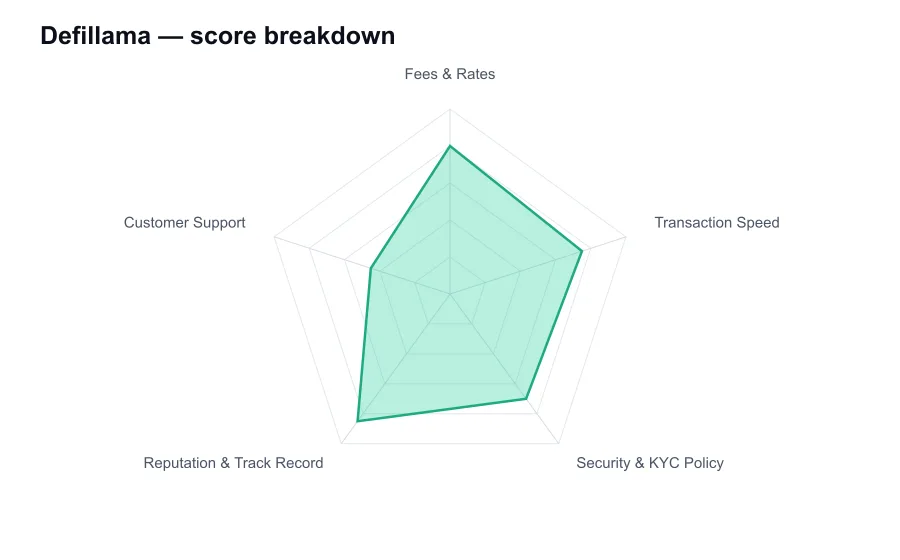
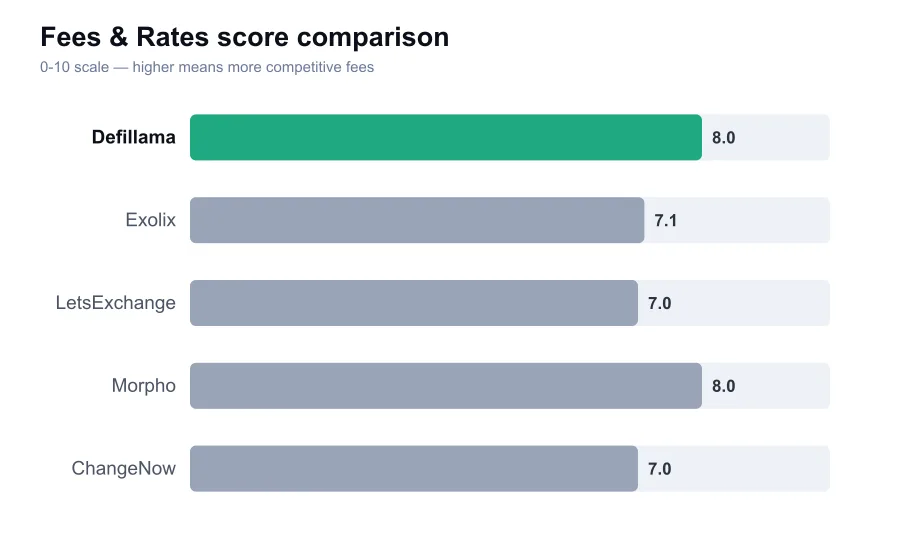
That model can make fees attractive. DefiLlama has generally positioned its swap tool as charging no separate interface fee, with the user paying the underlying protocol costs, liquidity provider fees, price impact, and network gas. In a clean, liquid route, that can be cheaper than a retail exchange spread or a swap frontend that adds a visible service charge. It is a genuine advantage for users who already understand onchain execution.
Still, zero interface fee does not mean zero cost. The underlying route may include several liquidity pools, each with its own fee. A trade on Ethereum may also carry substantial gas, while a token with shallow liquidity can suffer price impact that dwarfs any saved platform fee. DefiLlama's quote is useful, but a quote is only as good as the liquidity and block conditions behind it. Users should compare received amount, route complexity, and slippage tolerance before signing.
For ordinary research, speed is excellent because the product is built around fast public data access. Dashboards load quickly, filters are practical, and the pages rarely bury the important number under a marketing funnel. Data freshness varies by chain and category, as it must in a fragmented onchain environment, but the platform's coverage is impressively broad. It is far more useful than trying to collect dozens of explorer pages and protocol dashboards manually.
Swap speed is a different matter. DefiLlama cannot make a blockchain settle faster than that chain permits. On a fast network, a routed swap can confirm within seconds or a few minutes. On Ethereum mainnet, network congestion and chosen gas settings determine the wait. Complex routes may also be more exposed to quote changes before confirmation. The right way to judge DefiLlama Swap is not against instant internal transfers at Binance, but against other non-custodial aggregation interfaces.
There is no standard KYC requirement to browse DefiLlama or use its wallet-based tools. That privacy-friendly posture is valuable, particularly for users who want public data without turning every research session into an account onboarding exercise. It also means there is no centralized account security layer protecting poor wallet hygiene. DefiLlama cannot reset a seed phrase, freeze a compromised wallet, or reverse an approval you gave to a malicious contract.
The security question is therefore split in two. DefiLlama's site itself needs to be trustworthy as a data source and transaction interface. The swap route, wallet, token contract, blockchain, bridge, and liquidity protocol each add their own risk. A polished front end does not remove token scam risk. Nor does it guarantee that a third party route is safe, liquid, or suitable for a large order. Users should inspect token addresses and avoid treating a route recommendation as investment advice.
DefiLlama has earned considerable goodwill through its broad coverage, relatively clean design, and open data orientation. It has also had public internal governance drama. In 2023, a dispute involving the project's leadership and an attempted token-related direction led contributors to briefly launch an alternative site before the matter was resolved. The episode did not erase DefiLlama's credibility, but it reminded users that even decentralized branded projects can depend heavily on a small group of people.
Its reputation is strongest as an independent analytics destination. It is routinely cited in serious crypto reporting and used by market participants who would never rely on a promotional ranking site. That does not mean every figure should be accepted uncritically. TVL can be inflated by looping, incentives, bridged asset accounting, or protocol-specific methodologies. DefiLlama often provides useful methodology context, but capable analysts still cross-check important conclusions with onchain data and project documentation.
Support is sparse by the standards of a consumer exchange. There are community channels, social accounts, documentation, and ways to raise data issues, but there is no expectation of a dedicated agent handling a failed trade as though this were a bank transfer. That is not a flaw so much as a consequence of the product. A user who needs someone to call after a wrong-network transfer should not be using a self-custody aggregation tool.
The cleanest use case is research first, execution second. Use DefiLlama to understand where liquidity and capital are moving, then use the swap tool only if the quoted route makes sense and you understand the contracts involved. The platform is especially helpful for comparing protocols without creating accounts at dozens of services. It is less compelling for someone who simply wants to buy Bitcoin with a debit card and have a company manage the operational details.
I like DefiLlama because it has remained more useful than flashy. The analytics side is the real product and deserves a high reputation score. The swap tool is a sensible convenience, but it should not be confused with a regulated exchange, a custodian, or a guarantee of best execution. Smart users will get a lot from it. Users looking for hand-holding should look elsewhere.