WmMoney appears to operate in the familiar online exchanger segment, serving users who want to swap cryptocurrencies and payment system balances through a direct order process. It should not be confused with a full scale cryptocurrency exchange. The attraction is speed of setup and the absence of a complex trading interface. You choose a direction, supply the required account or wallet details, and receive a quoted outcome. That can be convenient, but convenience is not the same thing as low risk.
The name itself suggests a connection to the long running WebMoney ecosystem, but users should never assume affiliation based on branding alone. Confirm the exact service identity, legal disclosures, support contacts, and payment instructions on the official order page. Crypto and electronic money exchange scams often succeed because customers follow a familiar looking name or a copied logo. A legitimate provider should be transparent about the service that is actually receiving your funds.
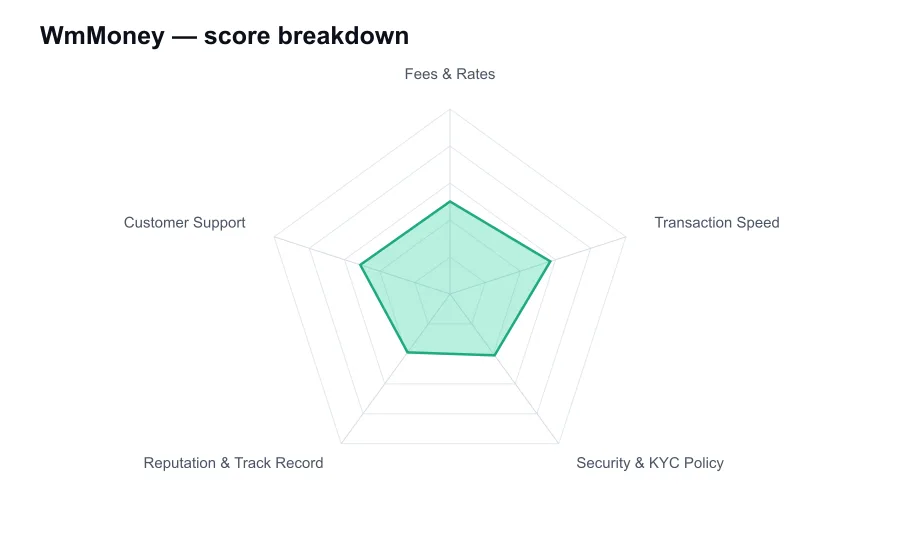
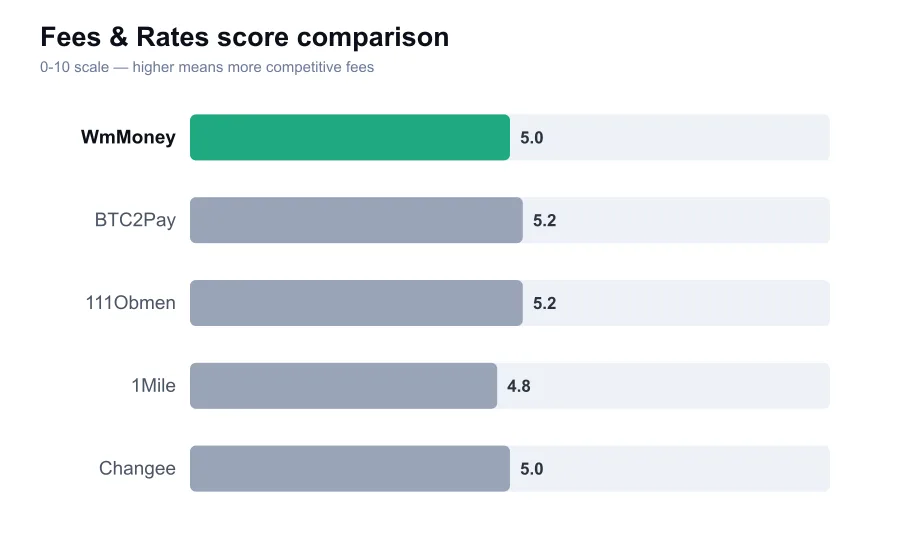
WmMoney's pricing needs to be approached as exchanger pricing. The service's margin is normally reflected in the conversion rate instead of separated into a neat maker and taker fee schedule. That makes the transaction simple to understand in one sense, since you can see the proposed payout, but it obscures the percentage you are paying. For a small conversion, the convenience premium may be acceptable. For a substantial transfer, it can become expensive.
Compare both sides of the transaction, not merely the displayed price. A rate can look attractive while the receiving amount is reduced by a payment system charge, a network fee, a minimum payout rule, or a later recalculation. Check whether fees are included, whether the rate is floating or fixed, and whether a payment must arrive within a short deadline. The order terms matter more than promotional wording about favorable rates.
Reserve availability is another practical issue. A small service may advertise a route but have limited capacity for the payment method you need. If the requested payout is near the published reserve, you should expect a manual conversation or a split transaction. Large orders should never be sent merely because a form accepts the number. Ask support to confirm capacity and the applicable rate in writing before you fund the order.
Speed can be good under ideal conditions. An automated exchange involving a well supported electronic money route or a quickly confirmed stablecoin transfer may take minutes. Bitcoin transactions can take longer because confirmations are external to the service. Bank card and cash related payouts can introduce their own timing and compliance checks. The honest expectation is prompt processing of a routine order, not a universal promise of instant settlement.
The biggest delays tend to happen at the edges of an order. An incorrect account number, a transfer without the required comment, a payment from a third party, or a crypto amount that does not match the invoice can turn a quick exchange into a manual case. That is why a first time user should not rush. Read every field, save the payment receipt, and make sure the sending name matches the order details where that payment method requires it.
Security and verification deserve more attention than they usually receive with services of this size. WmMoney may apply AML checks or request identity documents if it considers a transaction risky. This can happen even if an order flow initially feels lighter than opening an account at a major exchange. Customers should assume that cryptocurrency provenance and payment fraud controls exist, then decide whether they are comfortable supplying documents to this particular provider.
The key concern is the depth of publicly available assurance. Major exchanges publish broad compliance information, security programs, and often evidence of scale. A smaller exchanger generally provides far less material for an outsider to verify. That does not prove bad faith, but it means a careful user should reduce exposure. Do not send funds that you cannot afford to have delayed while a dispute, document request, or refund process is resolved.
WmMoney's reputation is therefore best described as limited rather than established at the level of prominent exchanges. Search results, monitoring site listings, and user comments can offer useful signals, but none should become the sole reason to trust the service. Watch for detailed reports about unresolved orders, rate changes, or requests for unexpected fees. Also distinguish a genuine company response from an anonymous comment thread that could have been written by anyone.
Support is likely the make or break component. A direct exchanger needs staff who can trace a payment, explain a hold, and correct ordinary errors without forcing the customer into a dead end. Before placing a large order, send a precise question about reserve, rate fixation, or verification. If the response is vague, copied, or asks you to continue in an unofficial messenger channel, that is a reason to walk away.
No matter how responsive support appears, basic self protection still applies. Use a unique email password, activate security measures on the payment account you are using, and confirm destination details independently. Never send a seed phrase, private key, card PIN, or one time banking code to anyone claiming to work for WmMoney. Those details are not required to process a legitimate crypto or electronic money exchange.
WmMoney may be useful for a user who needs a particular exchange direction that is poorly served by large platforms. That is the most defensible reason to use a niche exchanger. It is not the right choice merely because the order form feels easier than a regulated exchange account. Ease of use can hide a thin public record, unclear fee economics, and limited recourse if something goes wrong.
I would approach WmMoney with more caution than WhiteBIT and would keep the transaction size modest until the service has proved itself personally. Compare its net payout against competing exchangers, use a test transaction, and retain all records. If it delivers a hard to find payment route at a fair rate, it may earn a place in a user's toolkit. It has not earned the status of a default custody or high value settlement platform.
My final take is that WmMoney belongs in the utility category, not the trust anchor category. It may be capable of handling an ordinary, carefully structured exchange, but the available public assurance is too limited for complacency. Rates should be treated as quotes to verify, timing as conditional, and verification as possible even on a simple order. Experienced users who understand those boundaries can assess it sensibly. Beginners with significant money should choose a more transparent provider.