Mindswap was part of the wave of decentralized exchanges that emerged during the 2021 multichain boom. It positioned itself around token swapping, liquidity provision, farming, and a native MIND token, with activity associated with Polygon and other low-fee networks. At its peak, that was a familiar proposition. Fast swaps, cheap transactions, high advertised yields, and a community token were enough to attract attention in a market hungry for the next PancakeSwap-style success.
The problem is that a decentralized exchange is only as useful as its liquidity, developer activity, and continuing community. Mindswap no longer has the market relevance of Uniswap, QuickSwap, Sushi, Curve, or Balancer. That doesn't make every contract unusable, but it changes the risk profile sharply. A protocol that once had an active interface can become a poor route for a trade if liquidity thins out, pools are abandoned, or official communication slows to a crawl.
For ordinary users, the first question should not be whether a swap button still works. It should be whether the route gives a competitive price. On a thin pool, the visible trading fee can be low while price impact is punishing. A trade of a few hundred dollars may go through with little drama. A larger swap can move the pool price, get routed inefficiently, or expose the user to a token pair with weak reserves. That is why established aggregators and deep-liquidity DEXs usually deserve the first look.
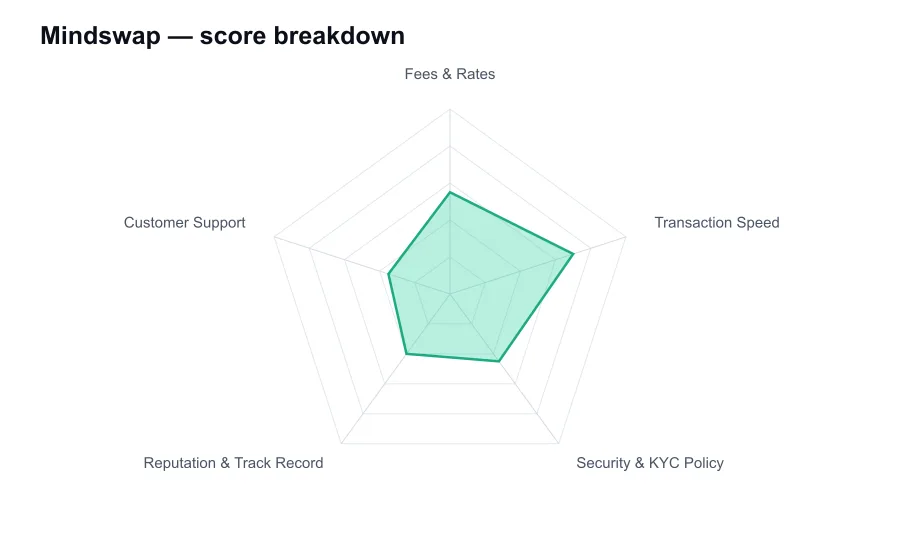
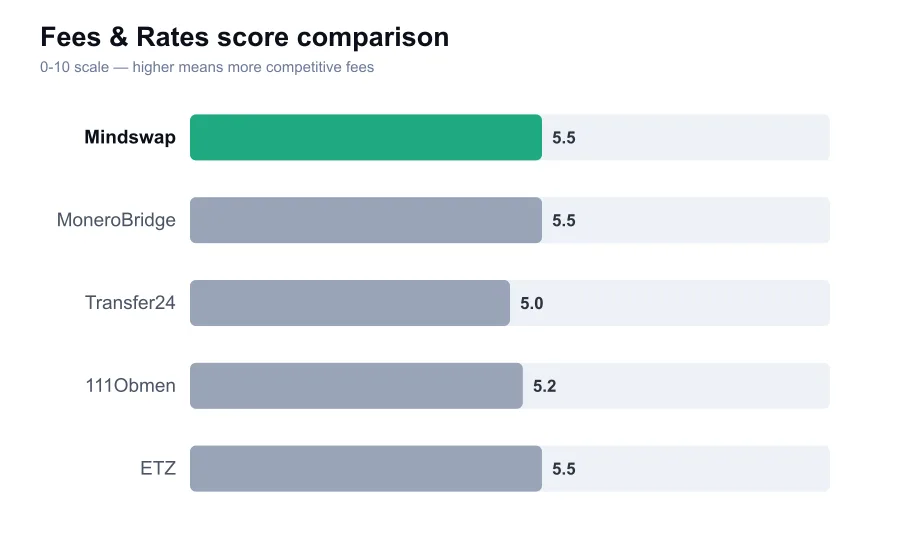
Mindswap's published fee model historically followed the common automated market maker pattern, where a small percentage of each trade was charged and distributed among liquidity providers and protocol participants. But the nominal fee is not the real cost of using a DEX. Slippage, liquidity depth, gas, token approval risk, and the chance of receiving a poorly priced long-tail asset all matter more. A 0.3 percent fee is not cheap if the pool costs another 4 percent in price impact.
Polygon's low gas fees were once a genuine advantage for Mindswap. A basic swap could cost pennies rather than the double-digit Ethereum transaction fees seen in congested periods. That advantage has faded as the market gained more low-cost chains and mature Layer 2 networks. Polygon remains inexpensive, but Mindswap is no longer uniquely positioned by that fact. QuickSwap and aggregators on the same network often provide a more credible baseline for execution quality.
Speed is fundamentally decent at the chain level. A transaction can be broadcast and confirmed in seconds to minutes, depending on wallet settings and network conditions. Yet fast confirmation isn't the same as fast resolution. A failed transaction, a misleading token contract, or a pool with shallow liquidity can leave a user with a confirmed result they didn't actually want. DEX speed is often mistaken for reliability because there is no manual queue, but the responsibility shifts onto the trader.
Mindswap's non-custodial design is one of its better features in principle. Users connect a wallet and sign transactions rather than depositing coins into a centralized company account. That eliminates a classic exchange failure mode: the platform holding customer keys and freezing withdrawals. It also means there is no account recovery, no password reset safety net, and no one who can reverse a transaction sent to the wrong address.
KYC usually isn't built into a permissionless automated market maker interaction. A wallet can interact with a public smart contract without opening a conventional account. Users should not confuse that with immunity from legal obligations or screening elsewhere in their crypto journey. Stablecoin issuers, centralized onramps, bridges, and regulated exchanges can all impose controls. More importantly, no-KYC access does not make a project safer, particularly if token and contract verification are weak.
Contract security needs a sober assessment. Historical DEX code and audits can offer some reassurance, but they are not proof that every live interface, liquidity pool, farm, token listing, or connected wallet flow is safe today. Old protocols can have unaudited upgrades, inactive maintainers, expired domains, compromised social channels, or frontend risks. The age of a smart contract is not automatically a virtue. Unmaintained software is often more dangerous than new software with active review.
Mindswap's reputation is mainly historical. It was visible during the DeFi expansion, but it hasn't maintained the persistent market presence or deep third-party coverage of leading decentralized exchanges. There is limited reason to believe it can match the liquidity, support, and development cadence of the major names today. That puts it in a category where a user should verify everything independently: official links, contract addresses, total value locked, pool reserves, and transaction simulations.
The native MIND token adds another layer of risk. Governance and reward tokens can be useful in an active protocol, but they are often highly speculative. A token's existence doesn't guarantee useful governance, meaningful revenue sharing, or sustainable demand. Farming incentives can temporarily inflate activity, then collapse when emissions decline. Anyone buying MIND should treat it as a speculative micro-cap position, not as a proxy for the safety or utility of the swap function.
Customer support is the clearest contrast with a centralized exchange. Mindswap does not provide the sort of accountable ticketing, phone support, or fiat-payment assistance that a retail exchange customer may expect. Community channels can help with basic interface questions, but they cannot recover private keys, unwind slippage, or resolve a bad signature. If you need someone to intervene after an error, a self-custody DEX is the wrong environment.
There is still a narrow use case for Mindswap. An experienced user who has independently verified the correct contracts and sees a specific pool with genuine liquidity might use it for a small, non-urgent trade. That is very different from recommending it as a default DeFi venue. Default choices should be the places where liquidity, active development, analytics, and security review are easiest to verify.
I would also avoid depositing into old high-yield farms merely because the annual percentage figure looks spectacular. A four-figure APY on a thin pool can be a warning rather than an opportunity. Impermanent loss, reward-token depreciation, and smart-contract risk can overwhelm the displayed yield. The more obscure the pool, the more likely the number is marketing rather than durable economic return.
Mindswap deserves a little credit for being part of the early low-cost DeFi ecosystem, and its non-custodial architecture remains preferable to handing coins to an unknown custodian. But the protocol's limited current prominence makes it a specialist tool at best. Most users will get a better price, clearer security signals, and a more reliable experience elsewhere.