BTC2Pay sits in the crowded end of the crypto exchange market where speed, low friction and a broad coin list are meant to matter more than polished institutional tooling. It appears aimed at people who want to swap assets or pay with crypto without opening an account at a major centralized exchange. That can be useful, particularly for experienced users who already understand wallet addresses, network selection and confirmation risk. It is not a platform I'd put in the same category as Kraken, Coinbase or Bitstamp. The public-facing footprint is simply too thin for that.
The main attraction is the familiar instant-exchange pitch. You choose a pair, send crypto, and receive another asset to an external wallet. For a one-off conversion, that workflow is far less cumbersome than funding an exchange account, completing verification, placing an order and withdrawing the result. BTC2Pay is designed around that convenience. The trouble is that convenience only has real value if the quoted rate, execution process and support path are transparent enough to trust with a meaningful amount.
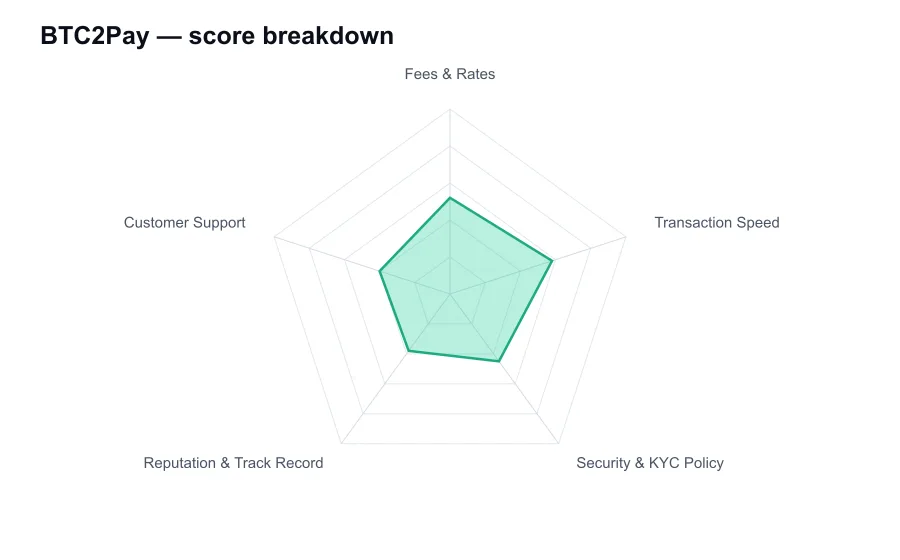
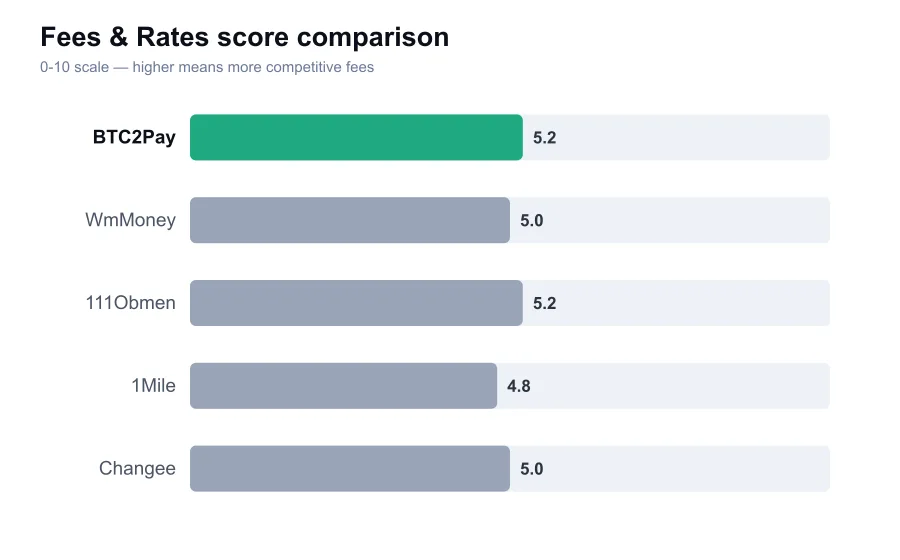
Fees are not the service's strongest documented area. A visitor should not assume that an apparently low visible fee tells the full story. In instant swaps, the effective cost often includes a provider spread, network fee assumptions, liquidity costs and, on floating-rate orders, price movement while the deposit is confirming. BTC2Pay does not have the kind of public, easy-to-audit fee schedule that would let a reviewer compare every pair cleanly against ChangeNOW, SimpleSwap or FixedFloat.
That does not automatically mean its pricing is poor. It does mean users need to do the arithmetic themselves. Check the amount sent, the quoted amount received, the rate source if one is shown, and the actual network fee before approving anything. A small difference may be irrelevant on a $50 swap. On a four-figure conversion, a two or three percent effective spread can become a painfully expensive shortcut. This is a platform where a test transaction makes far more sense than blind trust.
Speed is likely to depend heavily on the asset pair and chain involved. Bitcoin deposits need confirmations, Ethereum-based transfers can become slow or expensive during congestion, and liquidity providers may need time to fill less common pairs. No instant-exchange operator can honestly promise identical turnaround for every trade. BTC2Pay's model should work best for common, liquid assets on normal network conditions, such as BTC, ETH, USDT and major layer one coins.
A reasonable user expectation is minutes rather than seconds for a straightforward swap once the incoming transaction has the required confirmations. Anything beyond that needs a visible order status page and responsive support. That is where smaller services often disappoint. A transaction can be technically traceable on-chain while the customer still has no clear explanation of why an order is pending. BTC2Pay does not have a widely established record of detailed public operational reporting, so I would avoid relying on it for time-critical settlement.
The security question is more important than a slick no-registration flow. Non-custodial or low-custody exchange services reduce the risk of leaving a long-term balance on a platform, but they do not eliminate counterparty risk. You still send funds to an address controlled by the service or its liquidity partner. If the order is delayed, flagged or disputed, your protection depends on the operator's policies and willingness to resolve the case.
BTC2Pay's KYC approach should be read carefully rather than interpreted as an absolute promise of anonymity. Many exchange services advertise swaps without account creation while reserving the right to request identity checks for risk, compliance or transaction-monitoring reasons. That distinction matters. If the service asks for documents after receiving your coins, you may have very little practical choice but to comply or wait through a review. Anyone who cannot tolerate that possibility should not send funds.
I would also be cautious about the information supplied before placing a transaction. Clear terms, a stated refund process, supported network details and a reliable transaction identifier are basic safeguards. A support email alone is not enough for a provider handling irreversible blockchain transfers. BTC2Pay may suit a technically capable user who can independently verify wallet addresses and blockchain status. It is a poor fit for someone who expects the consumer protections of a regulated exchange.
Reputation is where BTC2Pay loses ground to better known instant-swap brands. A smaller public profile is not proof of bad conduct, and crypto is full of competent niche operators that never became household names. Still, longevity, independent reviews, documented incidents and visible company information matter because they give customers evidence to evaluate. With BTC2Pay, that evidence is limited compared with established competitors.
The absence of a large review trail creates a practical problem. You cannot easily distinguish a quiet but reliable service from one that simply has not processed enough visible customer volume to develop a reputation. I would not treat a handful of positive comments, affiliate listings or promotional rankings as meaningful due diligence. Look for repeated independent reports that describe completed transactions, delays, support outcomes and how refund disputes were handled.
Support is another area where expectations should remain modest. A service processing irreversible transfers needs fast human intervention when an address is wrong, a destination tag is missing, a transaction arrives late or a compliance check interrupts an order. BTC2Pay does not have the highly visible multi-channel support infrastructure associated with top exchanges. That makes the quality of the response during a problem more important than the normal flow during a successful swap.
For small, non-urgent exchanges, BTC2Pay can be a reasonable option if the live quote is competitive and the destination wallet details have been checked twice. I would use it only after a small test order and only for assets I can track confidently on-chain. The platform's appeal is simplicity, not deep transparency or public accountability. That is a meaningful trade-off, not a minor footnote.
My view is straightforward. BTC2Pay may be useful as a lightweight swap tool, but it has not earned the level of confidence I'd reserve for a major regulated venue or a long-established instant-exchange brand. Keep order sizes conservative, save every transaction reference, and compare the received amount with at least two alternatives before sending. If the exchange rate is not clearly better, there is little reason to accept the extra reputation and support risk.