Swapter is a noncustodial crypto swap service aimed at users who want to exchange assets without opening a conventional exchange account. It belongs to the fast growing group of instant conversion platforms that sit between a wallet and external liquidity providers. The pitch is familiar, choose two assets, send one, receive the other. Its challenge is proving that the simple interface is backed by reliable execution and fair pricing.
The site supports a broad mix of major coins, stablecoins, and token networks. That breadth is convenient for users moving between ecosystems, especially when a centralized exchange does not list a smaller asset. Still, asset count is not the same as liquidity quality. A platform can display hundreds of pairs while routing many of them through thin markets. For mainstream routes, Swapter is more useful than it is for obscure or newly issued tokens.
The no registration model is the main attraction. A user supplies a destination address rather than creating a username, password, and identity profile. For privacy minded users, that is a welcome reduction in friction. For inexperienced users, it removes guardrails. There is no account balance page to correct a mistaken withdrawal destination, and no familiar exchange interface to show a complete trade history under one login.
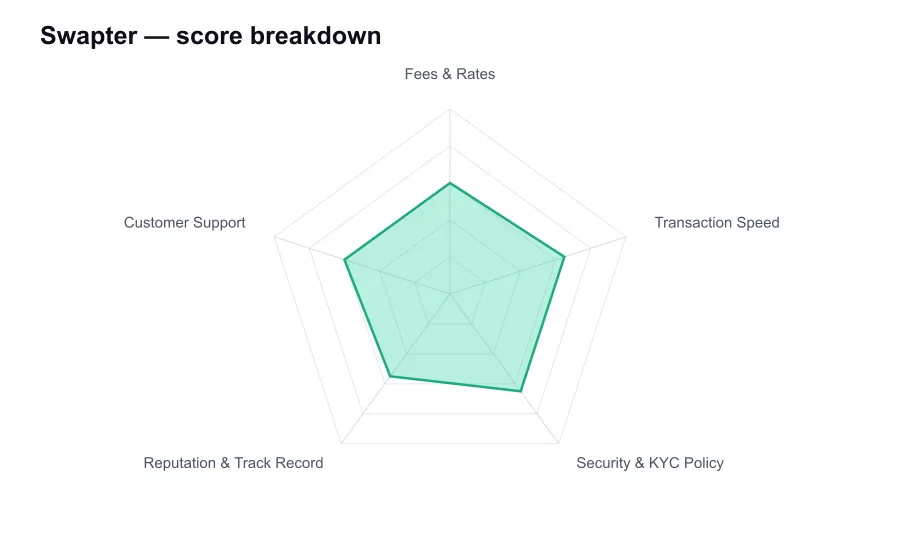
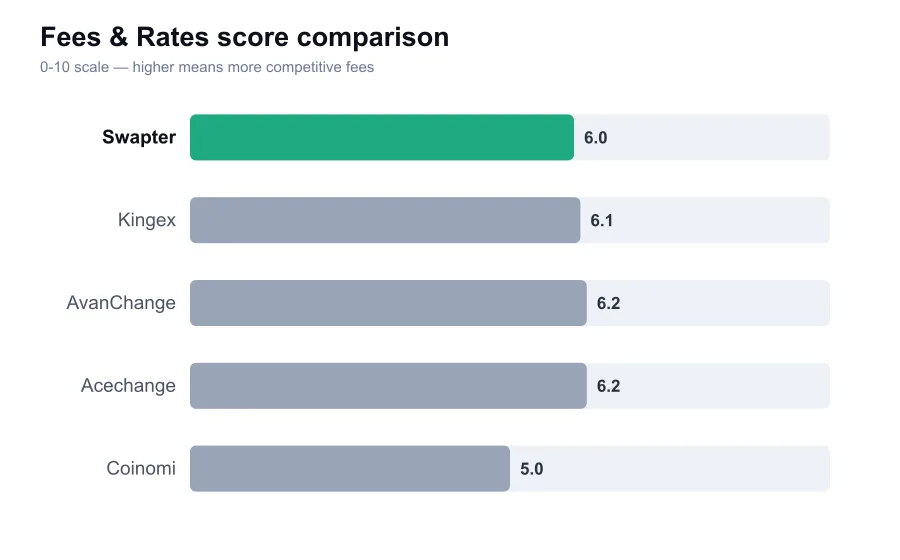
Swapter's quoted rate is the only number that should drive a decision. Instant exchange sites often advertise low fees, but the effective cost is usually a mix of provider spread, blockchain fees, and a service margin contained within the displayed payout. In practical terms, users should not assume a platform is cheap because it says no fee or low fee. Compare how much crypto reaches your wallet after all deductions.
For smaller conversions, Swapter can be convenient enough that a modest spread is acceptable. Paying a little for speed and avoiding an account setup is rational if you are simply converting a small amount of USDT to ETH. For larger swaps, the arithmetic changes. A one percent difference in effective price can be far more expensive than the inconvenience of using a deeper venue. Swapter does not make price discovery unnecessary.
The platform offers floating rate and fixed rate style swap choices on supported routes. Floating swaps can deliver a better outcome if the market moves favorably, but the quoted amount can change while the deposit confirms. Fixed options are usually the safer choice where available, especially with volatile assets or larger amounts. Users need to send the requested amount within the displayed window. Sending late can turn a supposedly fixed transaction into a manual case.
Speed is respectable on common network routes. Transfers on fast chains can move from deposit to payout quickly, provided the liquidity partner has no issue and the destination network is functioning normally. Bitcoin and Ethereum mainnet transactions are more variable. Confirmation requirements alone can mean a wait, and network congestion can make that wait noticeably longer. Swapter is not slow by design, but it cannot outrun blockchains.
The more important speed question is what happens when a swap goes wrong. Incorrect memos, underpayments, overpayments, delayed deposits, and maintenance at a partner exchange can all interrupt the automatic path. Swapter provides support channels, but resolution in those cases is inherently slower than a normal exchange. This is why users should never send their full balance on a first transaction, particularly on a token or chain they have not used before.
Security is adequate for the type of service, but it deserves a realistic reading. Swapter's noncustodial structure means it does not ask customers to keep a permanent trading balance on the platform. That reduces the risk of a large account takeover or an exchange insolvency affecting stored assets. During a swap, however, users relinquish direct control temporarily. The service, its partners, and the selected network remain part of the risk chain.
Swapter states that it can apply anti money laundering controls and request information in exceptional circumstances. This is common language among instant exchanges, and users should take it literally. No mandatory signup does not guarantee that every transaction will be processed anonymously. A compliance hold can be especially frustrating because a user may have already sent the asset. Avoid transactions linked to sanctioned, stolen, or high risk sources, and retain records of your funds.
Its reputation is still developing. Swapter does not have the long public operating history of Kraken, Coinbase, or even some older noncustodial swap competitors. That does not automatically make it unreliable, but it means there is less evidence available across different market conditions. Reviews should be read carefully. A five star review after one tiny swap tells little about how a service handles a delayed six figure transaction or a difficult refund.
Customer support appears geared toward transactional assistance rather than full service account management. That is appropriate for the product. Users can seek help through the available contact channels, but they should expect to provide transaction IDs, wallet addresses, and precise details. A concise, complete support request is far more likely to move quickly than an angry message saying only that funds are missing. The support experience is functional, not luxurious.
Swapter makes the most sense for users who understand wallets and want a quick conversion without a custodial account. It can be a practical alternative where a preferred asset is unavailable on a user's normal exchange. It is less persuasive for active traders, people converting large sums, or anyone needing formal dispute procedures. Those users benefit from order books, transparent fee schedules, and stronger institutional accountability.
My take is that Swapter is usable, but it has not earned the automatic trust I would give a long established exchange or a deeply documented DeFi protocol. The interface is straightforward and the noncustodial model is appealing. Yet quote based pricing, limited public track record, and the possibility of compliance delays make caution sensible. Use it for measured, wallet to wallet swaps after comparing quotes. Do not confuse a clean website with a guarantee of seamless execution.