Acechange is a small instant crypto exchange service aimed at people who want to swap one asset for another without opening a conventional trading account. It occupies the same broad territory as ChangeNOW, SimpleSwap, and StealthEX, but it has far less public history and far less brand recognition than those names. The pitch is straightforward, choose a pair, send funds, and receive the destination coin. That simplicity is appealing, although it also means users have fewer tools if something goes wrong.
The site focuses on exchange flows rather than a full trading terminal. There are no charting tools, order books, margin products, staking dashboards, or an account ecosystem to learn. For someone converting BTC to USDT or ETH to LTC, that can be a relief. For an active trader, it is plainly the wrong product. Acechange is a transaction utility, not a venue where you can manage a serious crypto portfolio.
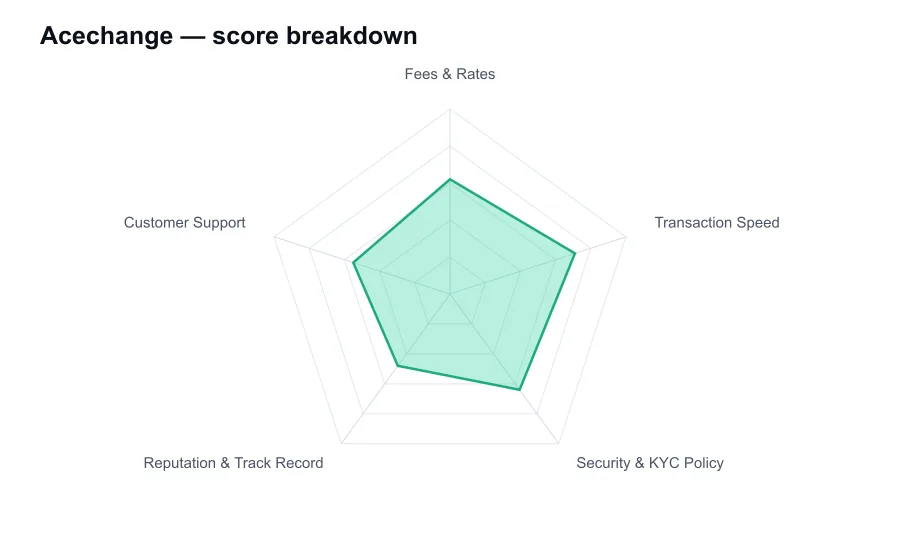
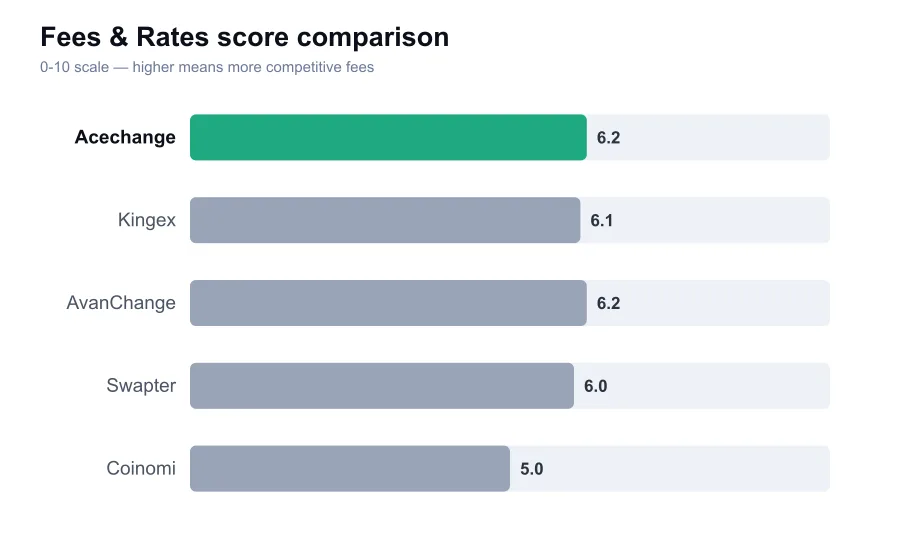
Pricing is the first area where a small instant exchanger demands skepticism. Acechange presents floating and, for selected routes, fixed quote options, but the practical cost is not always expressed as one clean headline percentage. The rate you see includes the service margin, liquidity provider pricing, and network fee treatment. That is common in this part of the market, but it makes direct comparison difficult. A quoted swap can look fee free while still carrying a meaningful spread.
In testing the economics of services like this, I care more about the amount received than the marketing language around fees. Acechange can be reasonable on liquid major pairs, especially where network costs are modest. It becomes less attractive on thin altcoin routes, small transactions, and assets on expensive networks. A user exchanging a modest amount of BTC may find the spread tolerable. A user converting stablecoins on Ethereum can quickly discover that the network charge has swallowed the apparent convenience.
The fixed rate option deserves attention because it is often the safer choice in a volatile market. A floating quote can improve slightly during the transaction, but it can also deteriorate before Acechange receives the required confirmations. Fixed quotes reduce that uncertainty, though they usually build in a wider buffer. Don't assume a fixed quote is automatically cheaper. It is a price for certainty, and on sharp market moves that price can be sensible.
Speed depends less on the Acechange interface than on the asset pair and the blockchain involved. A swap involving Litecoin, XRP, TRON, or a liquid stablecoin can be completed quickly once the deposit arrives. Bitcoin and Ethereum transactions are governed by confirmation time and network congestion, so a fast website cannot make an underpriced Bitcoin transaction settle faster. The service is best understood as quick operationally, not magically instant.
There is also a practical distinction between a completed swap and a swap that has merely started. Many frustrated users see a transaction identified as processing and assume the platform is stalling. Sometimes it is waiting for deposit confirmations or for a liquidity partner to fill the route. Acechange's status information is useful when it is available, but it is not a substitute for a transparent transaction explanation. Better established competitors tend to provide more polished tracking and clearer exception handling.
Acechange markets the privacy appeal that many instant exchanges offer. A standard transaction may not require a user to create an account or submit identity documents before getting a quote. That should never be confused with a guarantee of anonymity. Like other compliance conscious exchange services, Acechange can request KYC documents if an automated risk check, blockchain analytics flag, source of funds concern, or regulatory obligation triggers review.
That conditional KYC model is convenient until your transaction is the one selected for review. If you use an instant exchanger, keep proof of purchase, wallet records, and a clear explanation of fund origin available. Sending coins from mixers, sanctioned services, gambling sites, or high risk addresses can invite delay anywhere. Acechange does not stand out as unusually harsh here, but its smaller public profile means there is less independent evidence showing how consistently difficult cases are resolved.
Security is also about custody. Acechange does not ask users to leave a trading balance on the platform, which is a genuine advantage over keeping coins on a centralized exchange. You send funds for a specific conversion and withdraw to your own destination wallet. Still, this is not trustless swapping. During the process, you are trusting the service and its liquidity arrangements with the transfer, so wallet addresses and quote details must be checked carefully before sending.
The reputation question is where Acechange loses ground. It has a functional product and a familiar instant exchange model, but it does not have the long operating record, regulatory visibility, or large independent review footprint of the strongest alternatives. That does not prove bad conduct. It does mean the burden of caution is higher. I would not make Acechange my first choice for a large, time sensitive conversion simply because there is less public evidence to lean on if an exception occurs.
Support appears to center on online contact channels and transaction specific assistance rather than a large, multi language service operation. That is normal for a lean exchange product, but response quality matters most when a deposit has not appeared or a compliance review begins. Before using Acechange with meaningful money, test its support with a simple question and save the transaction ID, receiving address, and screenshots. A responsive answer before payment is not a perfect test, though it tells you more than promotional copy does.
Acechange can work well for a user who understands self custody, knows the networks involved, and wants a quick one off conversion without creating another exchange account. It is less convincing for newcomers who need phone support, fiat deposits, recurring purchases, or a clear regulatory relationship. The service's low friction is its core strength. Its limited public track record is the tradeoff that should keep position sizes modest.
My take is that Acechange is usable, but it has not earned blind trust. Compare its final received amount against ChangeNOW, SimpleSwap, and a major exchange withdrawal before confirming, because the difference can be larger than expected. Use a small first transaction for an unfamiliar route, avoid rushing during network congestion, and do not send funds you cannot afford to have delayed. For routine small swaps, it may be perfectly adequate. For large conversions, stronger transparency and a longer history are worth paying for.