Coinomi is often described as a crypto exchange, but that description misses the most important point. It is primarily a noncustodial multi currency wallet. The distinction is not academic. Coinomi can connect users to third party exchange and purchase partners inside its app, yet it is not a conventional central order book where the company holds a trading balance and matches buyers with sellers. Your security responsibilities are therefore much larger.
Founded in 2014, Coinomi became popular by supporting a wide range of blockchains in one mobile and desktop wallet. Its appeal is obvious to someone holding bitcoin, ether, litecoin, dogecoin, tokens, and less mainstream assets who does not want separate software for every chain. Coinomi has claimed support for hundreds of assets and many networks. Breadth is its main selling point, and it remains impressive.
That breadth can also make the wallet feel busy. New users may see dozens of networks, exchange routes, recovery settings, and token standards before they have learned the simple habits that actually keep funds safe. A wallet with many assets is not automatically a better wallet. It creates more room to select the wrong network, misunderstand a memo requirement, approve a bad swap route, or install an imitation application.
Coinomi is noncustodial in the standard sense: the user controls the wallet recovery phrase and private keys rather than leaving them with a broker. This is a major advantage over keeping a long term balance on a centralized exchange. It also means there is no password reset that can restore lost funds. Lose the recovery phrase, reveal it to a fake support agent, or type it into a phishing site, and Coinomi cannot rescue the wallet.
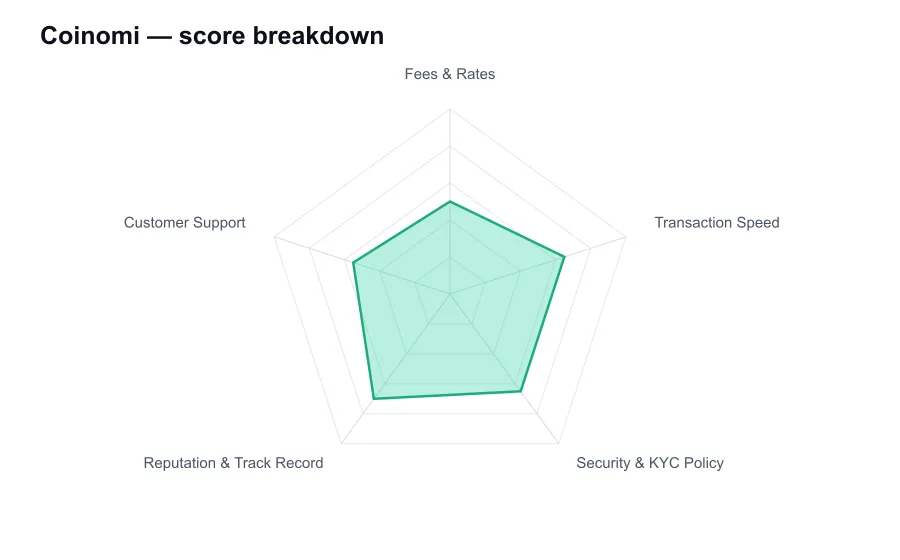
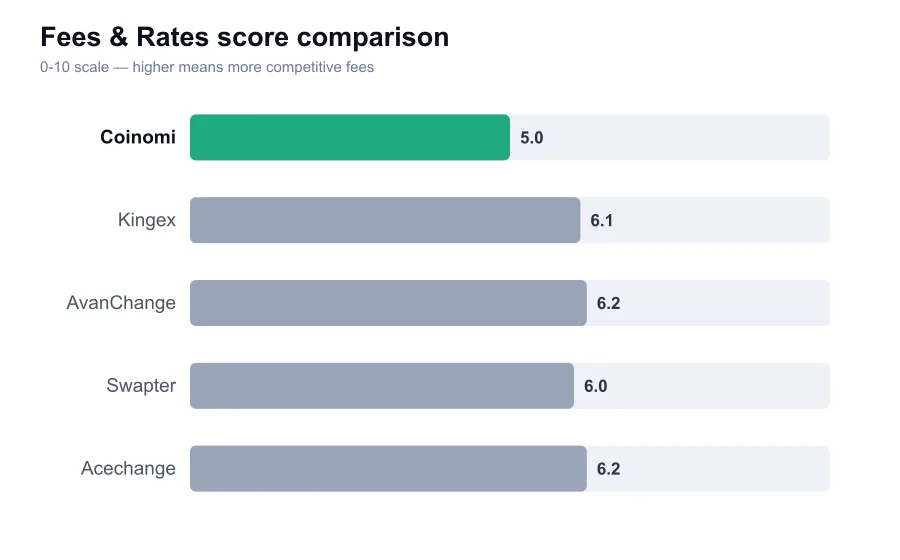
The app has offered built in exchanges through third party partners over the years. Those services can be convenient, but convenience is not the same as competitive execution. The exchange quote generally includes a partner spread, service fee, and network costs. Coinomi itself may not charge a separate wallet trading fee for every route, but the user still pays through the quoted rate. Compare the received amount against a major exchange before making a large swap.
For small conversions, the difference may be an acceptable price for avoiding deposits and withdrawals between platforms. For larger trades, it can be expensive. A user swapping several thousand dollars of bitcoin for ether through an in wallet provider may receive materially less than they would through a liquid order book at Kraken, Coinbase Advanced, or Bitstamp, even after transfer costs. Coinomi is a wallet first, not a venue for price discovery.
Transaction speed is also split between two layers. Sending bitcoin, ether, or another asset from Coinomi depends on the network fee selected and congestion on that blockchain. Coinomi broadcasts the transaction, but it cannot make Bitcoin blocks arrive faster or force Ethereum validators to prioritize a low fee transaction. A third party swap adds another stage, because the partner must receive the deposit, perform the conversion, and send the output.
That process can be quick in favorable conditions, but it is not reliably instant. Fixed rate offers may expire, floating rate exchanges can move with the market, and compliance checks from a third party provider can delay a swap. This is one of the reasons a wallet's integrated exchange should not be used for time sensitive trading. Use it for convenience, and test it with a small amount before depending on it.
Coinomi's security story has strong and weak parts. Local key control, password protection, and the ability to keep assets outside a centralized exchange are meaningful positives. At the same time, software wallets connected to the internet are not the safest place for large life changing holdings. A hardware wallet, properly backed up, is a better long term solution for most people with substantial crypto. Coinomi is a useful spending and portfolio wallet, not a vault.
Its history includes a serious 2019 controversy involving a report that a wallet passphrase could be sent to Google through Android spell checking. Coinomi disputed elements of the report and said the issue was fixed promptly. The precise technical argument matters less to ordinary users than the lesson: a wallet's security is affected by operating system features, settings, and user behavior, not only by the wallet's own cryptography. Disable unnecessary cloud input features and keep software updated.
Coinomi itself does not impose exchange style KYC just to create a self custody wallet. That is a meaningful privacy advantage. However, third party buy and swap providers integrated into the app may require identity verification depending on the transaction, country, amount, payment method, and compliance flags. Anyone promising that an in app swap is always anonymous is overselling it. Read the partner's conditions before sending coins.
Reputation is mixed but substantial. Coinomi has been around for more than a decade, which places it ahead of countless short lived wallet brands. It has a broad user base and a recognizable name among multi asset wallet users. Still, it does not command the same confidence among security purists as hardware wallet makers such as Trezor or Ledger, nor does it offer the open source transparency that some users demand from wallet software.
Support has the natural limits of self custody. Coinomi can help with app behavior, transaction identification, and general troubleshooting, but it cannot reverse a confirmed blockchain payment or recover an unbacked up seed phrase. Users should be wary of anyone claiming to be Coinomi support through Telegram, social media comments, or direct messages. Real wallet support never needs your recovery phrase, private key, or remote access to your device.
I like Coinomi for what it is: a versatile wallet for users who understand seed phrase discipline and need broad asset support. I do not like it as a place to execute large swaps, and I would not recommend it as a first crypto product for someone who has never secured a recovery phrase. Keep a written backup offline, use a separate hardware wallet for serious savings, and treat the built in exchange as a convenience tool with a price.