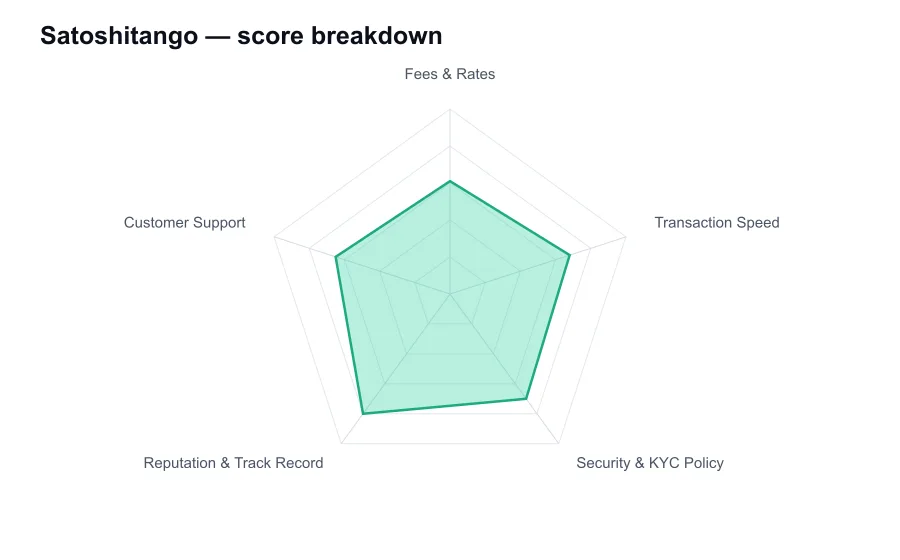
SatoshiTango is one of the longer running crypto platforms serving Latin American users, with Argentina at the center of its identity. It is a custodial exchange and payments oriented service, not a no signup swap widget. That difference is important. Its value is not that it offers the deepest international order books or the lowest imaginable trading costs. Its value is local access, familiar payment rails and a product designed around the practical reality of buying crypto in markets where inflation, currency restrictions and banking friction are everyday concerns.
The company has operated since 2014, which gives it a more substantial track record than the wave of anonymous instant exchanges that appear and disappear during each bull market. Longevity is a meaningful positive in Latin American crypto, where users have seen platforms freeze services, change banking partners or vanish entirely. SatoshiTango has survived several difficult market cycles. That does not make customer funds risk free, but it does make the business easier to take seriously.
Its offering has historically included crypto purchases and sales, wallet services, trading features and local payment methods. Availability differs by country and can change with banking rules, so users should verify what is offered to their residence before depositing. That caveat sounds dull, but it is essential. A platform can be excellent for an Argentine user moving pesos through a local rail and much less compelling for someone in Europe or North America who has access to larger global exchanges.
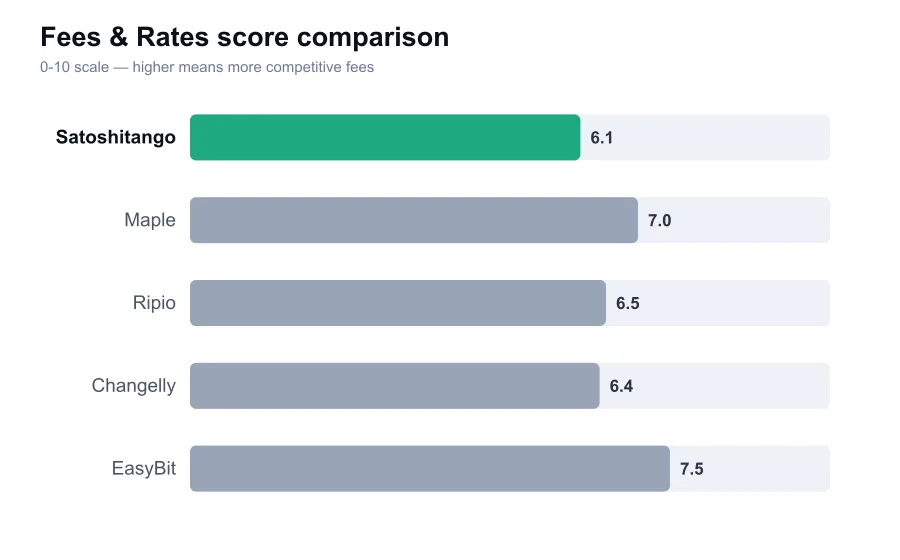
Fees are where SatoshiTango needs the closest reading. The platform does not always present a single simple number that answers the real cost of a transaction. Trading fees, deposit methods, withdrawal charges and the spread embedded in an instant buy quote can all affect the result. This is common among regional brokers, but it is still frustrating. A user should compare the final amount of crypto received, not merely look for the word fee on a pricing page.
For small local purchases, convenience may justify that premium. If you are trying to turn local currency into BTC, USDT or another major asset quickly, a familiar domestic payment route can be worth more than shaving a few basis points from the trade. For larger orders, the economics become harder to defend. International venues with deep liquidity frequently produce better execution, assuming you can fund them cheaply and legally. SatoshiTango is a local access service first, a low cost trading venue second.
Transaction speed depends heavily on what part of the service you are using. Internal account actions and certain local payments can be quick. Crypto deposits and withdrawals depend on the underlying blockchain, confirmation requirements and internal security checks. Bitcoin withdrawals should never be judged by the speed of a card purchase, while stablecoin transfers can be much faster if the selected network is functioning normally. Bank transfer timing also depends on the local banking system rather than SatoshiTango alone.
The platform is custodial, so users entrust assets and personal data to the company. That is a very different security model from using a wallet based protocol. It can be more forgiving for a newcomer who would otherwise lose a seed phrase, but it introduces counterparty risk. You are relying on the exchange's operational controls, custody arrangements and withdrawal processes. I would not leave a large long term portfolio on any regional exchange merely because it has been around for years.
KYC is part of the product rather than an optional nuisance. SatoshiTango generally requires identity verification and may ask for additional information depending on activity, payment method and local compliance rules. That will put off privacy focused users. For a fiat connected platform, though, it is normal and arguably preferable to vague claims of compliance. A user who needs anonymous crypto conversions should look elsewhere, while remembering that many supposedly no KYC services can still request documents when a transaction triggers risk controls.
The security posture appears more conventional than experimental. Account access protections, verification processes and compliance procedures are part of the service, but public users should not confuse a professional website with a full picture of custody. Exchanges rarely disclose every operational safeguard, and they shouldn't. The sensible response is basic discipline: unique password, available two factor authentication, withdrawal address checks, and prompt transfer of savings holdings to self custody.
Reputation is SatoshiTango's clearest advantage. It is a known name in its home region and has endured since the early days of Argentine crypto adoption. That provides more reassurance than a newly launched exchange with a glossy affiliate program. It also has the baggage that comes with being an established local provider. Customer comments can include complaints about verification delays, support response times and the expense of certain transaction methods. Those complaints should be read in context, but they should not be ignored.
Support quality is likely to matter more here than at a pure onchain service because users may be dealing with bank deposits, identity documents or account restrictions. SatoshiTango offers help center material and customer contact channels, and Spanish language support is an obvious practical benefit for its core audience. The experience can slow down during compliance reviews or periods of intense market activity. That is exactly when users most want a quick human answer, and it is where regional exchanges are often stretched.
The platform makes most sense as a bridge between local money and crypto, not as the final destination for an advanced portfolio. A user can buy a major asset, make a payment, or move funds into a personal wallet. That workflow limits exchange exposure while preserving the convenience that attracted them in the first place. Traders who need derivatives, complex order types, institutional depth or dozens of obscure tokens will find the proposition narrow.
SatoshiTango also deserves credit for serving a market that global exchanges do not always understand. Product design that accounts for local payment behavior is not glamorous, but it can be genuinely useful. The downside is that local services often inherit local regulatory uncertainty and banking constraints. If a payment rail changes, the user experience can change with it. No exchange can fully insulate customers from that environment.
I would advise new users to make a small deposit, complete KYC before they urgently need the account, and test a withdrawal to a wallet they control. That process tells you more than marketing copy ever will. Check both the quoted buy price and the final withdrawal cost. If the platform is being used for recurring purchases, record a few transactions and compare effective costs against alternatives. A little arithmetic can reveal whether convenience is costing too much.
SatoshiTango is credible where it matters most for its intended audience: it is established, local and built for fiat connected use rather than crypto maximalist ideology. It is less attractive for fee sensitive traders and anyone who wants anonymity. I see it as a practical regional gateway with real limitations, not a world class exchange competing head to head with the largest global names. Use it for access and convenience, then manage long term custody yourself.