Ripio is one of Latin America's more recognizable crypto brands, with roots going back to 2013 under the BitPagos name. It has evolved into a regional platform for buying, selling, storing and using crypto, with a particular focus on markets such as Argentina, Brazil, Uruguay and Colombia. That regional specialization is its real advantage. Ripio understands local currency rails and local customer needs better than many global exchanges do.
For an Argentine user navigating inflation, capital controls and a volatile peso, crypto access is not always a speculative hobby. Stablecoins and Bitcoin can be practical tools for preserving value, sending money or diversifying savings. Ripio has built its product around that reality. Its app is approachable, its brand is familiar in the region, and its local-market focus gives it more relevance than a generic offshore exchange with no local support.
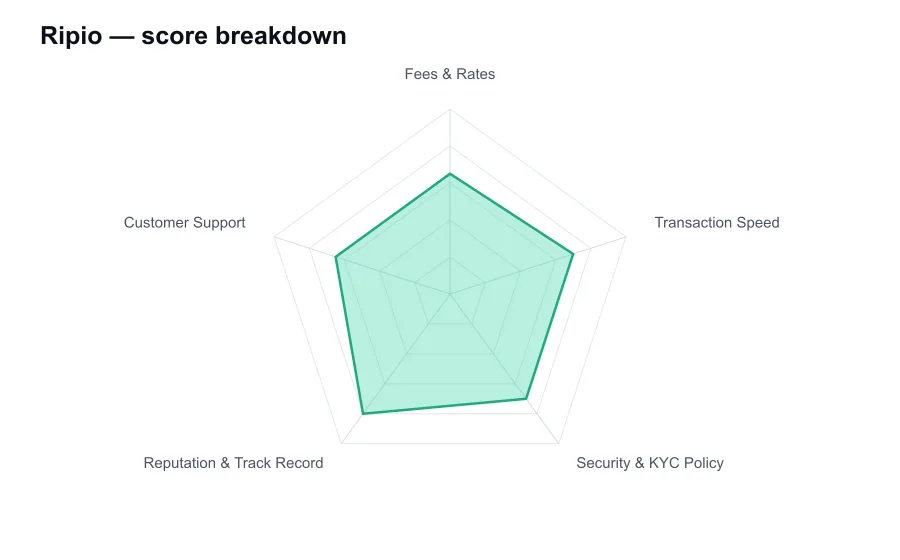
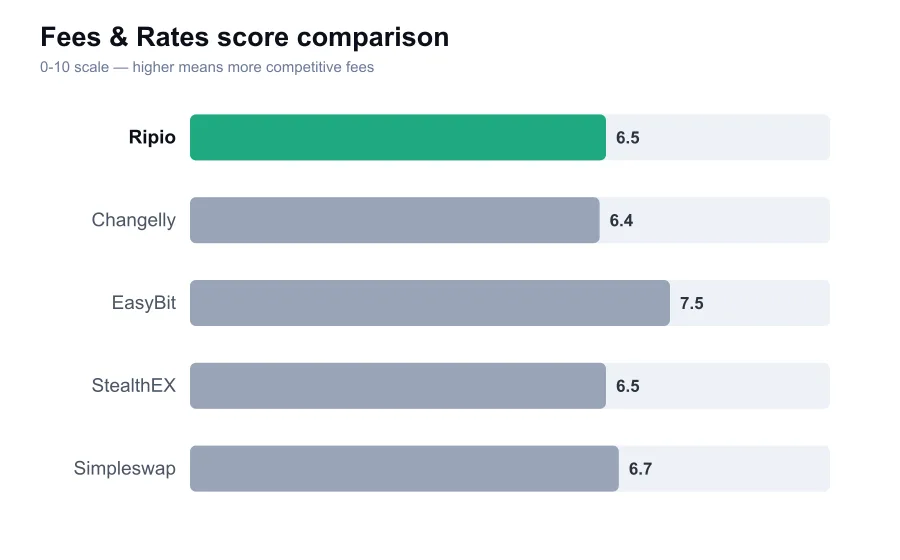
Fees need careful attention because Ripio's pricing can vary by country, product and payment method. Buying through a simple app interface is convenient, but the economic cost may be represented through a spread rather than a plainly visible order-book commission. Bank transfer, card purchase and crypto conversion can each produce different results. Compare the amount of crypto received against alternatives, particularly Mercado Pago-linked options, Binance P2P and local broker platforms.
That does not make Ripio unusually expensive by regional standards. It does mean users should avoid assuming that a zero-fee message means zero cost. Spread is still a cost, and it can widen during periods of peso volatility or reduced liquidity. For regular purchases, a user should track the real execution price over several transactions. A small difference on each stablecoin purchase adds up faster than people expect.
Ripio's exchange tools are generally better suited to investing and basic trading than to high-frequency speculation. The app makes it easy to buy common assets, monitor balances and move money through supported local rails. More experienced traders may want deeper order books, extensive charting and a broader derivatives market than Ripio provides. It is not trying to be Binance, and that is not necessarily a flaw, but the distinction is important.
Transaction speed is good where Ripio controls the process. Local deposits, internal balance updates and straightforward crypto trades can be quick, subject to bank and payment-rail availability. External withdrawals still depend on blockchain conditions and the platform's risk controls. During busy network periods, Bitcoin and Ethereum transfers can take longer than the app experience suggests. Fiat withdrawals can also be limited by local banking hours and country-specific procedures.
The platform's card and payments-oriented products have helped Ripio become more than a basic exchange. That can be genuinely useful for users who want to spend or manage crypto through familiar consumer tools. Yet a crypto card is not a reason to hold an oversized balance with any provider. The convenience is real, but so is the exposure to a custodial company, local financial rules and the tax implications of spending crypto.
Identity verification is expected. Ripio operates in a regulated, bank-connected environment, and customers should be prepared to provide identification and possibly further information depending on local law and transaction patterns. This is a poor fit for people seeking an anonymous exchange. For regional users who value the ability to connect bank accounts and deal with a recognizable company, mandatory KYC is part of the bargain.
On security, Ripio benefits from being an established business with a long regional operating history. It offers the standard account safeguards expected from a consumer platform, including password and account-access controls, and it has a stronger incentive than a small anonymous swap service to preserve customer trust. Still, customers do not control private keys for assets held inside the platform. For meaningful long-term holdings, self-custody remains the safer default.
I would like to see every regional exchange publish more detailed, easily comparable information about custody architecture, reserve management and incident handling. Ripio is not alone in falling short of the transparency standards sophisticated crypto users increasingly expect. A long operating history and a recognizable brand are positives, but they are not substitutes for the kind of detailed public assurance that lets customers evaluate solvency and operational risk precisely.
Ripio's reputation is one of its better assets. It has operated through multiple crypto cycles and the economic instability of several Latin American markets, which is a more demanding test than launching during a bull market. It has also attracted institutional backing and expanded beyond one country. Customer feedback is naturally mixed, especially around verification and banking delays, but the company is a known regional operator rather than an anonymous site with no accountable history.
Support quality appears most useful for customers whose issue fits a normal local process, such as a bank deposit, account verification or app feature question. Help channels and local-language resources are more valuable here than they would be at an English-only global exchange. The difficult cases are the familiar ones: compliance holds, blockchain withdrawal questions and account-access disputes. Users should keep transaction receipts and communicate through official channels only.
Ripio makes the most sense as a bridge between local money and mainstream crypto assets. It is strong where many global rivals are awkward: regional banking access, Spanish and Portuguese user experience, and an understanding that stablecoins have everyday relevance. It is weaker as a sophisticated international trading venue and less attractive for users who want full custody control.
My view is favorable, with limits. Ripio is a credible choice for Latin American newcomers and regular users who need local access more than exotic tokens or ultra-low trading fees. Keep active spending and trading funds there, not your entire long-term stack. Its regional trust and usability are meaningful strengths, but disciplined users should still separate convenience from custody.