Sanctum is not a conventional crypto exchange, and judging it as though it were Binance or Coinbase misses the point. It is a Solana focused liquidity and staking protocol built around liquid staking tokens, often shortened to LSTs. Its core pitch is simple: stake SOL, retain liquidity through an LST, and move between supported Solana staking assets without repeatedly waiting through native stake activation and deactivation cycles. That makes it a specialist tool for Solana users, not a general purpose place to buy crypto.
The project arrived in a market where liquid staking was already established, but Solana's LST scene was fragmented. Marinade, Jito, BlazeStake and smaller validator linked tokens all had their own liquidity pools, prices and use cases. Sanctum's major idea was to make those tokens more interchangeable. Its Infinity pool and related infrastructure aim to provide a shared route for swaps and redemptions, which is a more ambitious proposition than simply issuing another liquid staking token.
That architecture matters because a liquid staking token is only useful if it remains liquid at a sensible price. Native unstaking can take days because of Solana's epoch schedule. Selling an LST into thin liquidity can also mean accepting a painful discount. Sanctum tries to close that gap by letting users exchange eligible LSTs through pooled liquidity. In normal conditions, a swap is completed at Solana speed, usually within seconds once the transaction is confirmed.
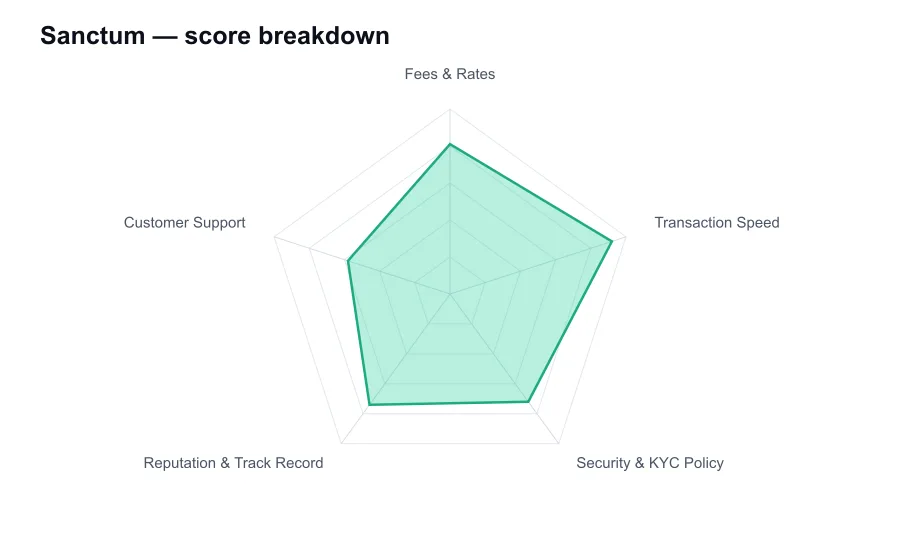
Speed is one of Sanctum's strongest practical advantages. Solana transactions are cheap and settle quickly, so converting an LST, depositing into an eligible pool or using a Sanctum integrated interface usually feels immediate compared with Ethereum liquid staking workflows. That does not mean every action is frictionless. Congested Solana periods, wallet approval mistakes and insufficient liquidity can still derail a trade. Native stake withdrawal also remains governed by Solana's epoch mechanics if instant liquidity is unavailable.
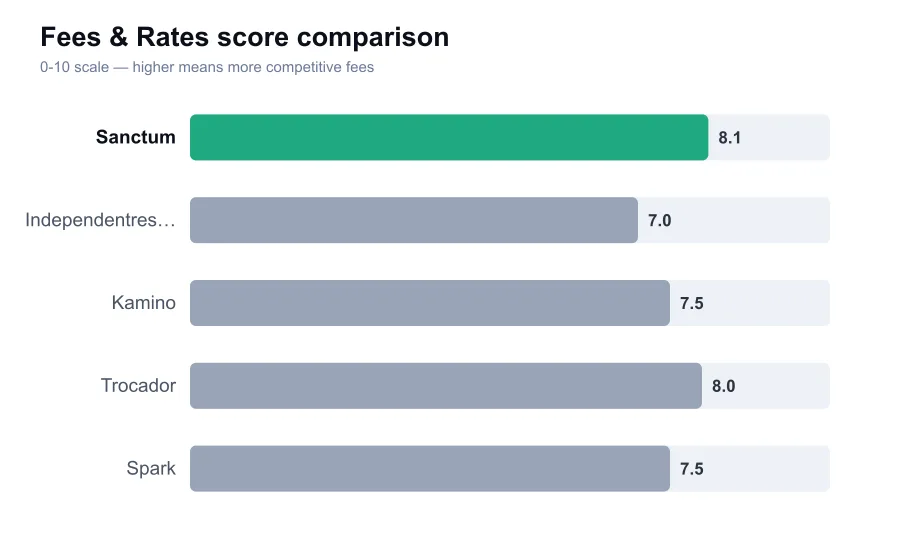
The cost picture is better than many retail swap sites, but it is not as simple as a posted flat exchange fee. Fees can be embedded in the route, pool economics, LST pricing, validator rewards and any interface or partner product used. SOL network fees are normally tiny, though that is the least important cost. The meaningful question is whether the LST you receive or sell trades close to its fair backing value. A seemingly free swap that includes a noticeable price impact is not free in any useful sense.
Sanctum is particularly attractive for users who already understand this distinction. A careful user can compare quoted output with the expected value of the underlying LST and check liquidity before signing. A casual user may see an attractive annual yield and overlook the fact that LST returns, discounts and liquidity conditions change. The protocol's design can reduce friction, but it cannot manufacture stable liquidity during a broad market panic.
There is no ordinary account signup process and no routine identity check for direct onchain interactions. Connect a Solana wallet, approve a transaction, and the protocol does what the smart contracts permit. Privacy minded users will appreciate that. It also means there is no traditional recovery desk if someone loses a seed phrase, signs a malicious transaction or sends assets to the wrong address. Self custody is empowering right until it isn't.
That no KYC character should not be confused with a blanket promise that every access route is unrestricted. Front ends, integrated products and jurisdictions can change how users are served. More importantly, Sanctum's risk profile is technical rather than compliance based. Users are exposed to smart contract risk, oracle or pricing assumptions, Solana network outages, validator performance and the possibility that a given LST loses liquidity or depegs from the value it is meant to represent.
The team has made security a visible part of the project through public documentation, ecosystem integrations and audits or reviews associated with protocol components. Those are positive signals, but smart contract audits are not insurance. DeFi history is full of audited systems that failed under unusual market conditions or through interactions nobody adequately modeled. I would treat Sanctum as a serious protocol, not as a savings account. Keeping an entire SOL position in one LST route is a poor use of its convenience.
Its reputation is promising rather than fully seasoned. Sanctum has become a recognizable Solana name, especially since the rise of its Wonderland points campaign and the growing market for LST liquidity. It has attracted meaningful attention from active Solana users and integrates with familiar wallets and ecosystem venues. Still, it does not have the multi cycle operating record of older DeFi primitives, and incentive campaigns can make usage figures look stronger than durable customer loyalty.
The Wonderland campaign also showed both sides of crypto's attention economy. It brought users, liquidity and visibility to a fairly technical protocol. It also created speculation around points, rewards and expected token economics. That kind of excitement can obscure a sober question: would users still value Sanctum if there were no campaign attached? For LST routing and instant access to liquidity, many probably would. For some yield chasers, the answer is less flattering.
Support is limited by design. Sanctum offers documentation, social channels and community based assistance rather than a conventional customer service operation with telephone agents and account case managers. Experienced DeFi users may find that perfectly normal. Beginners who expect someone to reverse a mistaken transaction will be disappointed. A protocol that handles wallet based transactions cannot provide the same dispute process as a custodial exchange, even if its community team is responsive.
The interface is generally cleaner than the underlying subject deserves. That is a compliment, but it carries a small danger. Liquid staking involves yield sources, validator allocation, withdrawal timing, token discounts and smart contract exposure. A polished swap screen can make those tradeoffs feel trivial. Before using it, I would inspect the exact token, understand whether a route is instant or epoch based, and test it with a small amount of SOL.
Sanctum competes most directly with separate LST pools and with users simply holding JitoSOL, mSOL or another established Solana staking asset. Its advantage is flexibility, particularly for a user who wants to move among LSTs or access liquidity without waiting. Its weakness is that each extra layer of protocol design adds another thing to understand. If you only want straightforward staking, a single reputable LST provider may be easier to evaluate.
My view is that Sanctum is one of the more interesting pieces of Solana infrastructure, but it is not a product I would casually recommend to a first time crypto buyer. The speed is excellent, the onchain model is genuinely useful, and its fee structure can be efficient for informed users. The tradeoff is a meaningful smart contract and liquidity risk surface, plus support that assumes you can take care of yourself. Use it as a sophisticated liquidity tool, not as a substitute for doing the work of risk management.