Liquity is not an exchange in the normal sense. It is a decentralised borrowing protocol built around collateralised loans, a dollar-pegged stablecoin called BOLD in its newer design, and a governance-free model that differs sharply from centralised crypto lenders. Users deposit ETH collateral into a position, called a Trove, and borrow against it. That makes Liquity relevant to people seeking on-chain liquidity without selling ETH, not to someone who simply wants to swap Bitcoin for Solana.
The protocol became widely known through Liquity V1 and its LUSD stablecoin. V1 used ETH collateral, a minimum collateral ratio of 110 percent, and an interest-free borrowing design with a one-time borrowing fee that moved with demand. Liquity V2 expands the model around BOLD and introduces user-set borrowing rates, multiple collateral branches, and a more explicit market for stability. The details matter because the version and interface used can change the cost structure significantly.
Liquity's strongest idea is simplicity at the protocol layer. There is no central lender approving an application, no credit score, and no identity check built into the smart contracts. If a wallet has eligible collateral and meets the protocol's requirements, it can open a Trove. That is a major advantage for crypto-native users who want predictable on-chain access and do not want to hand a lender their financial history.
It is also a system with hard consequences. A Liquity loan is overcollateralised, and falling collateral value can lead to liquidation. In the original ETH-based design, the 110 percent minimum was efficient compared with protocols that require more conservative ratios. It was never a permission slip to borrow right up to the line. ETH is volatile, and a position opened at 112 or 115 percent collateralisation is gambling with liquidation rather than managing a loan.
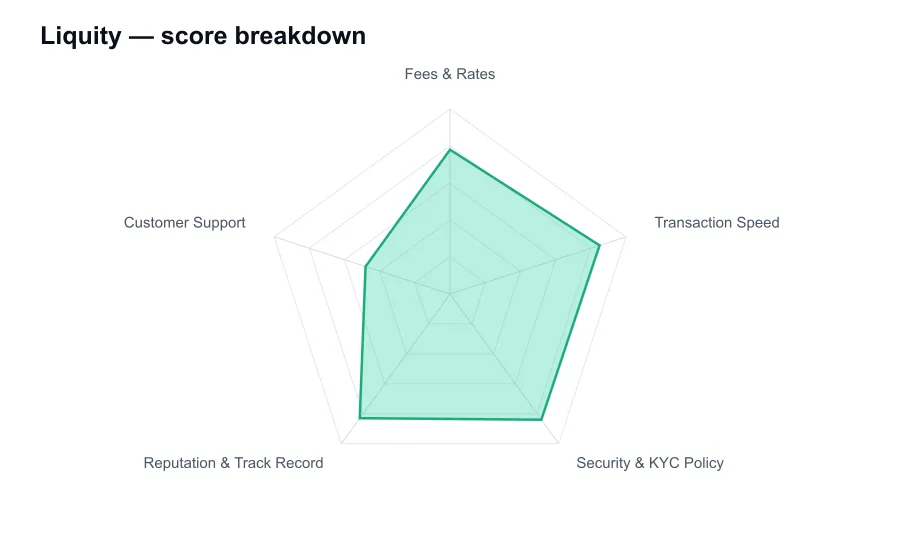
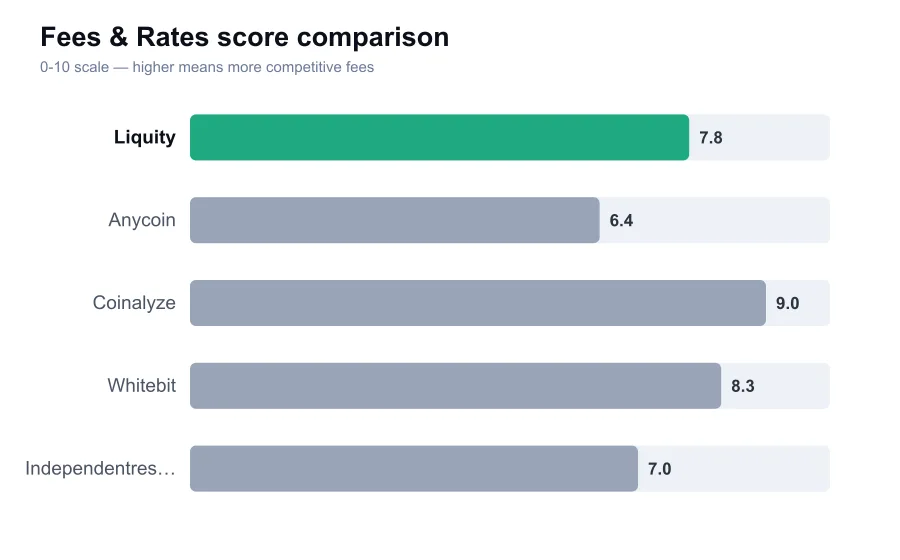
The fee conversation around Liquity needs more care than promotional summaries usually give it. V1 did not charge recurring interest in the way a traditional lending protocol does, but borrowers paid a one-time borrowing fee, with a minimum fee historically set at 0.5 percent. There was also a redemption mechanism that helped keep LUSD close to one dollar. It improved the peg, but it could reduce debt and remove collateral from low-rate positions in ways users needed to understand.
V2's variable-rate borrowing changes the picture. Rather than simply claiming the protocol is interest-free, users need to inspect the current borrowing rate, upfront fee mechanics, and the chosen collateral branch. Rates can be attractive, but they are market-driven and subject to change. A borrower should calculate the annualised cost, the health of the stablecoin market, and the consequence of a redemption before deciding that a Liquity loan is cheaper than Aave, Spark, Morpho, or a centralised credit product.
Gas is another real cost. Opening, adjusting, and closing a Trove requires on-chain transactions. Ethereum gas can make small positions uneconomic, especially during busy periods. Liquity is more suitable for a borrower with enough collateral that fixed transaction costs do not dominate the economics. A person borrowing a few hundred dollars may discover that gas and risk outweigh any theoretical benefit from a lower protocol fee.
Speed is excellent at the settlement layer because the protocol follows blockchain confirmation. There is no human credit department and no bank transfer queue. Once a transaction is accepted and confirmed, the position exists and the stablecoin is available in the wallet. That is a genuine advantage over centralised lenders. But Ethereum block times are not the same as instant finality, and network congestion can delay or make adjustments expensive exactly when an ETH price decline makes speed most valuable.
Liquity's security profile is unusually strong for a DeFi protocol, but it is not magic. The system's smart contracts have been subjected to extensive scrutiny, and the project has a long reputation for prioritising immutable, minimally governed architecture. That reduces governance attack surface and avoids the familiar spectacle of token holders voting themselves emergency powers. It also means users cannot expect a company to reverse an error, bail out a bad trade, or freeze a malicious transfer.
Smart-contract risk remains the central risk. Audits and time in production are valuable evidence, not a guarantee. The protocol depends on oracles, liquidations, stablecoin liquidity, Ethereum, interfaces, and users' own wallet security. A fraudulent front end, compromised browser extension, or approval granted to the wrong contract can defeat the practical safety of an otherwise well-designed protocol. DeFi security begins before the first transaction is signed.
The Stability Pool is one of Liquity's more sophisticated and more easily misunderstood features. Users who deposit the protocol stablecoin help absorb debt from liquidated Troves. In return, they can receive collateral gains and incentive rewards, depending on the version and configuration. This is not a risk-free savings account. Stability Pool participants are explicitly taking liquidation exposure, stablecoin exposure, and opportunity cost in return for yield. Anyone using it should learn the loss mechanics before chasing an annual percentage figure.
Liquity has an excellent reputation among technically informed DeFi users. Its original model is admired for avoiding governance token capture and for making liquidation logic transparent. It has also survived several market cycles better than many short-lived lending experiments. Still, it is a specialised protocol with a smaller mainstream footprint than Aave or Maker. That is not a defect, but it means there are fewer familiar support channels for a newcomer who gets stuck.
Support is not Liquity's strongest consumer feature because there is no support desk that can safely intervene in protocol-level transactions. Documentation, community channels, front-end guidance, and independent educational material do much of the work. This is acceptable for an advanced DeFi user. It is poor fit for someone who expects a telephone number, a password reset, or a person who can undo an incorrect wallet transaction.
Liquity is one of the more intellectually coherent ways to borrow against ETH on-chain. Its design rewards users who understand collateral ratios, liquidations, redemption mechanics, and wallet security. I like its resistance to governance sprawl and its emphasis on transparent rules. I would not recommend it to anyone who needs certainty, dislikes monitoring positions, or is borrowing against collateral they cannot afford to lose. Liquity is powerful financial infrastructure, and that is precisely why casual users should treat it with respect.