Independent Reserve is one of the more established Australian crypto exchanges, and its identity is much clearer than the typical offshore trading brand. Founded in 2013, it has built its name around compliance, Australian dollar access, and a conservative approach to running a centralized exchange. It is not trying to be the loudest venue or the one with the longest token list. Its pitch is steadier than that, and for many Australian users that restraint is the point.
The exchange serves retail customers, self-managed super fund investors, and business or institutional clients, with services shaped around Australian banking and compliance expectations. It has also expanded its reach beyond Australia through Singapore operations. That regional focus is important. Someone chasing every new memecoin or perpetual futures market will find the selection restrained. Someone who wants to buy Bitcoin, Ether, and established assets with AUD may find the narrower catalogue reassuring.
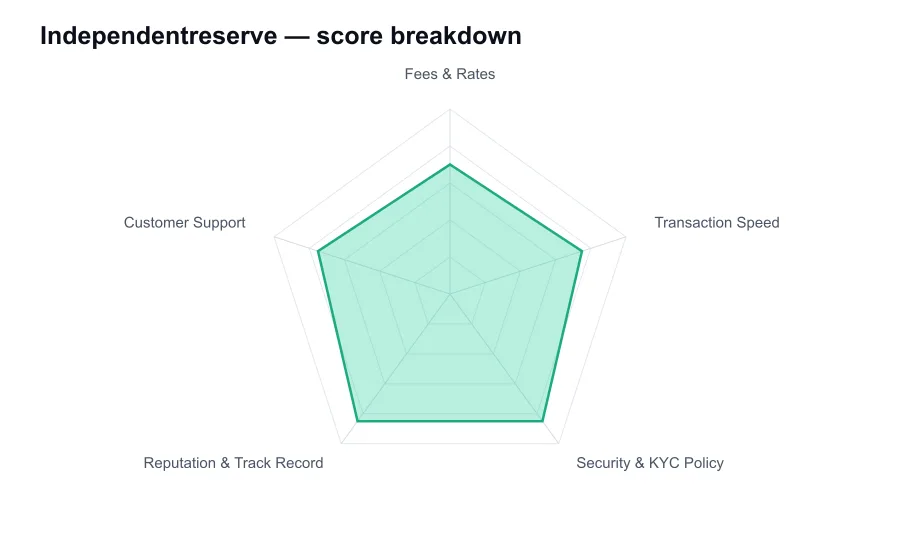
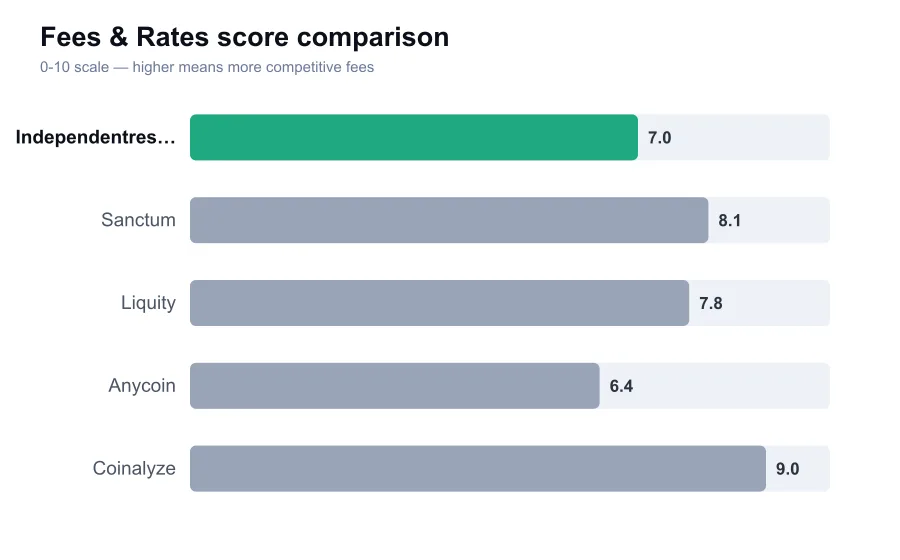
Pricing is fair but not the cheapest on the first trade. Independent Reserve's standard trading fee begins at 0.5 percent, then falls as 30-day trading volume rises. High-volume tiers can reach materially lower rates, with the published schedule historically moving down to 0.02 percent for makers and 0.05 percent for takers at the top end. That structure rewards active traders, but a casual buyer should not pretend 0.5 percent is bargain pricing.
The exchange's Auto-Buy feature has historically charged a 0.5 percent fee, which is clear enough but not especially aggressive. Compare that with a low-cost brokerage route or a deep order-book exchange and the saving can be meaningful for frequent purchases. Still, transparent pricing has value. I would rather see a plainly disclosed half-percent than a supposedly free purchase masked by a much wider spread.
Deposit and withdrawal economics depend on the method and asset. Australian dollar bank transfers are generally the practical path for local users, while blockchain withdrawals carry network-related charges that can change. Before funding an account, check the live fee page, because fee tables and supported methods do move. The important positive is that Independent Reserve provides a conventional schedule rather than forcing users to discover costs at the point of withdrawal.
Execution is good for mainstream pairs, not miraculous. AUD markets for Bitcoin, Ether, XRP, Solana, and other established assets are usually the sensible place to trade. For less liquid coins, the order book can be thinner than Binance or Coinbase, and a market order can eat through several price levels. Use limit orders for any size that matters. That advice applies everywhere, but it matters more on regional exchanges.
Bank transfer speed is normally driven by Australia's payment rails and the sending bank. PayID and faster bank transfers can make funding relatively quick, though an initial deposit or a compliance review may take longer. Crypto deposits are credited after the required network confirmations, and withdrawal timing depends on wallet processing plus the destination chain. In ordinary conditions, Independent Reserve is a practical platform, but it isn't built for the hyperactive trader demanding millisecond-level infrastructure.
The security story is one of the exchange's stronger points. Independent Reserve operates under Australian anti-money laundering rules and is registered with AUSTRAC as a digital currency exchange. It requires account verification, which is inconvenient for privacy-focused users but sensible for its target market. The company also discusses cold-storage practices and provides security features such as two-factor authentication. Those are meaningful basics, though users should still avoid treating any exchange account as a long-term vault.
Its account protection options deserve attention. Enable authenticator-app 2FA rather than relying on SMS, use a unique password, and scrutinize withdrawal settings and emails. The exchange's Vault service is designed to add a time delay and multiple approvers to withdrawals, an unusually useful control for larger holders, SMSFs, and organizations. A delay can feel annoying until the day it stops an unauthorized withdrawal. For the right customer, that feature is more valuable than another obscure altcoin listing.
Independent Reserve has also offered an insurance-style arrangement called Premium, aimed at covering certain losses from theft or hacking under defined conditions. Read the current terms carefully rather than assuming every loss is covered. Insurance language in crypto is often narrower than users expect, and it does not protect against market losses, a compromised personal email account, or sending coins to the wrong address. The core rule remains the same, don't leave more on an exchange than you need.
Its reputation is solid, particularly in Australia. More than a decade of operation matters in an industry where many brands disappear after one market cycle. The company has been visible in local crypto policy and banking discussions, and it has developed products for SMSFs and over-the-counter clients that suggest a real operating business rather than a short-lived retail funnel. That doesn't make it risk-free, but it is a genuine track record.
Support is competent rather than luxurious. Independent Reserve provides help-centre material and ticket-based support, and its local orientation is an advantage for users who don't want to explain Australian payment issues to an offshore team. It is not a 24-hour phone concierge for small retail accounts. During a market spike, response times can still test patience. The documentation does a decent job with common account, deposit, and security questions, which prevents some avoidable tickets.
The limitations are clear. Token choice is smaller than at global competitors, leverage hunters should look elsewhere, and a casual customer paying the standard 0.5 percent fee can find lower-cost routes. The interface is functional and sober, not designed to entertain. I see those as mostly deliberate trade-offs. Independent Reserve is trying to be a dependable Australian gateway, not a casino with a wallet attached.
My take is positive for its intended audience. Independent Reserve earns trust through visibility, compliance, sensible controls, and a long local history, even if it loses on fees and market breadth. It is a particularly good match for Australians buying established assets, SMSF users, and businesses that value a recognizable counterpart. Advanced global traders can get better depth elsewhere, but they may also give up some of the calm, accountable experience this exchange provides.