SimpleSwap is a long running instant crypto exchange service, built for people who want to convert assets without learning a full trading terminal. It occupies a middle ground between a centralized exchange and a decentralized swap. You choose the coins, send one asset to a supplied address, and receive another asset in your own wallet. That is convenient, particularly for occasional conversions, but it is not the same as trading directly on a transparent exchange or executing a trustless onchain swap.
The service has been operating since 2018 and has become one of the more recognizable names in the quote based exchange category. Its interface is easy to understand, its asset list is broad, and the platform has built integrations that put its swap function in front of many wallet users. This is a meaningful advantage over obscure competitors. SimpleSwap is not a faceless new site with no history, although its reputation is still more mixed and less institutionally robust than that of a major regulated exchange.
The main attraction is simplicity. There is usually no need to maintain an exchange balance, navigate charts or submit a conventional limit order. For a user holding BTC in a wallet who wants ETH, or someone consolidating an altcoin position into a major asset, the process can be quicker and less intimidating than opening a full exchange account. The platform also supports a large range of cryptocurrencies, which helps where centralized exchanges do not list a particular asset.
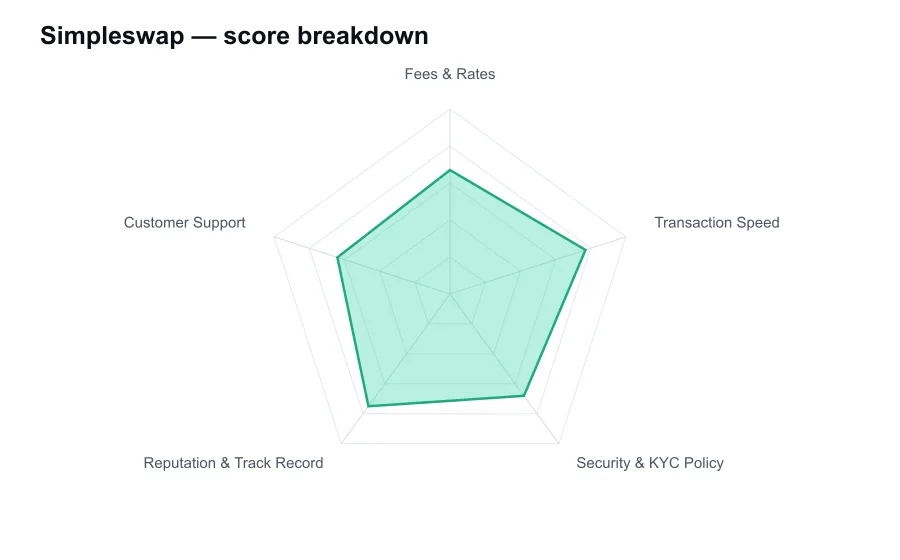
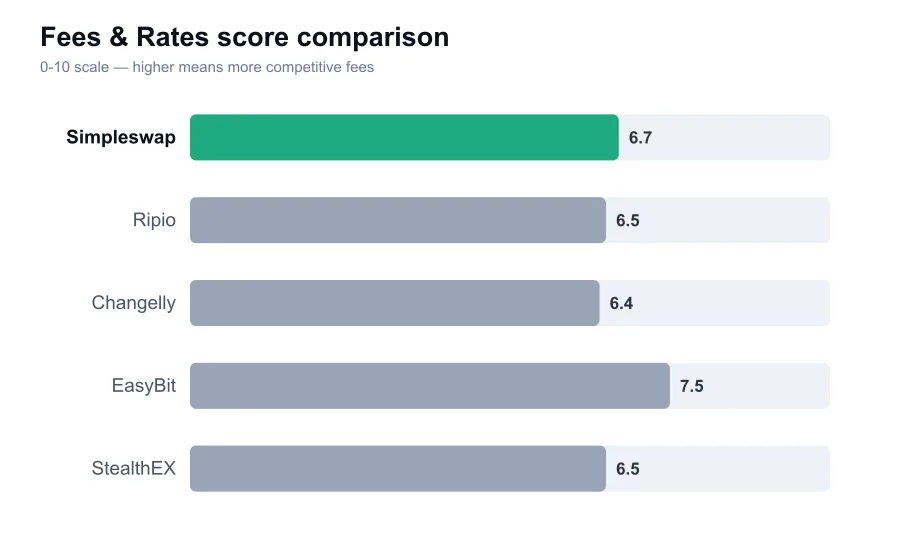
That ease should not distract from the question that matters most: what rate are you actually getting? SimpleSwap's pricing is quote based. The visible result incorporates liquidity provider pricing, the platform's economics and network costs where applicable. The service has offered floating and fixed rate transaction options, and users should understand the difference before selecting either. A floating rate can move with the market between quote creation and execution. A fixed rate can reduce that uncertainty but may include a higher cost.
There is no universal SimpleSwap fee figure that tells the whole story. The effective cost varies by pair, liquidity, network conditions and transaction size. For common pairs in calm markets, the quote can be reasonable. For thin assets, volatile periods or larger amounts, the spread can be noticeably less favorable than trading on Kraken, Coinbase Advanced, Binance or a liquid decentralized exchange. This is not unique to SimpleSwap. It is the economic price of turning a complicated trade route into one button.
The right way to judge it is by comparison, not advertising. Check a live quote on SimpleSwap, then compare the expected output with another instant service and with the result of a manual trade after deposit and withdrawal fees. For a $50 wallet cleanup, convenience may win even if the percentage cost is higher. For a $10,000 conversion, a few percentage points of hidden spread becomes real money. SimpleSwap is best used by people who can do that arithmetic.
Speed is usually good for ordinary transactions. Once the incoming transfer receives the needed confirmations, SimpleSwap can route and send the outgoing asset without requiring an order book match from the user. Fast networks and liquid pairs may complete in minutes. Bitcoin, Ethereum during high gas demand, obscure chains and busy market conditions can take much longer. Anyone who promises a precise completion time for every swap is selling a fantasy.
The platform's status as noncustodial is also frequently misunderstood. SimpleSwap does not ask users to leave funds in a persistent trading account in the normal flow. Yet it necessarily receives the incoming coins during the exchange process and sends the output afterward. That is temporary counterparty risk. It is safer than leaving a portfolio parked on an exchange for months, but it is not equivalent to a decentralized wallet to wallet contract where nobody else controls the transaction path.
No standard registration is normally required for a basic swap, and that is one reason the service remains popular. Still, SimpleSwap has compliance policies and can request KYC information where a transaction is flagged by its risk systems or partners. Users should not send funds under the assumption that no verification can ever occur. The uncomfortable truth is that many instant services reserve this right, and a held transaction can be stressful if the user expected unconditional anonymity.
Security is decent in the practical sense that the platform has operated through multiple market cycles and users can receive funds in their own wallet rather than maintain a custodial balance. The major risks are operational: entering the wrong address, choosing the wrong network, using a phishing clone, or having a transaction delayed for compliance review. There is no chargeback button in crypto. Always copy addresses carefully, verify the domain, and do a small test where a network or token is unfamiliar.
SimpleSwap's reputation is better than most smaller instant exchange brands, but it is not spotless. Public feedback includes many users praising quick, uncomplicated swaps, alongside complaints typical of this category about delayed transactions, rate changes and support during AML reviews. That pattern does not automatically mean the service is unreliable. It does mean that the best experience is usually a straightforward transaction, while edge cases can become frustrating. A service should be judged partly by its worst normal day, not just its best five minutes.
Support is available through its website and support channels, and the company publishes help material for common transaction problems. For a simple missing payment issue, that may be enough. Support quality becomes harder to assess when funds are held pending compliance information or a partner route fails. In those cases, users need clear status updates, specific transaction references and realistic timelines. SimpleSwap is more established than many rivals, but it still cannot offer the dispute machinery of a bank or a top tier regulated broker.
The breadth of asset support is useful, yet it is also where discipline matters. Do not assume every listed token has equally reliable liquidity or every supported network has the same processing quality. Wrapped versions, lookalike tickers and destination tag requirements are recurring sources of avoidable mistakes. I would use SimpleSwap primarily for liquid, recognizable assets and only send a less familiar token after confirming the exact chain, contract or network designation.
Compared with ChangeNOW, SimpleSwap belongs in the same convenience first tier. Compared with a centralized exchange, it wins on low friction and can avoid the hassle of moving funds through an account. It loses on transparent execution, advanced order controls and usually price efficiency at scale. Compared with a decentralized exchange, it is easier for cross chain conversions but introduces a company and its partners into the process. There is no free lunch in that tradeoff.
My take is favorable but conditional. SimpleSwap is a credible tool for small to medium, nonurgent swaps where its quoted payout is competitive and the user knows exactly what they are sending. It is not where I would execute a large portfolio rebalance, chase a volatile token or route funds under time pressure. Use the simple interface, but don't think simply about the risks. The best SimpleSwap user is a cautious self custodian who values convenience without surrendering judgment.