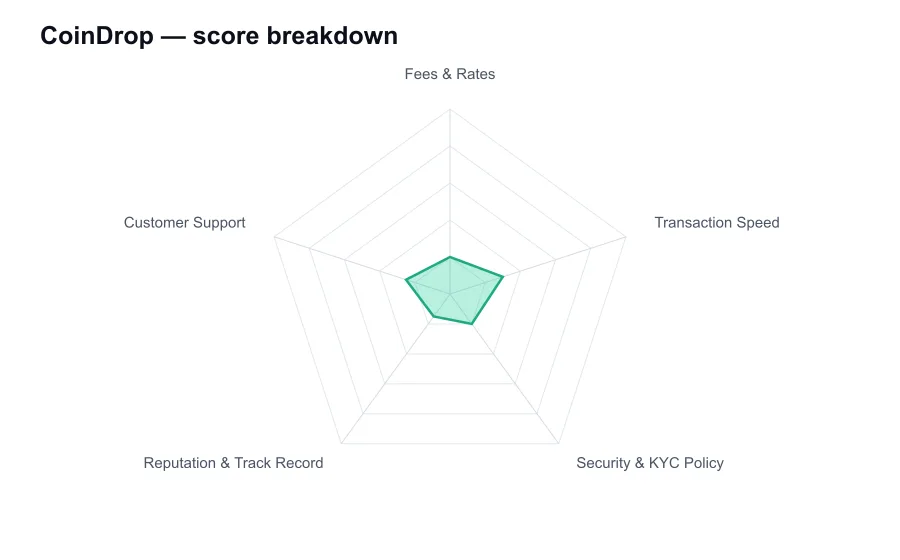
CoinDrop is a name that surfaces in crypto search results and social posts, but it does not occupy the same established market position as regulated retail platforms such as Coinmotion, Kraken, Coinbase, or Bitstamp. The main problem starts before anyone deposits: there is not a sufficiently clear, independently verifiable public record showing who operates a major CoinDrop exchange service, where it is regulated, or what customer protections apply. That makes it impossible to treat it as a normal, proven exchange.
A crypto provider does not need to be famous to be legitimate. Plenty of good regional services began quietly. But a newcomer still needs to show the basics clearly: legal entity, registered address, terms, privacy policy, licensing position, supported jurisdictions, fee schedule, and a working support route. CoinDrop's public footprint is too thin and too inconsistent for me to verify those fundamentals to the standard a reader should expect before sending money.
That lack of clarity matters more than slick design or a tempting exchange quote. Crypto transactions are usually irreversible. If a platform delays a withdrawal, freezes an account, changes a rate after payment, or simply stops answering, the user needs a named company and a credible complaint route. With well documented providers, you can at least identify the operator, regulator, banking partner, and escalation path. CoinDrop does not give me enough confidence on those points.
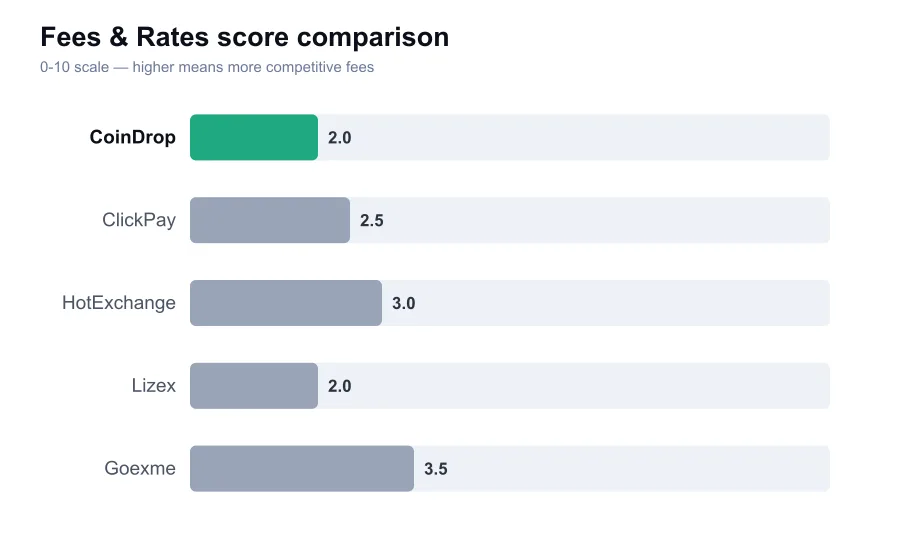
Fees are particularly difficult to assess because I cannot substantiate a stable public fee table from a clearly identified operator. A quoted exchange rate is not the same thing as a disclosed fee. Many instant swap services build their margin into the rate, then may charge a network fee or payment processing cost as well. Unless the final amount, rate type, and every charge are displayed before confirmation, a cheap looking swap can become an expensive one.
That is why I would not assign CoinDrop a competitive fees score merely because a promotional page or referral post claims low costs. A serious comparison requires a repeatable quote for the same trade across several providers, including the amount that actually arrives in the destination wallet. Coinmotion publishes its trading fees. Kraken and Coinbase show trading or spread information, however imperfectly. CoinDrop's pricing transparency is not at that level.
Speed claims need the same skepticism. An instant purchase can still involve card approval, blockchain confirmation, manual compliance review, or a delayed payout from an underlying liquidity provider. A credible service distinguishes between the time to place an order, the time to receive fiat, and the time for an onchain transaction to become spendable. I could not verify published service levels or a dependable record of completed CoinDrop withdrawals.
For small test transactions, a blockchain explorer can confirm whether a provider has actually broadcast a payment. That does not prove the company is safe, but it helps separate a temporary network delay from a platform problem. I would never make CoinDrop the first destination for a meaningful transfer. If somebody insists on trying it, use an amount you can afford to lose, send to a wallet you control, and test withdrawal before considering another deposit.
Security is not just about whether a website uses HTTPS or offers a login code. A trustworthy custodial provider explains how it stores customer assets, whether it uses cold storage, how it handles withdrawal address changes, whether two factor authentication is available, and what happens if an account is compromised. CoinDrop does not provide enough independently checkable detail for a positive security assessment. Vague references to encryption do not answer custody questions.
Its identity verification policy is also unclear. That can sound appealing to people who dislike intrusive onboarding, but ambiguity is not privacy. A platform may accept funds quickly and then request documents when you try to withdraw, especially if a payment processor or compliance provider flags the transaction. Legitimate no KYC wallet software is one thing. An unclear service handling customer money is another, and users should not confuse the two.
Reputation is where CoinDrop falls furthest behind. I found no long operating history comparable to Coinmotion's Finnish business record, no substantial body of credible independent reviews that can be tied to a clearly identified company, and no meaningful public evidence of how it handled past market stress. A few positive comments, affiliate posts, or screenshots are not a track record. They are marketing material until proven otherwise.
Customer support is hard to praise when the ownership and documented support structure are uncertain. Before using any little known provider, test the support channel with a practical question about fees, withdrawal limits, jurisdiction, and account closure. Generic replies, pressure to move to Telegram or WhatsApp, or requests for a deposit before assistance are serious warning signs. Legitimate companies can use chat apps, but they should never be accountable only through chat apps.
There is also a basic due diligence issue around domains. Fraudulent operations often use names that resemble existing crypto brands, rotate web addresses, or publish cloned terms pages. Check the exact domain, company registration, age of the domain, and whether the contact details match the legal documents. Do not trust a search ad as proof that the service is official. Search placement is bought, not earned.
For a user who just wants to buy bitcoin or exchange stablecoins, CoinDrop gives no clear advantage that compensates for the information gap. Established platforms may ask for more documentation and may feel less exciting, but their fees, limits, and business identities can be investigated. Crypto is already risky enough without adding counterparty uncertainty that could have been avoided.
My view is blunt: CoinDrop is not a provider I can recommend for deposits, trading balances, or large swaps until there is far better evidence of ownership, pricing, security controls, and customer outcomes. A tiny test transaction is the maximum exposure I would consider, and even that is optional rather than advisable. Use a known regulated exchange for fiat purchases and a self custody wallet for longer term holdings. CoinDrop has not earned the trust required to move beyond the watchlist.