CoinCraddle does not have the public profile, documented operating history, or independently verifiable exchange infrastructure needed to assess it alongside established crypto platforms. In practical terms, that places it in the high caution category before we even get to pricing or features. The crypto industry has no shortage of little known brands promising quick conversions, automated profits, trading access, or account managers. A credible provider must show who operates it, where it is registered, how it protects client assets, and what happens when a customer wants to withdraw.
I could not verify CoinCraddle as a recognized, regulated, or widely documented crypto exchange with transparent public terms. That does not prove wrongdoing by itself. New services exist, and not every legitimate company is famous. But the burden is on the provider to establish trust, particularly if it accepts deposits or asks users to upload identity documents. CoinCraddle does not offer the kind of public evidence that would justify treating it like Coinbase, Kraken, Gemini, Bitstamp, or a licensed regional exchange.
The name itself should make users slow down and verify every detail. Crypto scams routinely use memorable but generic names, then lean on social media ads, private messaging, fake testimonials, and polished dashboards to create the appearance of an operating investment platform. A dashboard showing profits is not evidence that trades occurred. A support agent saying funds are secure is not proof of custody. The only reliable evidence is a transparent legal entity, clear terms, independently confirmable licensing where relevant, and successful normal withdrawals without invented charges.
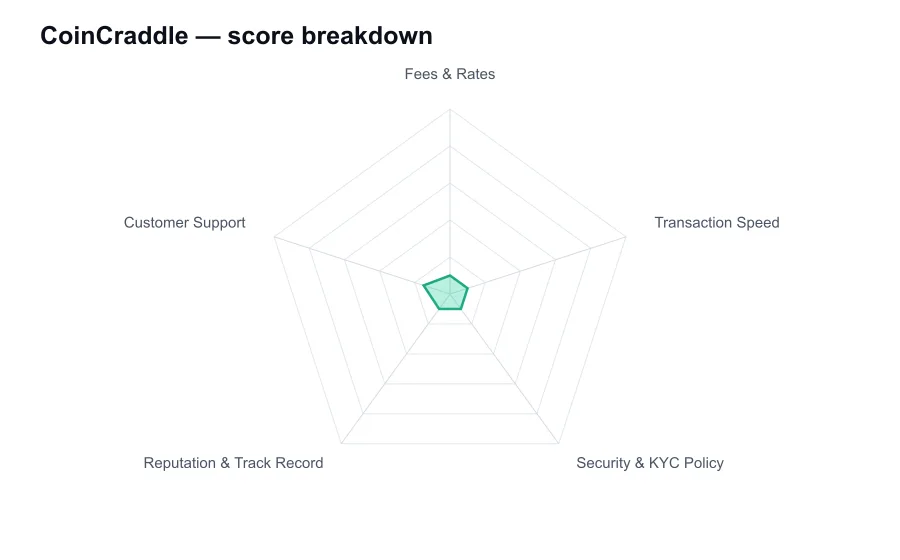
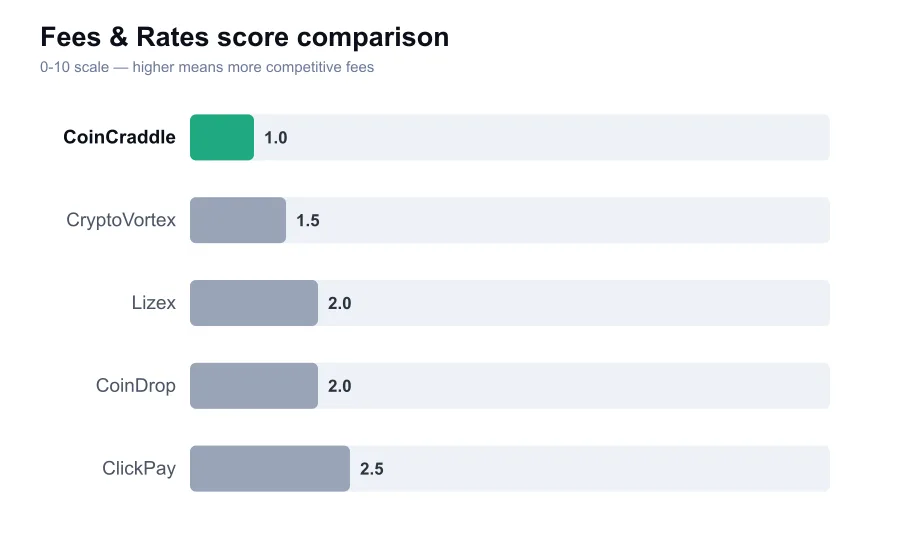
There is no dependable public fee schedule that I can attribute to CoinCraddle. That means there is no responsible way to tell prospective users whether it charges a spread, maker and taker fees, card processing fees, deposit fees, network fees, inactivity fees, or withdrawal charges. Hidden costs are bad enough at a known exchange. At an unverified provider, unclear fees can become a mechanism for trapping funds. Customers may be told that a tax, security bond, liquidity fee, or account upgrade payment is required before withdrawal.
That last pattern deserves direct attention. Legitimate exchanges may pause withdrawals for compliance checks or require identity verification, but they do not normally demand a fresh crypto deposit to release an existing balance. Nor do they ask users to pay a percentage of alleged profits upfront before they can access funds. If CoinCraddle, or anyone claiming to represent it, makes such a request, stop sending money. Save the messages, transaction hashes, wallet addresses, and screenshots, then contact your bank, card issuer, exchange, or relevant fraud reporting service promptly.
Speed is another category where marketing language can mislead. A platform can credit an internal account instantly while delaying or refusing an external withdrawal. The only speed that matters for a custodial crypto provider is the ability to send assets to a wallet you control, reliably and at a disclosed cost. I found no independently established withdrawal service level, blockchain confirmation policy, or proof that CoinCraddle processes meaningful customer withdrawals under normal conditions. It cannot earn a strong transaction speed score on promises alone.
Security disclosures are also not sufficiently verifiable. A serious exchange explains account security, two factor authentication options, withdrawal address controls, cold storage practices, incident response, and the legal treatment of customer assets. Some go further with proof of reserves, audit reports, bug bounty programs, and detailed compliance pages. CoinCraddle does not present a public security record that can be meaningfully compared with those standards. Generic claims about encryption are not enough. Nearly every website uses encryption, including fraudulent ones.
KYC can be a particular danger on an unproven site. Identity verification is normal at regulated exchanges, but users should know exactly which company receives their passport, selfie, address record, and financial information. Handing that material to an obscure platform can create long term identity theft risk in addition to financial loss. Do not upload documents merely because a chat agent says verification will unlock a bonus, withdrawal, or premium account. First verify the entity through government company registries and credible regulatory databases.
Reputation is CoinCraddle's central failure. I could not identify a durable public record of independent reviews from reputable industry sources, named leadership, clear licensing, audited financial information, or a demonstrated history through multiple market cycles. A handful of glowing reviews on a website or in a messaging group carries little weight because such content can be purchased or fabricated. Trust has to be observable outside the provider's own marketing channels, and CoinCraddle does not clear that bar.
Support should not be judged solely by how quickly someone answers a chat message. Fraudulent operations can be extremely responsive before a customer deposits, then become evasive after a withdrawal request. Useful support means a documented ticketing process, business address, accountable legal operator, published complaints route, and terms that explain dispute handling. CoinCraddle does not provide enough independently verifiable information to show that these safeguards exist. Fast friendly messages cannot substitute for accountable customer service.
If you already opened an account, the safest next step is not to add more money to meet an alleged threshold. Attempt a small withdrawal to a self controlled wallet, but do not send extra funds to unlock it. Check the destination transaction on a reputable block explorer once it is broadcast. If the platform has your documents, change passwords on any reused accounts, enable two factor authentication on your email, and monitor financial accounts for suspicious activity. Do not let urgency override basic caution.
A user researching CoinCraddle should compare its disclosures with a known exchange's public materials. At Kraken, for example, fee tiers, supported services, security practices, and legal documentation are readily available. At Coinbase, users can find a large volume of customer support articles, corporate disclosures, and product terms. Those companies have their own flaws and customer complaints, but they are identifiable businesses subject to public scrutiny. CoinCraddle's lack of comparable transparency is not a minor feature gap.
There is no good reason for a first time buyer to choose an obscure platform over a regulated and established alternative simply because it advertises a special return, lower fee, or private account manager. Crypto transactions are irreversible once confirmed, and recovery options are limited. A self custody wallet can protect assets after withdrawal, but it cannot rescue funds that were never honestly available to withdraw. The safest decision is to keep crypto purchases boring, use known providers, and avoid investment offers delivered through unsolicited messages.
CoinCraddle could improve this assessment only through concrete evidence, not promotional claims. That would mean a named company, verifiable registration, complete legal terms, transparent fee and withdrawal rules, clear security documentation, independently checkable support channels, and a record of normal customer use. Until such evidence is easy to find, it should not be treated as a viable exchange or investment platform. The absence of proof matters more here than any promised feature.
My view is unequivocal: do not deposit meaningful funds with CoinCraddle based on the information that can currently be verified. The risk is not balanced by a demonstrated advantage in pricing, speed, security, or service. There are established platforms with clearer costs, stronger public accountability, and a real history of processing customer withdrawals. CoinCraddle is a name to approach with scrutiny, not trust.