WhiteBIT is a centralized cryptocurrency exchange with roots in Ukraine and a much broader European ambition. It is not an exchange kiosk or a simple swap page pretending to be a market. It offers spot markets, conversion tools, earn products, trading features, and fiat on and off ramp connections. That makes it substantially more capable than a regional exchanger, but it also means customers must accept account controls, identity verification, and the risks that come with entrusting assets to a centralized platform.
The platform's biggest strength is that it gives ordinary users access to a proper exchange structure without feeling as intimidating as some global competitors. A beginner can use the basic buy or convert functions, while an active user can work from the spot market interface. WhiteBIT has also spent heavily on brand visibility, sports partnerships, and its position in the Ukrainian crypto scene. It is a recognizable business, not an obscure website with a chat button.
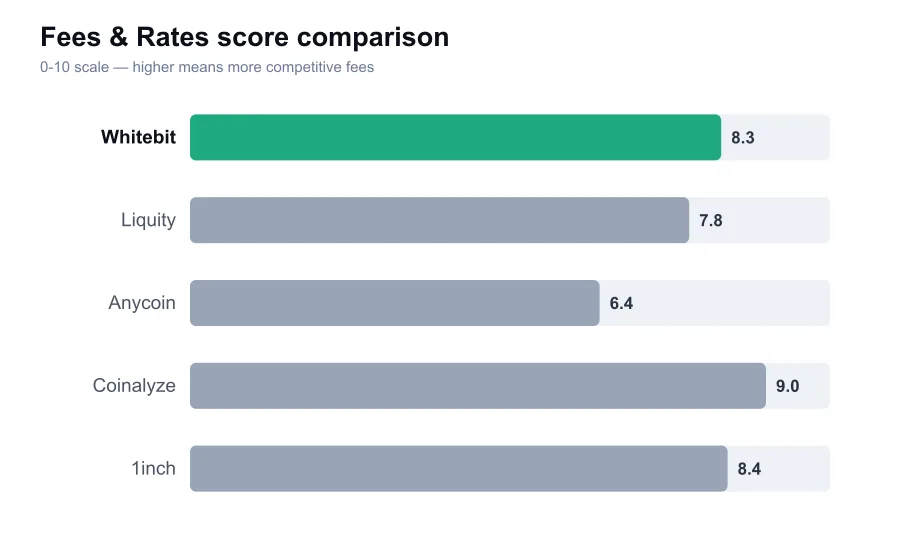
On trading fees, WhiteBIT is competitive. Standard spot trading fees have commonly been advertised at up to 0.1 percent, with lower levels available through its fee arrangements and loyalty structure. That places it in the same broad low cost bracket as Binance spot trading and below the standard fee levels many casual users pay at Coinbase. Market conditions and account tier rules change, so traders should verify the current schedule before assuming a particular rate.
The important qualification is that low spot fees do not mean every action is cheap. Crypto withdrawals carry network and platform specific charges, fiat deposits and withdrawals can involve external payment partner costs, and the instant conversion feature may build a spread into the quote. A user buying crypto by card may pay far more in effective cost than a trader depositing USDT and placing a limit order. WhiteBIT is best value when you use the exchange deliberately rather than clicking the easiest button.
Liquidity is decent on the principal pairs, particularly major assets and stablecoins, but it is not at the level of Binance's deepest global books. For normal retail orders this rarely matters. For a larger order, look at the order book, calculate likely slippage, and use a limit order instead of a market order. Smaller tokens can show thinner depth and wider spreads, so the listed price can be more flattering than the fill you actually receive.
Execution speed is strong. Orders on a centralized exchange are generally matched in seconds, and internal transfers can be immediate. Crypto deposit speed is dictated by the relevant blockchain and WhiteBIT's confirmation requirements, while withdrawals need security processing and network broadcasting. A routine withdrawal can be quick, but no exchange can make Bitcoin blocks or Ethereum congestion disappear. Users who understand that distinction tend to have a far better experience.
WhiteBIT's security posture is considerably stronger than that of a small unregulated exchanger. The company promotes cold storage practices, two factor authentication, anti phishing measures, address management, and security monitoring. It has also publicized its use of custodial security partners and security certifications. Those are positive signals, but they should not lead users to believe an exchange account is equivalent to self custody. A centralized platform remains a concentration of operational and counterparty risk.
KYC is not optional for the full WhiteBIT experience. Identity verification is part of its compliance framework, particularly for fiat access and broader account functionality. Some users dislike that, but it is the price of a platform trying to operate with payment providers and a public regulatory profile. Anyone who requires strict privacy or wants to avoid source of funds questions should not open an account expecting an anonymous trading venue.
Verification can also be a point of friction. Document rejection, selfie checks, name mismatches, and regional restrictions are common across centralized exchanges, including WhiteBIT. The platform is a better fit for a user whose identity documents, banking details, and tax situation are clean and consistent. It is a poor choice for people attempting to move third party money, use a borrowed card, or trade from a prohibited jurisdiction. Those practices are likely to trigger restrictions.
WhiteBIT has built a meaningful reputation, especially among Ukrainian and European users. Its longevity, marketing presence, ecosystem development, and public facing partnerships give it more accountability than a typical small exchange service. Still, reputation in crypto cannot be treated as a guarantee. The industry has repeatedly shown that brand recognition is not a substitute for prudent custody. Keep trading capital on the platform, not savings you cannot afford to have temporarily inaccessible.
Customer support is functional but not exceptional. WhiteBIT provides help center material and support channels, which will answer many basic account questions. The real test is how the team handles a difficult withdrawal review or verification problem. Like other big exchanges, response times can feel slow when queues rise, and scripted first responses can frustrate customers who already read the FAQ. This is one area where a small local exchanger can occasionally feel more personal.
The mobile and web experience are generally polished enough for regular use. I particularly like that the exchange gives users a path from a simple purchase to genuine spot trading without requiring an immediate jump to professional tools. The danger is feature overload. Earn products, promotional campaigns, tokens, and trading options can encourage inexperienced users to do more than they understand. Keep the first steps boring: secure the account, buy or deposit a major asset, and withdraw a test amount.
For security, enable app based two factor authentication, use a unique password, activate anti phishing protections if offered, and whitelist withdrawal addresses after verifying them. Do not treat email access as an afterthought. A compromised email account can undermine even a carefully protected exchange profile. It is also sensible to maintain records for taxes, deposits, and withdrawals because centralized exchange activity is much easier to document while the account remains accessible.
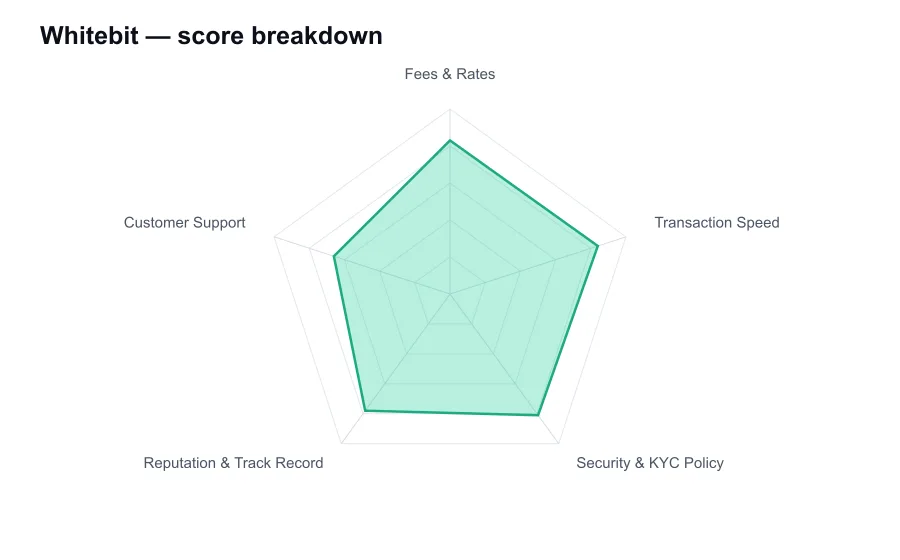
WhiteBIT is a strong fit for users who want a serious exchange with relatively low spot fees, useful fiat links, and a familiar European facing service. It is not the cheapest route for every card purchase, and it is not the best venue for users who want no KYC or maximum self custody. The platform works best for methodical users who use limit orders, understand withdrawal costs, and keep only active funds online.
My final view is favorable, with the usual centralized exchange warning attached. WhiteBIT has enough scale, product depth, and public presence to be a credible alternative to larger global names for many European and Ukrainian customers. Its attractive trading fees are real, but the total cost depends on how you fund and withdraw. I would trust it for normal trading activity more readily than any small exchanger on this list, while still moving long term holdings to a wallet I control.