Symbiosis is not a conventional custodial exchange in the Coinbase or Kraken sense. It is a cross-chain liquidity protocol built to let users swap assets between networks from one interface. Its pitch is simple and appealing: turn a multistep bridge-and-swap exercise into a single transaction. For DeFi users moving stablecoins, ETH, or major wrapped assets between chains, that solves a real annoyance.
The service sits in a crowded part of the market. Across, Stargate, LI.FI-powered aggregators, Squid, Rango, and native bridges all compete for the same user who wants assets on another chain without manually hopping through several dApps. Symbiosis distinguishes itself with a relatively approachable interface and broad support for EVM networks, plus Bitcoin-related routing through its cross-chain design. It feels designed for active on-chain users rather than first-time crypto buyers.
A user generally selects the asset and source chain, chooses the destination chain and token, connects a wallet, and signs the required transactions. Behind that simple screen, the route can involve liquidity pools, a bridge operation, and a destination-side swap. That architecture is convenient, but users should resist treating it as magic. The quoted route is only as good as the liquidity, gas conditions, and smart contracts involved at that moment.
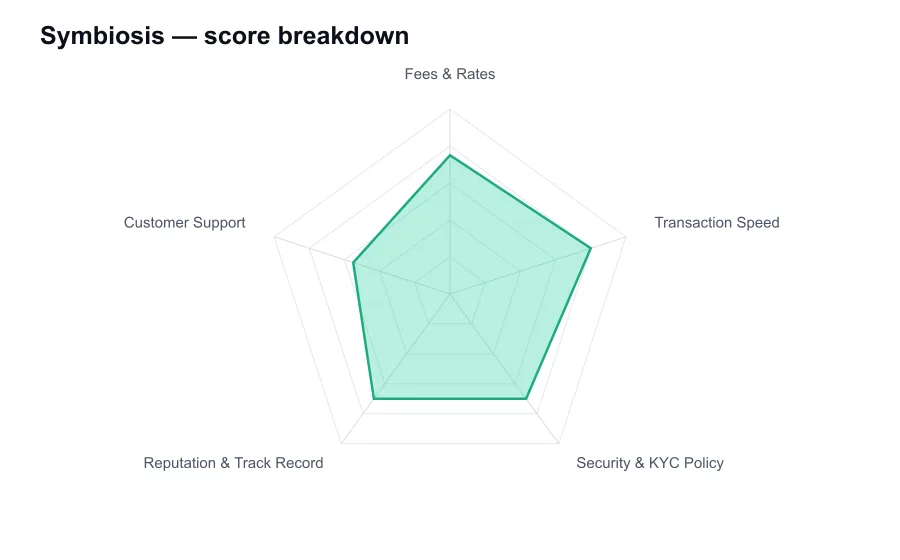
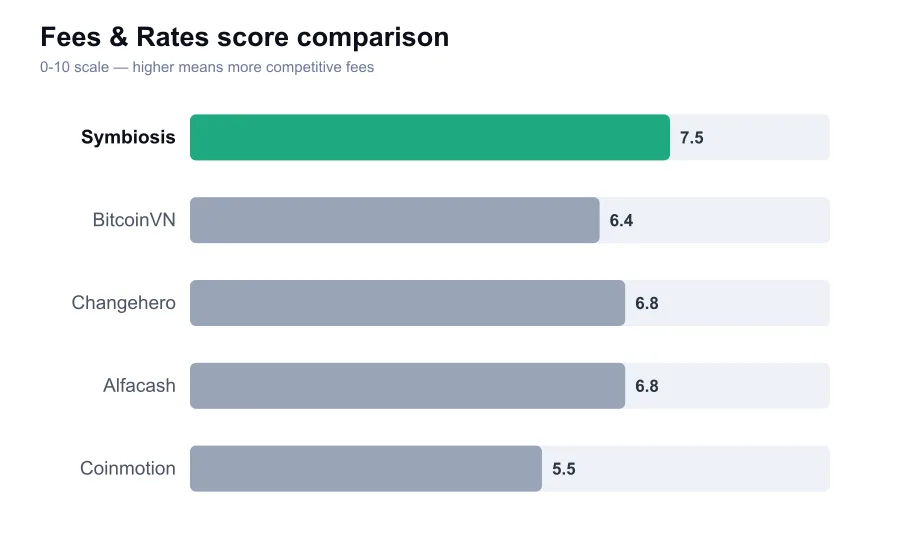
Fees are best judged from the quote screen, not from a headline number. Symbiosis does not function like a simple exchange with one transparent, flat trading fee pasted across every pair. The total cost can include the protocol's routing or liquidity fee, source-chain gas, destination execution costs, bridge-related costs, and price impact on the relevant pools. A cheap-looking route can become less attractive if the source chain is congested or the token has thin liquidity.
For common stablecoin transfers between well-supported chains, the cost is often competitive with doing a bridge and separate swap manually. The savings are mostly about avoiding duplicated approvals, separate swap spreads, and the possibility of making a costly operational mistake. Still, a sophisticated user should compare the final received amount against Across, Stargate, and a route aggregator before sending a large sum. Symbiosis can win the quote, but it does not win every quote.
The protocol's fee presentation is decent but not perfect for newcomers. The interface shows the estimated output and expected route, which is what matters most, yet it can take some experience to separate slippage from gas and protocol charges. There is no honest universal percentage to cite because a USDC transfer from Arbitrum to Base is not economically comparable to swapping a volatile token from BNB Chain to Polygon. Anyone promising one number for every transaction is oversimplifying the product.
Speed is usually good on routes with deep liquidity and fast destination chains. A routine transfer can complete in minutes, and sometimes faster, rather than the long waits associated with older bridge designs. That does not mean every transaction is instant. Confirmation on the source chain comes first, and any destination swap still depends on network conditions and available relayer or liquidity capacity.
The frustrating cases tend to be the predictable ones. Congested Ethereum gas, unstable RPC connections, token approvals, unusual assets, and cross-chain message delays can turn a quick route into a waiting game. The interface may show a transaction as pending while several components finish in the background. Users should save transaction hashes and avoid sending a second transfer merely because the first one has not appeared immediately on the destination network.
Security is the central trade-off. Symbiosis is non-custodial in the everyday sense: users connect a self-custody wallet and do not deposit coins into a personal exchange account. It does not ask ordinary swap users for identity documents, and that is attractive to privacy-conscious DeFi participants. But non-custodial does not mean risk-free. Funds interact with smart contracts and cross-chain infrastructure, which brings a materially different risk profile from holding coins in a hardware wallet.
The project has published technical material and undergone audits, factors that are better than blind trust in an anonymous swap page. Yet audits are snapshots, not insurance policies. Cross-chain protocols have repeatedly been among the most consequential targets in DeFi because liquidity and message validation are valuable attack surfaces. A careful user should verify the domain, inspect the wallet approval, avoid unlimited allowances where possible, and use a small test transfer before moving a meaningful amount.
Symbiosis has been operating through several difficult market cycles, which gives it more credibility than a newly launched bridge with no observable history. Its name is familiar in the DeFi cross-chain category, even if it does not have the mainstream brand recognition of the largest centralized exchanges. That reputation is meaningful, but the protocol still depends on a moving collection of networks, pools, contracts, and third-party wallet infrastructure. It is not a place to park a life-changing balance.
Support is more community-led than concierge-led. Documentation, official social channels, and community spaces are useful for checking supported routes and known issues. For a technical user who can provide a transaction hash and describe the network path, that may be enough. For a beginner who expects live agents to reverse a mistaken transfer or explain every signature prompt, the experience can feel thin.
That limitation matters because blockchain transfers are final. Support can help investigate a pending route, but it cannot rescue funds sent to the wrong address, restore a compromised wallet, or undo an on-chain approval already signed. Symbiosis is best approached with the habits of a DeFi user: verify each chain, read the quote, retain proof of the transaction, and do not rely on support as a safety net.
My view is that Symbiosis is a useful execution tool, not a universal crypto exchange. It earns its place for people who already understand wallets and want fewer steps between chains. Its fees can be efficient, and the experience is often fast, but both depend heavily on the exact route. Newcomers buying their first crypto should use a regulated fiat on-ramp and learn self-custody first. Experienced users who compare quotes and keep transfers modest relative to their risk tolerance will get the most from it.