Mine, commonly known as Mine Digital, is an Australian crypto brokerage and exchange-style provider rather than a global mass-market platform. Its pitch has been straightforward: offer digital-asset buying, selling, custody, and over-the-counter service to Australian customers who want a more local relationship than they might get from a giant offshore exchange. That can be appealing, particularly for higher-value clients who want a person to call. It also makes the quality of governance and client-asset handling absolutely central.
The company has operated in a market where Australian users have several credible choices, including Independent Reserve, CoinSpot, BTC Markets, Swyftx, and Kraken Australia. Mine Digital has never had the same broad retail profile or deep trading reputation as the strongest names in that group. That doesn't prevent it from serving a niche, but it means the service needs to demonstrate why a user should accept the extra counterparty risk of a smaller provider.
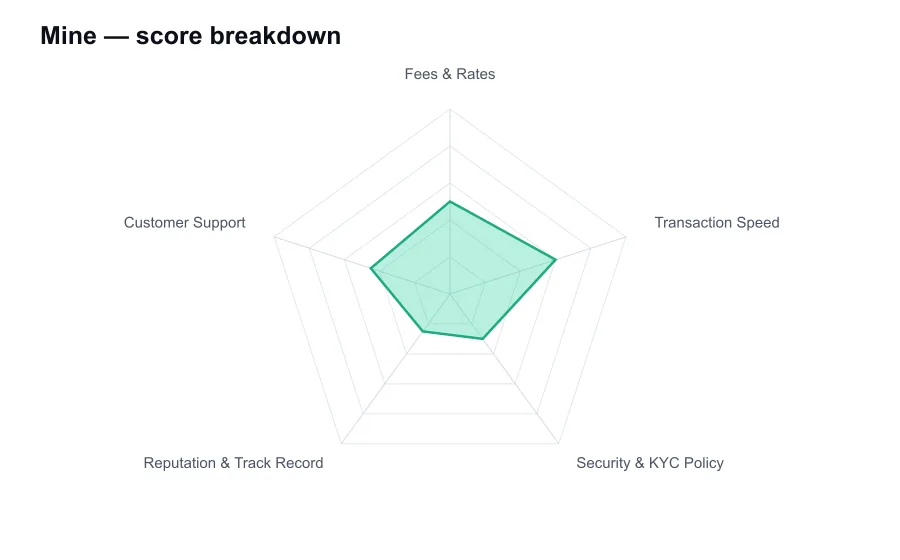
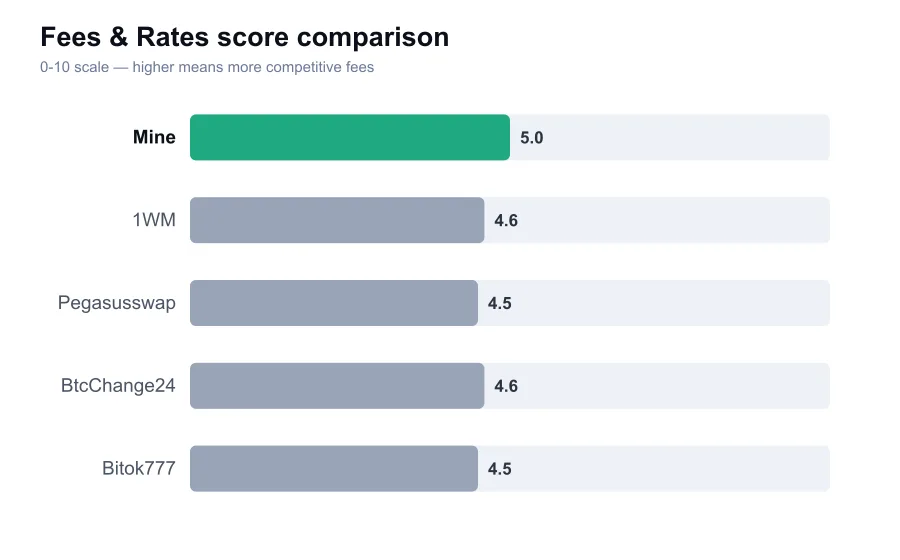
For basic purchases, fees are not always as transparent as a classic exchange order book. Brokerages can charge a stated commission, embed a spread in the quote, or use a combination of the two. The final all-in price is the only number that matters. A customer should compare the exact Australian-dollar cost and the exact amount of crypto received with quotes from Independent Reserve, Kraken, and a liquid global venue before accepting a Mine Digital offer.
This matters especially on larger orders. A 1 percent spread on a modest purchase is irritating. On a six-figure trade, it is a serious cost. OTC desks can justify a premium if they source liquidity well, provide responsive settlement, and reduce execution hassle. But customers should ask for a written quote, the duration for which it is valid, whether it includes all fees, and what happens if the market moves before payment clears. Vague language about competitive rates isn't enough.
Transaction speed can be good on a broker model if funds are cleared, the asset is liquid, and the desk is staffed. Australian bank transfers through PayID and other fast-payment rails can reduce the wait compared with old-fashioned bank transfers. Crypto withdrawals still depend on internal approvals and blockchain confirmations. Bitcoin withdrawals may take longer than an onchain transfer of a low-fee asset, and large or unusual transfers can trigger compliance checks.
That last point is normal, not a criticism by itself. Any responsible Australian provider should monitor transactions and verify customers under anti-money-laundering rules. Mine Digital's KYC process is therefore not an optional nuisance. Customers should expect identity verification and potentially additional source-of-funds questions for larger activity. Users looking for anonymous swapping should not choose an Australian fiat-facing brokerage in the first place.
The bigger concern is trust and client-asset protection. A local company name and an Australian registration should not be confused with deposit insurance, bank-level protection, or an automatic guarantee that crypto is segregated in bankruptcy. Crypto users need clear answers about custody. Are assets held in named wallets, pooled wallets, third-party custody, or a balance-sheet arrangement? What insurance exists, if any? What happens if the business is unable to meet a withdrawal request?
Mine Digital has faced serious public scrutiny connected with a customer dispute over a large Bitcoin purchase that was not delivered. Public reporting and court proceedings have raised troubling questions about how customer money was handled. That is not a minor customer-service complaint. It goes to the heart of whether a crypto broker can be trusted to receive fiat, source assets, and settle the trade as promised.
The allegations and legal developments should be read carefully in their proper context, and customers should avoid assuming that every report establishes every fact beyond dispute. But the practical consumer conclusion is simple. A provider facing that kind of controversy has a higher burden to prove that controls, solvency, governance, and client protections are now robust. I have not seen enough public reassurance to wave away the concern.
Reputation is therefore Mine Digital's weakest area. Crypto is already a sector where customers must accept irreversible transfers and volatile markets. Adding uncertainty about a provider's execution or treatment of client funds is not a risk most retail users need to take. There are larger Australian exchanges with longer public operating histories, clearer compliance profiles, and more readily assessable support infrastructure.
Security claims should also be tested against operational reality. Two-factor authentication, encrypted websites, and cold storage are useful, but they don't answer the hardest question: can the customer withdraw the assets they paid for, promptly and in full? Exchange security has technical, financial, and governance layers. A firm can have competent wallet security yet still fail clients through weak treasury controls or poor business practices.
Support is another area where a smaller Australian provider can theoretically excel. A dedicated account manager or direct phone contact is valuable during a large OTC transfer. But support quality is demonstrated in difficult cases, not just during onboarding. Users should test response times with practical questions about withdrawal limits, settlement timing, wallet whitelisting, fees, and complaint escalation before they send substantial money.
Anyone still considering Mine Digital should keep exposure tightly limited. Do not leave a long-term balance with the platform. Fund only an order you are ready to execute, withdraw coins to a wallet you control once settled, and preserve copies of every quote, invoice, chat, bank transfer reference, and blockchain transaction. These are sensible precautions on any exchange, but they are especially important where public confidence has been challenged.
The safer alternative for most Australian retail users is not complicated. Use a well-established Australian exchange for routine Australian-dollar trading, or use a globally recognized venue with strong liquidity and then withdraw to self-custody. For a genuine large OTC order, compare multiple written quotes and select a desk with a clear legal entity, documented custody arrangements, and a strong record of completed settlement.
Mine Digital could only become a strong recommendation through sustained transparency and a demonstrably improved public record. Until then, its local positioning and potential personal service do not outweigh the reputational concerns. In crypto, trust is the product. Once that trust is in doubt, a competitive quote is nowhere near enough.