Coinmotion is a Finnish cryptocurrency broker and custody service that has been operating since 2012. It is not trying to be Binance, with hundreds of speculative tokens and a casino floor attached. Its pitch is calmer: buy, sell, store, and use a limited selection of established cryptoassets through a European service that takes compliance seriously. For Finnish and Nordic users especially, that positioning has real value.
The company is operated by Coinmotion Oy and has long presented itself as a Finnish virtual currency provider supervised under Finland's anti money laundering framework. That does not make crypto deposits state guaranteed, and it does not remove market risk, but it gives customers a far clearer counterparty than an anonymous swap site. The distinction matters. You know which company is handling the relationship and which national framework applies.
Coinmotion's product range is deliberately selective. Bitcoin is the center of gravity, joined by familiar assets such as ether, litecoin, XRP, stellar, chainlink, uniswap, Aave, USDC, and a changing but comparatively short list of other major coins. Traders seeking every newly issued token will find it restrictive. Long term buyers may see that restraint as a feature, because fewer listings mean less temptation to chase illiquid hype.
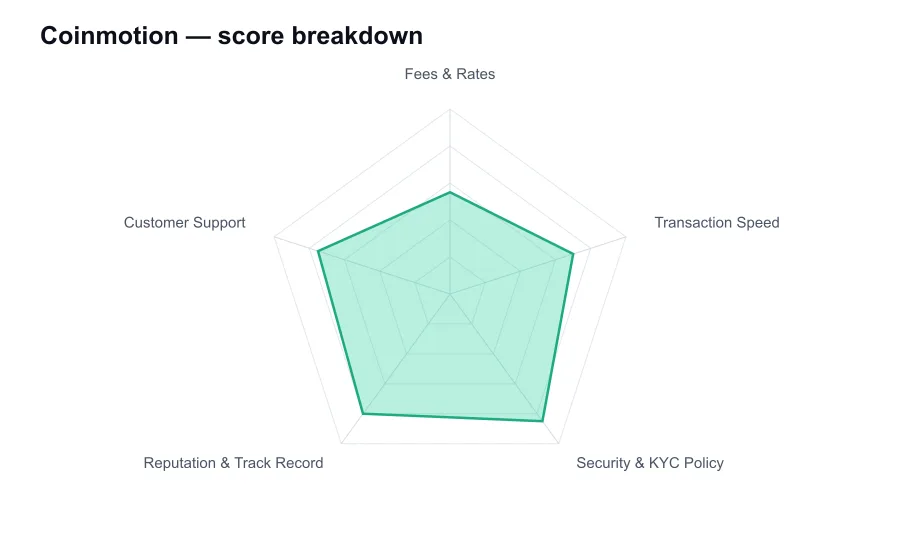
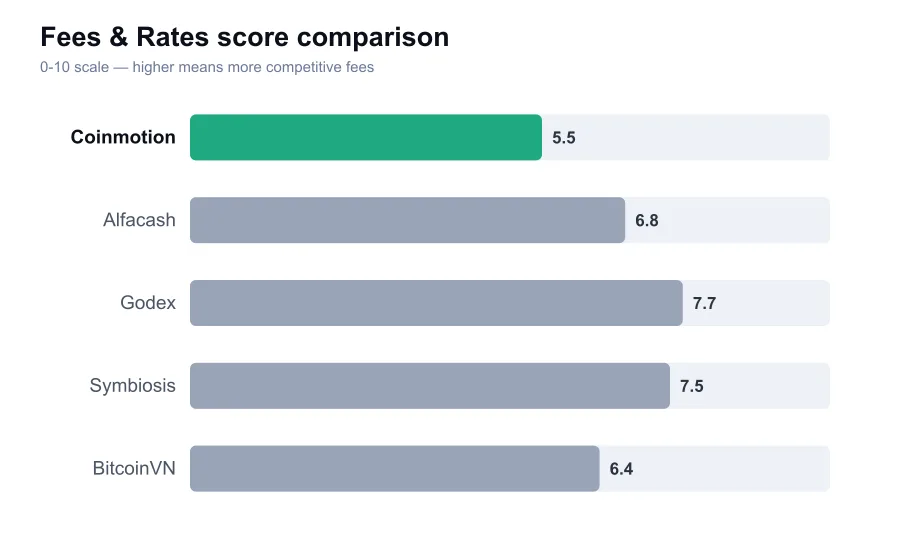
The interface feels more like a financial service than a high frequency trading terminal. It is approachable, particularly for someone making recurring bitcoin purchases, but it is not the cheapest place to execute a large trade. Coinmotion publishes a tiered trading fee structure, with the standard rate historically around 2 percent and lower levels available as rolling trading volume increases. Its lower tiers can reach roughly 0.4 percent for very active customers.
Two percent is expensive beside Kraken Pro or Coinbase Advanced, where liquid spot markets can cost a fraction of that for active orders. Coinmotion is charging for simplicity, local banking integration, custody infrastructure, and a service model aimed at less technical clients. That is a fair commercial choice, but readers should call it what it is. A casual buyer paying 2 percent each way gives up a noticeable slice of returns before bitcoin has moved at all.
The platform's rate presentation is usually easier to understand than the hidden spread model common in consumer crypto apps. Still, users should look at the final confirmation screen, not merely the headline trading fee. Bank transfer costs, card related costs where available, blockchain withdrawal fees, and the spread implicit in a quoted conversion can affect the final result. External withdrawals also carry network related charges that can vary with blockchain conditions.
For euro deposits and withdrawals, Finnish banking rails are a practical strength. SEPA transfers are normally the economical route, though banks and payment timing determine how fast funds arrive. A business day transfer can be quick, but it is not the same as instant settlement at any hour. Once euros are credited and an order is executed, the internal account update is generally prompt. External coin withdrawals depend on Coinmotion's processing and the target chain.
In normal conditions, bitcoin and ether withdrawals should be judged in hours rather than seconds, especially if the platform batches transactions or waits for compliance checks. That is ordinary operational caution, not necessarily a defect. What I like is that Coinmotion does not sell a fantasy of frictionless finance. Identity checks, bank transfers, and blockchain confirmation all take time, and users who understand that are less likely to confuse prudent controls with a failure.
Security is one of Coinmotion's better arguments. It has publicly emphasized cold storage, multi signature arrangements, and institutional grade custody practices. No outsider can audit every operational control from a marketing page, so customers should never interpret those claims as a guarantee. But Coinmotion has provided far more concrete security context than the usual small exchange, and its long survival through several crypto market cycles adds weight.
KYC is mandatory. You should expect identity verification, personal details, and potentially source of funds questions, particularly for larger activity. Privacy maximalists will dislike this, and there is no point pretending otherwise. Coinmotion is designed to operate inside the regulated financial system, not around it. For many European users, that is exactly the reason to choose it. For others, a self custody wallet funded through a different legal route will be more suitable.
The company also offers services beyond basic retail trading, including recurring purchases, an interest or earnings style offering at various points in its product history, and wealth management oriented options. Product availability can change with regulation and jurisdiction, so customers should not assume an older review is still current. The core proposition remains much simpler than those extras: a relatively conservative gateway between euros and major cryptocurrencies.
Coinmotion's reputation is solid rather than glamorous. It does not have the massive global brand recognition of Coinbase, and it lacks the deep market liquidity of Kraken. It has, however, been around since 2012, survived bull markets, crashes, and regulatory tightening, and maintained a recognizable Finnish corporate identity. In crypto, boring continuity deserves more respect than it usually gets.
Support is generally positioned as human and local, with Finnish and English language assistance among its strengths. That does not mean every ticket will be answered instantly, particularly during sharp price moves when every exchange gets overwhelmed. The more relevant question is whether there is a real company behind the response and whether the request can be escalated through normal business channels. Coinmotion compares well with offshore platforms on that measure.
My criticism is straightforward. Coinmotion costs too much for frequent traders and gives advanced traders too little control to justify that premium. It is also not the place for altcoin collectors, DeFi experimentation, or anonymous crypto use. But for a Finnish or European investor who wants a regulated feeling service, straightforward euro transfers, and a small portfolio of established assets, it is one of the more credible choices. Pay the fee knowingly, not accidentally.